Cisco has revealed its Secure Workload Software, a micro-segmentation tool formerly known as Tetration that is supposed to stop attackers moving laterally across a network, has four critical flaws plus another high-severity bug. CVE-2026-20315 and CVE-2026-20317 are the two perfect-ten-rated bugs. Both relate to improper access control. Cisco has not offered much detail about either, saying only that 20315 “covers authorization, authentication, privileges, and bypasses” and that 20317 has to do with “missing authentication, authentication bypass, and reliance on untrusted inputs.” The 9.9-rated flaw is CVE-2026-20231, which describes issues related to “Improper neutralization of special elements (covers command, OS, argument injection).” CVE-2026-20318 is the 9.6-er and is an improper input validation problem. Coming in last, at 7.5, is CVE-2026-20319, a problem related to “Improper restriction of operations within the bounds of a memory buffer” including overflows and out-of-bounds writes. Cisco offers Secure Workload Software as a SaaS-y service and for on-prem deployment. The company has fixed the flaws with its SaaS, but users still need to upgrade the Agent and Connector tools needed to use the cloudy software. On-prem users who have deployed version 3.10 or earlier need to get to version 3.10.9.1. Users of version 4.0 or later need to adopt 4.0.4.16 sooner rather than later. Cisco revealed the flaws on Thursday and says it discovered them after “a comprehensive internal security review” that involved “existing testing processes as well as frontier AI models.” Cisco is a known participant in Project Glasswing, which grants access to Anthropic’s too-powerful-for-public-release Mythos bug-finding model. So maybe that’s the frontier model involved in this research. Thankfully, Cisco says it has detected no malicious use of the vulnerabilities. ®
Google is tracking three distinct suspected Russian cyber-spy groups that are targeting individuals in academia, aerospace, defense, government agencies, and think tanks across Europe and the US. The UNC (unclassified) groups, as Google calls them, have been orchestrating these highly targeted campaigns since at least last year, and they remain ongoing. Some of the phishing and OAuth-abuse operations used in the attack took place this month. Each campaign had fewer than 100 targets, and under 10 victims, the threat-intel team told The Register. Despite the small numbers, if you work in government, NGOs, academia, or aerospace, you may be a target, and over the past few months the Russian snoops have adapted their attacks to abuse legitimate authentication flows. This makes these types of social engineering tactics appear more legitimate – and allows the cyber operatives to compromise personal accounts across multiple platforms, Google warns. It also means that potential victims may not recognize these as phishing attempts. Google says it wants to raise awareness about these campaigns “so that targets can more readily recognize malicious outreach.” In other words: don’t blindly trust that calendar invite that purports to come from the US State Department. UNC6293 The security analysts have been tracking one of the three, UNC6293, for almost two years. UNC6293 is a suspected APT29 (aka Cozy Bear, which Google now tracks as Ice Relic – insert eyeroll) phishing squad that poses as US State Department employees to lure victims into giving the snoops long-term access to their email correspondence. APT29 is probably best known for the 2020 SolarWinds hack, and infosec analysts from the UK and US governments, and the private sector, often link it to Russia's Foreign Intelligence Service (SVR). On Thursday, Google’s Threat Intelligence Group (GTIG) said it's now tracking two other suspected Russian groups, UNC7005 and UNC5976, which also conduct phishing, abuse OAuth flows, and/or deploy malware to these same types of targeted individuals. Last summer, GTIG documented UNC6293 phishing for app passwords belonging to people who are critical of Russia. In this campaign, they impersonated State Department personnel, and they’ve continued using that lure while also adding OAuth phishing into their toolkit. “In June 2026, GTIG observed OAuth phishing where UNC6293 requested targets share either the full URL or ‘verification code’ after performing a legitimate login to an external provider,” Google threat analysts Gabby Roncone and Wesley Shields said in the Thursday report. “By providing the requested verification code the target would grant UNC6293 access to the account.” UNC7005 GTIG also asserts, with “moderate confidence,” that UNC7005 is another initial access group connected to APT29/Cozy Bear/Ice Relic – and the SVR. This crew, first identified in February, usually targets academia, diplomatic, and nonprofit personnel across Ukraine, Western Europe, and the US. While it shares similarities with UNC6293, Google tracks it separately “due to its lower sophistication and poor operational security, infrastructure with divergent characteristics, and incorporation of malware.” Reliaquest and Microsoft first sounded the alarm on this group - Redmond tracks UNC6293 as Storm-2945 - after spotting a campaign compromising captive portal networks to deliver infostealers, keyloggers, and other malware. The Russian intelligence operatives targeted users of public Wi-Fi networks at places like hotels, conference centers, and other shared venues in the hospitality sector in an AI-assisted operation that began in February. UNC7005 also enjoys device-code phishing for both Microsoft and WhatsApp accounts. Most recently, the phishing lures look like invitations to diplomatic events and conferences delivered via email with links to attacker-controlled websites. The crew also tends to reuse website templates. They did this in May, we’re told, re-using the website template from an operation that used the theme of an "embassy invite." The later campaign spoofed the real GLOBSEC forum - a geopolitical gabfest that focuses on Eastern Europe. Once victims visit the attacker-controlled website, the snoops fingerprint the victim’s system and prompt them to confirm their attendance at a conference. “The registration process is thorough, and notably contains an epicurean wine selection, which was a theme in multiple previous ICE RELIC-linked phishing campaigns,” the Googlers wrote. In May and June, UNC7005 carried out social engineering attacks spoofing WhatsApp and prompting the victim to either join a voice call, encrypted chat, or download a file. Joining the voice call triggers a malicious JavaScript that records audio and video of the target, which the malware uploads to the attacker’s command-and-control server. While Google doesn’t say how the Russians use the stolen images and audio, attackers can use both to help carry out convincing social engineering campaigns. Also in May, the goons conducted “a much broader phishing wave than any we had previously observed,” Roncone and Shields wrote. This one targeted prominent, mostly US-based academics, diplomats, and researchers whose work focused on Russia and former Soviet states. The miscreants’ website was more “elaborately built to social engineer the target,” with specific information about a resolution supporting Ukraine, plus contact details for general questions or tech support. Those contacts were a hotline to the attackers, not a helpdesk. When users click the button that, they believe, will download a “Summit Companion App” to read the full resolution, they inadvertently put infostealers on their own Mac OS and Windows devices. Since August, the same crew also started both Google and Microsoft account OAuth phishing operations using cloud infrastructure. UNC5976 Finally, UNC5976 is yet another suspected Russian cyberespionage group and again likes to steal OAuth tokens. GTIG began tracking OAuth-related activity from this crew in March 2026. In these campaigns, UNC5976 buys up several domains with names related to file sharing and then creates a cloud project related to the domain. The domains host a fake file sharing page that prompts users to “Continue with Google” via a popup link. The links takes them to a legitimate Google OAuth login page, asks them to sign in, and after authenticating the credentials redirects the victim to a Google Cloud project URL that saves the authentication token for the attacker. GTIG calls UNC5976 “distinct” from the other two initial access groups, and notes that this may indicate “differing strategic mandates and potential alignment with alternative Russian intelligence services.” It also uses dedicated infrastructure for post-compromise activity instead of residential proxies, plus more malware and tooling in its OAuth operations. ®
US Bank says that it's investigating ransomware crew LockBit’s claims that it breached the financial institution and stole data, which the crims threaten to leak on September 3 unless the bank pays an extortion demand. "We have investigated this matter and the available evidence indicates that the claim regarding a potential cyber incident is related to a fourth party event that occurred outside of our environment. At this time, there is no evidence that our systems, networks or data repositories were compromised," Lee Henderson, US Bank VP of public affairs, said in an emailed statement to The Register. If the extortionists’ claims are true, and even if the bank pays the ransom demand, there’s still no guarantee that the digital thieves will delete the stolen files. When cops took down an earlier iteration of LockBit in 2024, they found evidence that the crooks retained victim data - even after the victims paid the extortion demands. “We have provided relevant information to law enforcement and continue to support their investigation," Henderson continued. "The security and privacy of our customers’ information is our highest priority. We will continue to provide updates as warranted.” LockBit added the bank to its leak site late Wednesday night, and gave the bank 14 days to pay a ransom demand or else see its data dumped online. The post doesn’t say how many files the crew allegedly stole, or what they contained. In February 2024, international cops seized servers, domain infrastructure, and decryption keys in an effort to dismantle the notorious ransomware group, and in May 2024, they outed LockBitSupp's true identity - although Dmitry Yuryevich Khoroshev, a Russian national, remains at large. In September 2025, however, LockBit reemerged with its new LockBit 5.0 ransomware variant. LockBit’s latest claims follow previous third-party breaches affecting US Bank customers’ data, and at least one law firm says that it’s considering a class-action lawsuit against US Bank National Association, the primary banking subsidiary of US Bancorp, on behalf of a small group of customers whose credit card information may have been exposed in a third-party security snafu that reached the bank through its vendor, Fidelity National Information Services. US Bank reportedly found out about the third-party incident on May 7, and in June, began notifying 537 customers, all Massachusetts residents, that their names, mailing addresses, and credit card numbers may have been stolen by the digital crooks. Customers’ Social Security numbers, online banking credentials, and account balances reportedly weren’t accessed. A much larger incident affecting around 11,000 customers occurred in 2022, after a different vendor “accidentally shared” a file containing personal information associated with closed US Bank credit card accounts, including names, addresses, Social Security numbers, dates of birth, closed account numbers, and outstanding balances.® Updated on Aug 21 with a new statement from US Bank.
A young security researcher figured out a way to enroll a Linux device into Apple’s Find My network and read live location data from it. Find My is Apple’s app for, you guessed it, finding things – whether AirTags, iPads, or other supported devices and items. It also works for people. Families can track each other's whereabouts for safety reasons, and friends can tell when others are hanging out without them. In typical Apple fashion, though, the full Find My experience is limited to Apple hardware, like an iPhone or Mac. iBiz also offers Find Devices via the iCloud website, although it lacks Find My’s people-tracking feature for viewing locations others have shared with you. However, the 22-year-old researcher, who goes by “Zerotistic,” devised a way to enroll a Linux-based machine into the iNetwork, tricking Apple into sending the people-location data it exclusively reserves for Apple devices. It’s important to note, at this point, that this is not an exploit that allows anyone to arbitrarily retrieve any Apple user's location. It refers to registering a non-Apple device to the Find My network and retrieving the location data of people who had already chosen to share their locations with the Apple account owner. Retrieving people-location data requires Apple to trust that the machine you’re using belongs to its network and is capable of receiving the data, which is sent over Apple’s Push Notification service (APNs). The first step was tying the Linux machine to the researcher’s Apple account. Zerotistic obtained an identity delegate by going through Apple’s standard GrandSlam authentication protocol. In pursuit of an Apple Identity Services (IDS) device certificate, which links the intended device to an Apple Account, they then used that delegate to build a custom certificate signing request (CSR). Lots of trial and error later, Zerotistic discovered that the CSR had to use the PKCS#10 format and a 2048-bit RSA key signed using SHA-1, linking the Linux machine to their Apple account. They bundled this up into a compressed XML file and sent it to Apple’s authenticateDS profile-enrollment endpoint. The SHA-1 signature requirement and XML encoding were surprises. The researcher’s “best guess” is that the CSR had to conform to older standards because authenticateDS is a legacy endpoint. Apple signed the CSR, handing the Linux device the IDS certificate needed to register its public key to the researcher’s Apple account. The Linux device was registered at this point, but further work was needed to convince Apple that it was capable of running Find My. Zerotistic found that a Find My registration request required the device to subscribe to six different subservices, define the types of encryption it supported, and provide the public keys to support Apple’s device-to-device messaging format. It also had to be signed using an IDS certificate and an APNs certificate obtained during initial network setup. At this point, the researcher had enrolled the Linux machine in an Apple account and convinced Find My that it was capable of receiving location data via a persistent binary TLS connection to Apple’s private APNs servers. However, this registration did not automatically retrieve the location data of people who had previously shared their locations with Zerotistic, as a box-fresh Apple device would after setup. Issuing a SubscribeAndFetch request fixed this, prompting the device of the researcher’s friend to push an encrypted location key to the newly registered Linux device. The final challenge was reading the location data the Linux device fetched from Apple’s SearchParty service. Zerotistic was not simply using the GUI Find My app on Linux; they were receiving the encrypted data and had to figure out how to unpack the location message. This required a Linux script to unwrap Apple’s messaging envelope, extract the shared location key, and decrypt the Find My location data, which is comprised of coordinates, timestamps, and accuracy information. Once developed, the script could fetch and decode subsequent location reports for the existing location share. It took the researcher less than a week of tinkering to develop the Find My-busting technique, they said. The Register asked Apple if it was aware of the researcher’s work and if it had any plans to address the issue, but it did not immediately respond. ®
McAfee Labs’ latest investigation into the WeedHack malware campaign found that the threat has continued to evolve even after its original command-and-control infrastructure was disrupted by McAfee. Researchers identified multiple active websites still distributing WeedHack to gamers, often by impersonating legitimate Minecraft clients, offering paid tools for free, or using trusted platforms to make malicious downloads appear credible.
Among the findings:
→ More than 6,300 attempts to access malicious sites were blocked by McAfee WebAdvisor in the past month.
→ Researchers found lookalike gaming websites designed to closely replicate legitimate projects, including their branding, feature lists, FAQs, installation guides, developer credits, and links to genuine GitHub repositories.
→ In one case, the top two Google results observed by researchers for a popular Minecraft client led to sites distributing WeedHack, demonstrating how SEO poisoning can put malicious downloads directly in gamers’ paths.
→ Nearly half of the malicious URLs identified were Discord links (49.6%), followed by MediaFire (23.4%) and GitHub (8.2%), showing how attackers can use familiar platforms alongside fake websites to distribute malware.
→ Researchers also identified a malicious site built using an AI-powered website creation platform, illustrating how readily available tools can make it easier to launch convincing new malicious sites.
Threats like these show why protection needs to start before a malicious download ever reaches your device. McAfee helps block dangerous websites and downloads before malware has a chance to install, helping you stay focused on the game.
Threats like these show why protection needs to start before a malicious download ever reaches your device. McAfee helps block dangerous websites and downloads before malware has a chance to install, helping you stay focused on the game.
Background
2026 has seen a significant shift in malware tactics, where traditional perimeter breaching techniques are being traded in for more elusive methods, such as AI-powered phishing and widespread deployment of Info-stealer malware. Over 560,000 new malware variants are detected every day, with infostealers accounting for the most active category.
McAfee Labs has also seen a significant spike in Malware-as-a-service (MaaS) campaigns, that offer their customers access to sophisticated infostealers and backdoor malware samples at minimal cost. These campaigns provide detailed tutorials to their customers, teaching them how to target popular gaming software, develop authentic-looking websites, and implement SEO Poisoning techniques in order to bamboozle gamers and infect their systems.
Introduction
Recently, McAfee Labs has covered a Malware-as-a-service campaign, called ‘Weedhack’ that infected over 116,464 gamers and utilized SEO Poisoning techniques to infect such a large user base.
While uncovering the depths of this campaign, we’ve encountered multiple websites and file hosting services that are still active and distributing WeedHack malware. In this article, we cover some of the most prominent examples we’ve encountered in the wild to educate our readers and provide key insights on how to identify and avoid such malicious websites.
Note: This list is not exhaustive, and there may be additional websites that are not covered in this article.
Malicious websites spreading WeedHack
During our investigation of this campaign, we observed that most of these websites appear legitimate, as they are well-crafted and often mimic legitimate websites. We observed a series of dedicated brand-impersonation attacks targeting several popular Minecraft clients.
We published the original article in the first week of July, and, as a result, we’ve seen a disruption in WeedHack’s campaign: its C2 server is no longer active. Consequently, we have observed a shift in tactics by these attackers.
The WeedHack Dashboard has been taken down, yet we’ve discovered websites that are actively spreading WeedHack malware.
Out of these URLs, most belonged to file-hosting services:
49.6% were Discord links
23.4% were MediaFire links,
8.2% were GitHub links
4.6% were Dropbox links
The remaining URLs were customer-facing websites designed to deceive users.
In the last month, McAfee WebAdvisor has prevented more than 6,300 users from accessing these malicious websites. At the time of writing this blog, the following websites were still distributing WeedHack malware.
Figure 1: glazed-client landing page
This website ‘glazed-client.com’ replicates the original website called ‘glazedclient.com’. It provides a free and open-source Minecraft add-on called ‘Glazed Client’ designed specifically for DonutSMP server. The website contains a feature list, along with Archive, Credits, and FAQ sections,that are identical to those on the original website.
Figure 2: Feature list
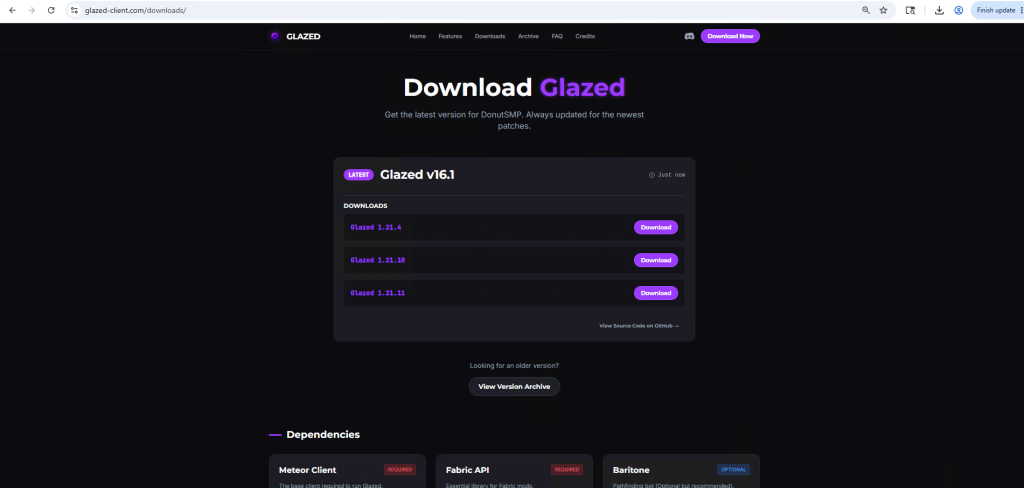
Under the download section, the websiteprovides three download options, and all of them are infected with WeedHack.
Figure 3: Download Section
This website has a GitHub link, which links to alegitimate GitHub repositoryin order to build trust with the visitors.
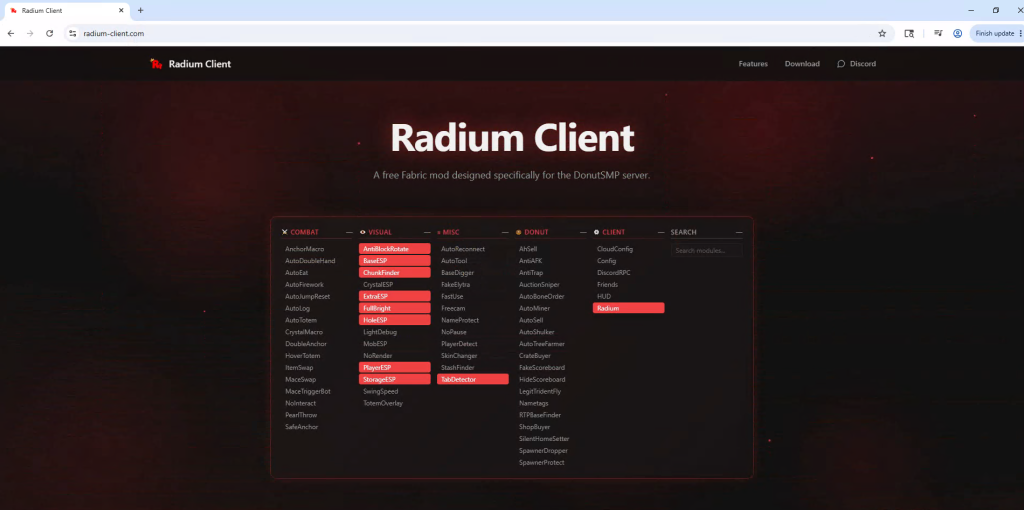
Example 2– radium-client.com
Figure 4: radium-client landing page
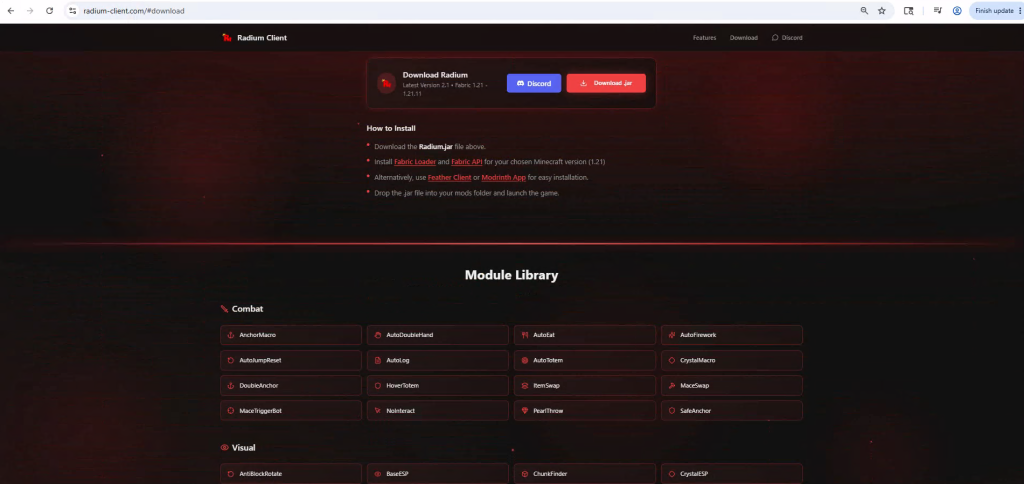
The website ‘radium-client.com’ is replicating a legitimate website called ‘radiumclient.com’.The original website offers Minecraft client for $9.99 per month, but the malicious website offers the same tool for free.
The malicious replica also has a detailedfeatureand download section. The downloaded JAR file is infected with WeedHack.
Figure 5: feature list and download button
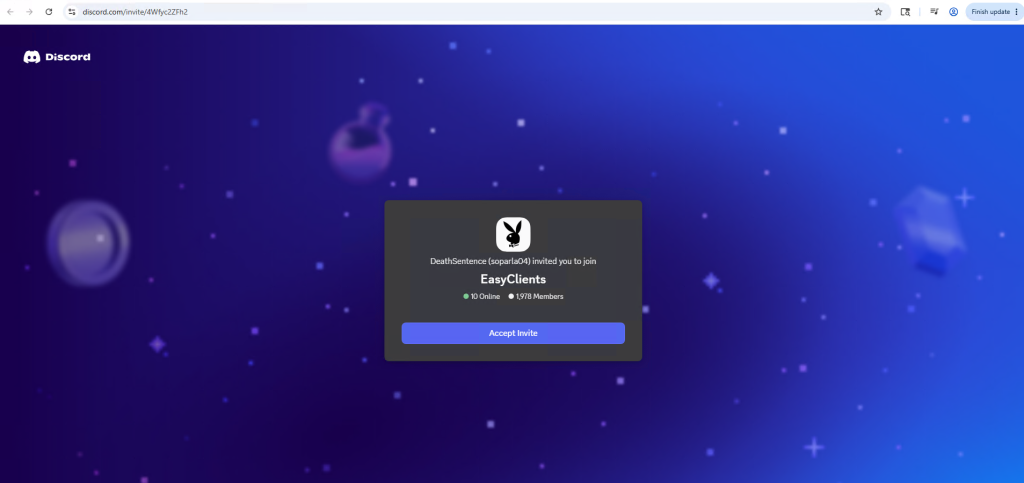
In this instance, the malicious website contains a discord link, similar to the original website, but it pointsto a channel called ‘EasyClients’, that has over 1,900 members.
Figure 6: EasyClients Discord Channel
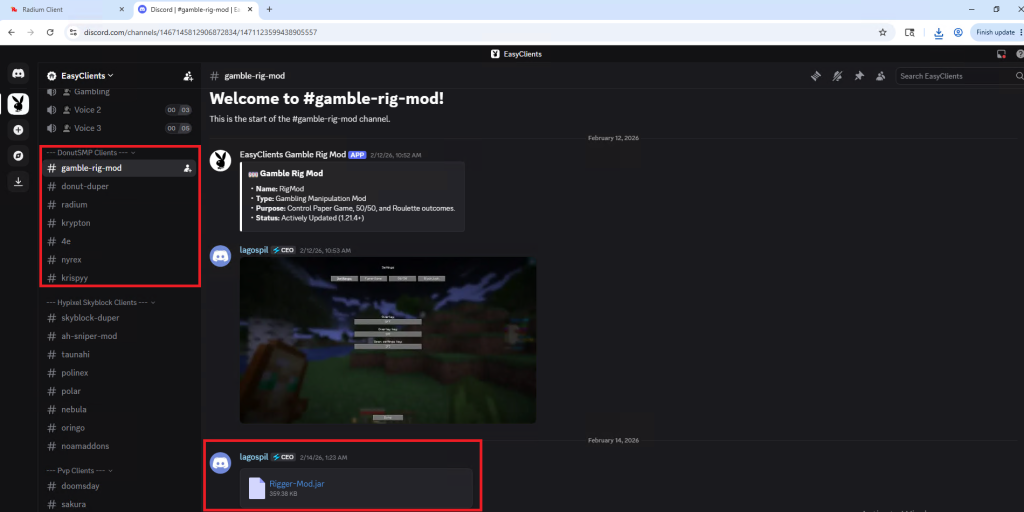
This channeloffers 7 differentDonutSMP clients for free (Image 7, Highlighted in Red) which are also infected with WeedHack.
Figure 7: EasyClients Discord Channel
Example 3 – seedcrackerx.github.io
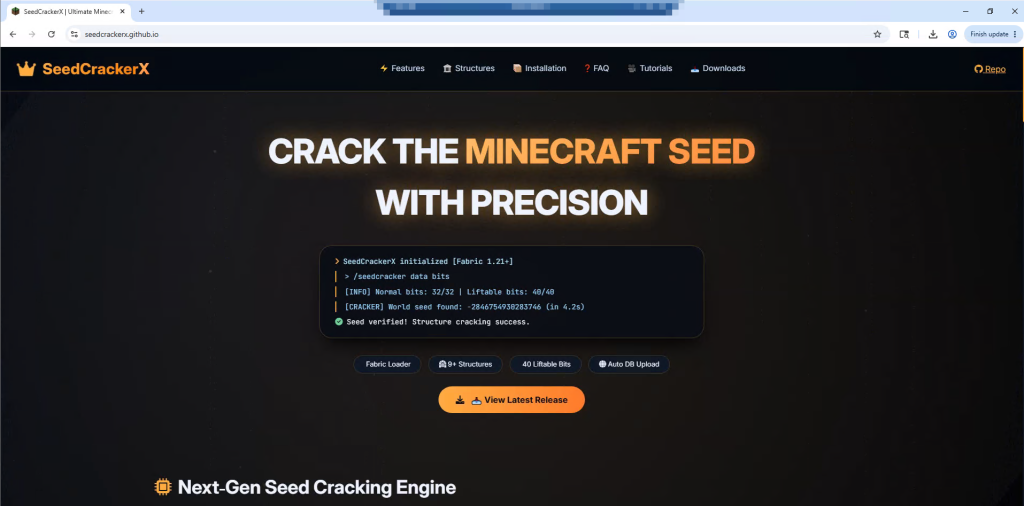
Figure 8: SeedCrackerX’s landing page
In this example, we see GitHub’s web hosting service ‘GitHub.io’ being exploited by attackers. Here they are impersonating ‘SeedCrackerX’ tool, which is a Minecraft seed crackingsoftware capable of identifying the exact world seed used to generate a Minecraftworld.
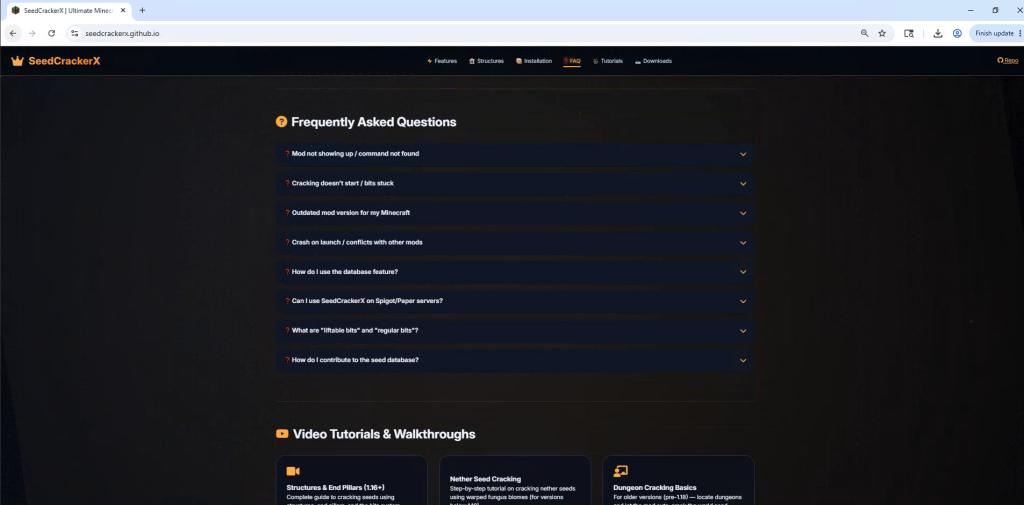
Figure 9: FAQ section
Here, the malicious websites imitate the original website ‘seedcrackerx.com’, by replicating its fonts and color palette. The website also includes an elaborate tutorial and FAQ section, educating the visitors on how to properly install the tool.
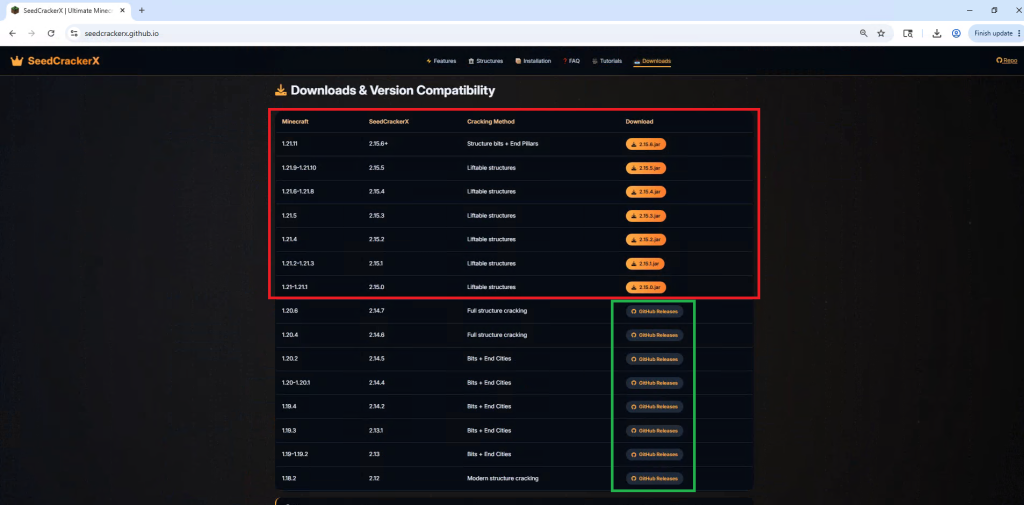
Figure 10: Download section
Under the download section, the website offers seven versions to choose from, but all of them are infected with WeedHack. (Highlighted in Red)
This malicious website has also linked the genuine GitHub repository hosting the SeedCrackerX tool (Highlighted in Green), to appear more legitimate.
Example 4 – xenoclient.lol and xenonclient.com
Xenon Client is one of the most popular Minecraft Clients, known for being lightweight, community driven and offering niche vanilla-friendly utilities. Given its widespread popularity, this client is a prominent target for threat actors.
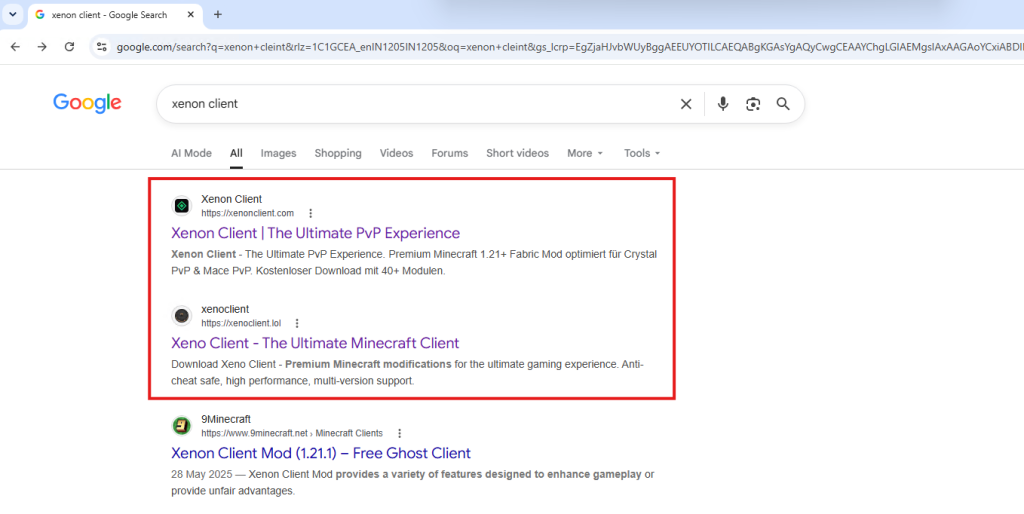
Figure 11: Google search results for ‘Xenon Client’
During our research, we identified that the top two Google search results for ‘Xenon Client’directed users to websites (Highlighted in Red) that are spreading WeedHack.
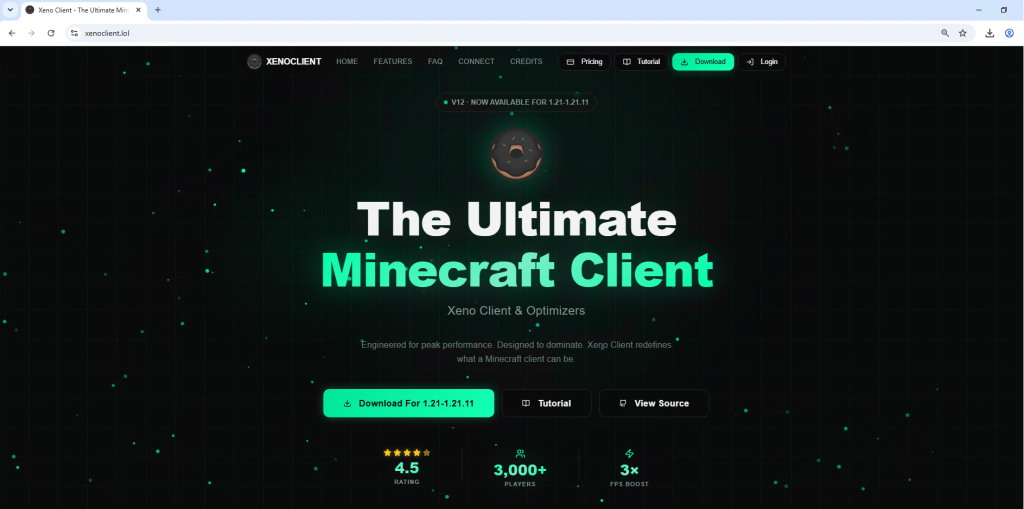
Figure 12: Xenoclient.lol Landing Page
The “xenoclient.lol” website is particularly noteworthy, for the range of features and support it offers. The website includes comprehensive download and installation guides, as well as FAQ and Credits sections. Additionally, it lists the original Xenon Client GitHub repository and features a community section for like-minded gamers, further enhancing its professional appearance.
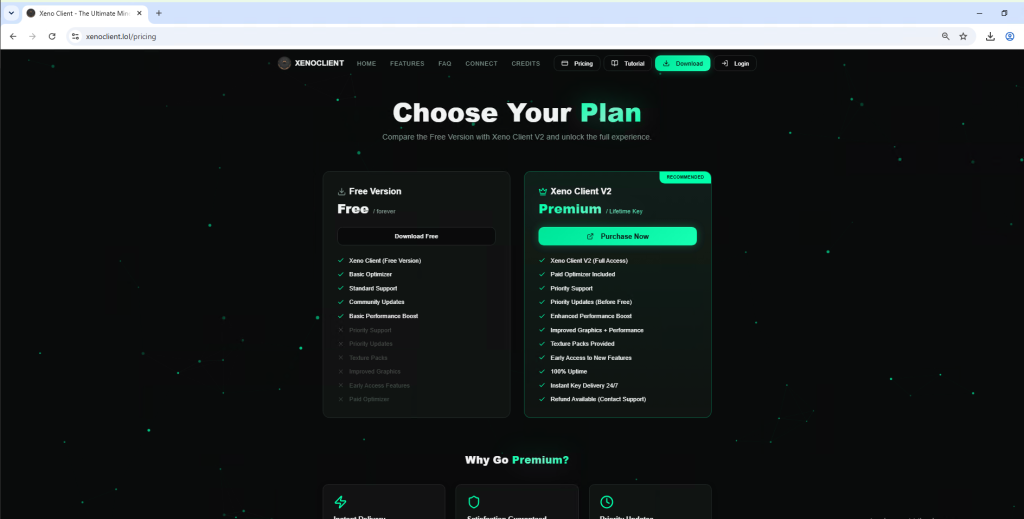
Figure 13: Xenoclient.lol Purchase Options
It offers 2 purchase options for free and premium, where the premium version is listed for $5.
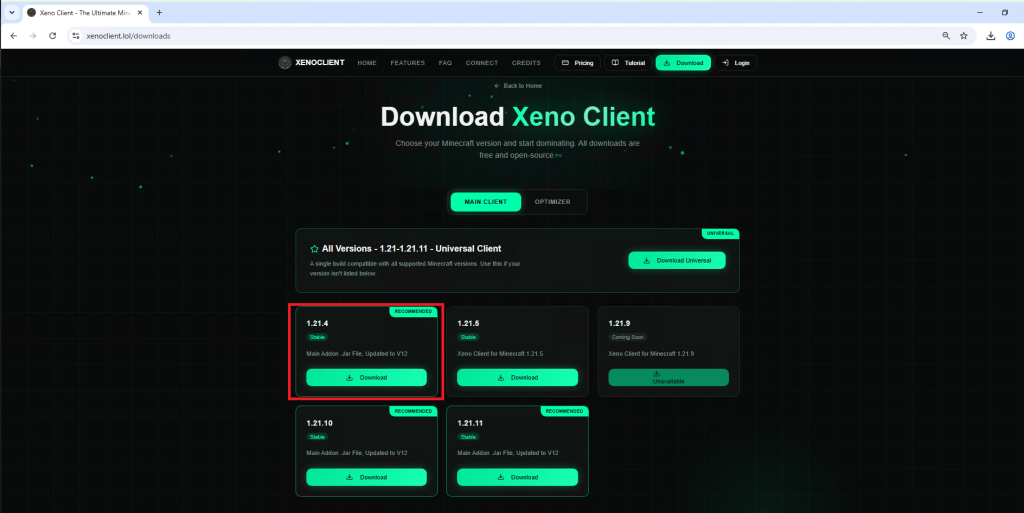
Figure 14: Download Page
The free option, on the other hand, offers six download options for the main client and six additional options for the client optimizer. At the time of writing, only one download link remains operational (highlighted in red), and it delivers a payload infected with WeedHack.
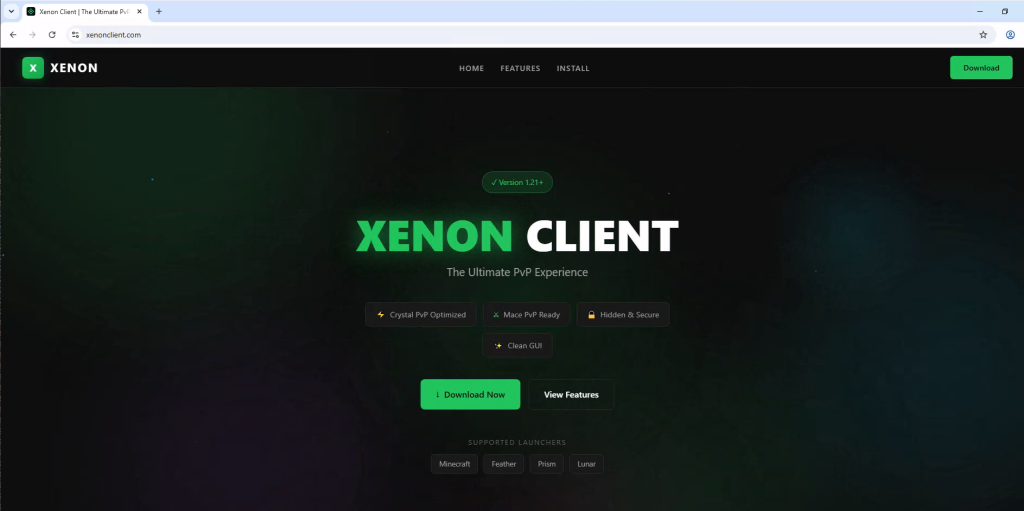
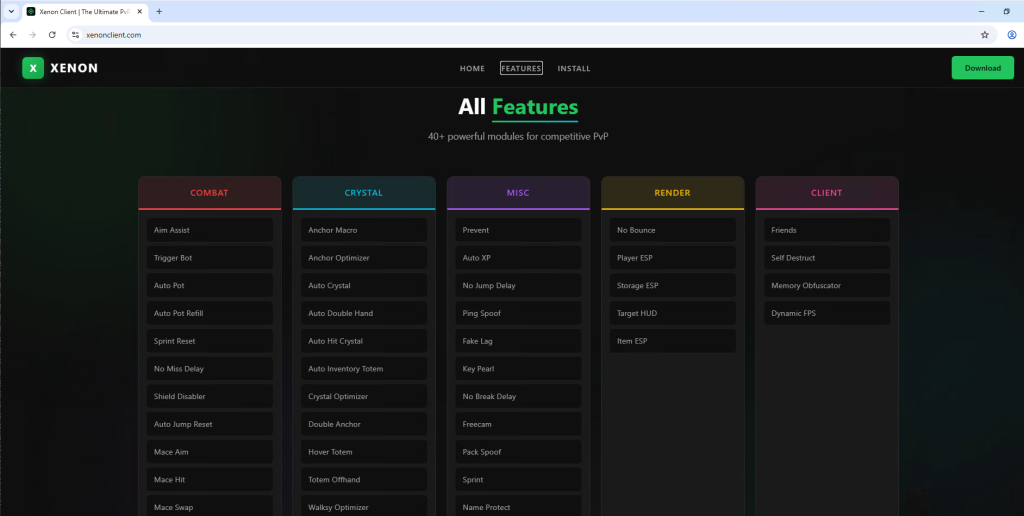
Another website, “xenonclient.com,” is also targeting Minecraft players, luring them with a free version of the same client.
Figure 15: xenonclient.com Landing Page
Similar to other websites in the campaign, this site includes an installation guide and a feature list for the Xenon Client to enhance its apparent legitimacy.
Figure 16: Feature List
The final JAR file downloaded from this website infects users with WeedHack.
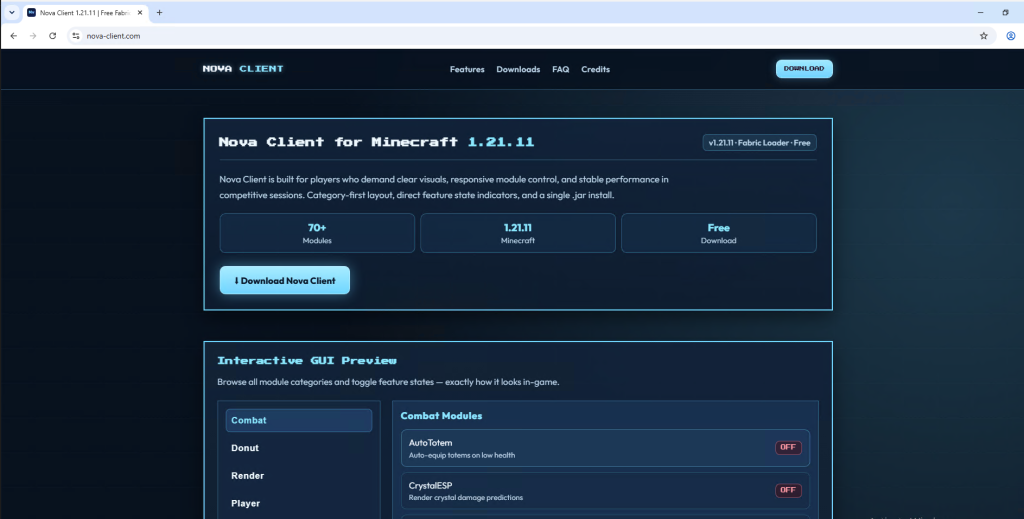
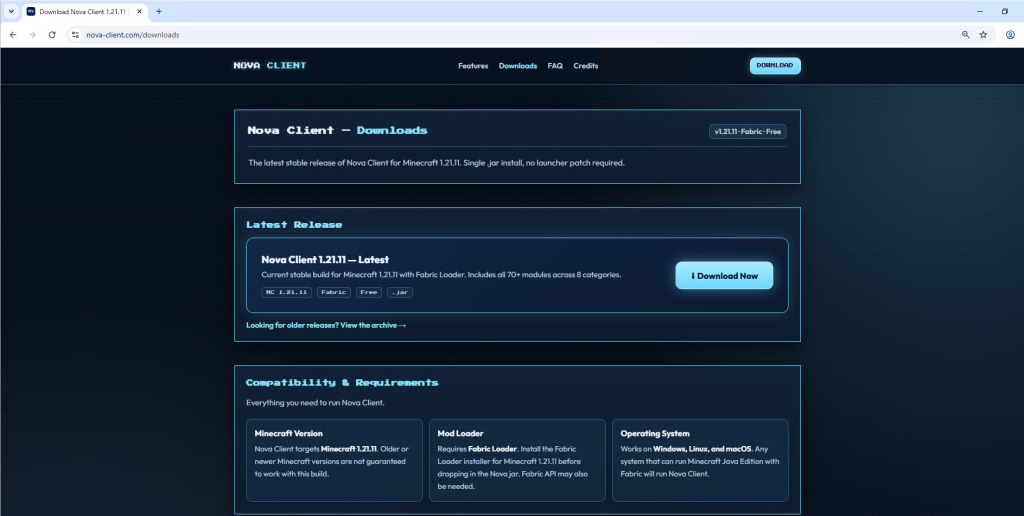
Example 5– nova-client.com
Nova client is anopen-source client designed for Minecraft Bedrock Edition.
Figure 17: Nova-Client’s landing page
This client is an easy target for attackers because it lacks an official website.The legitimate client is hosted on GitHub and Modrinth; however, attackers have created a spoofed website and leveragedSEO poisoning techniques to outrank the official sources in search results.
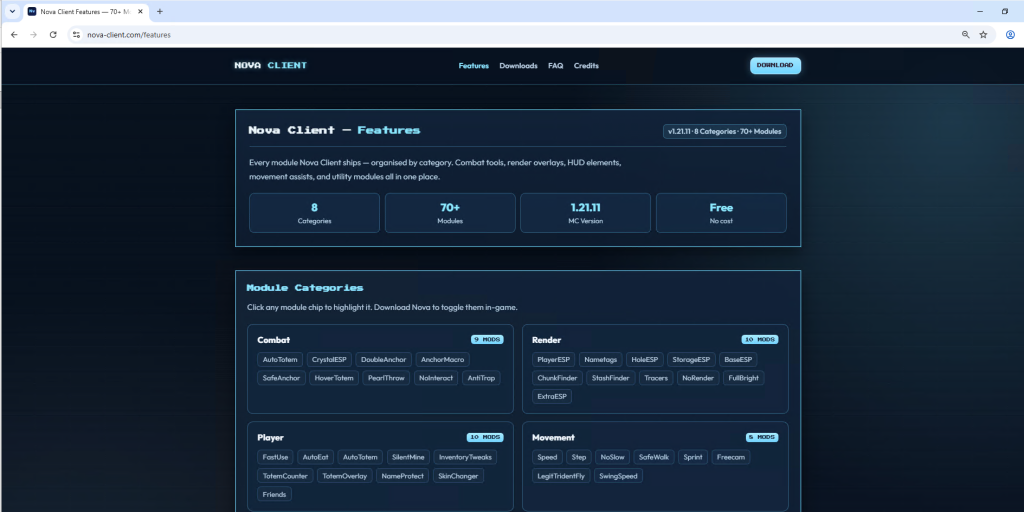
Figure 18: Feature Section
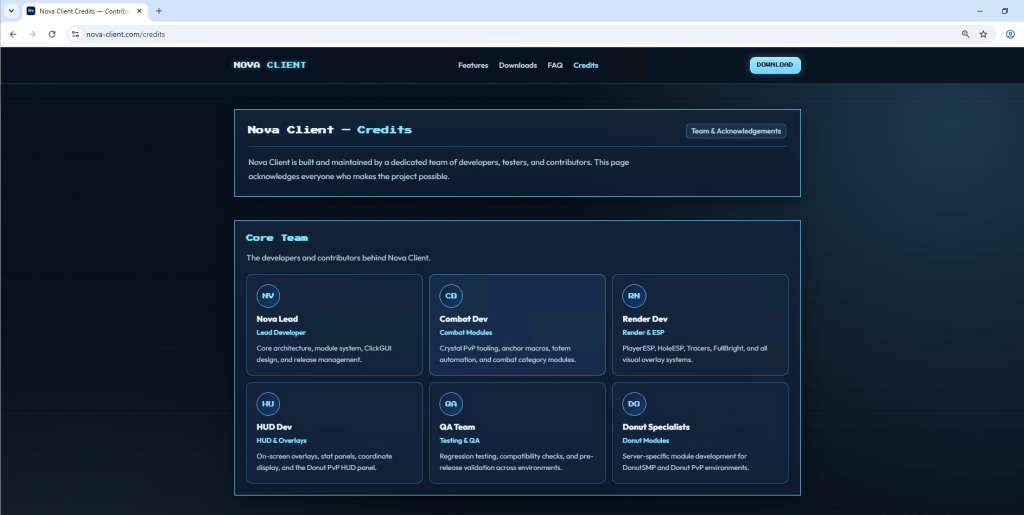
This website also includes a Features page, installation guide, and FAQ section. In addition, it displaysscreenshots from the legitimate Nova Client to deceive users. What is interesting here isthat attackers havealso included a credits section, which is common with legitimate Minecraft client websites.However, they do not mention anyone who has actually worked on the project and instead used generic team names.
Figure 19: Credits Section
The download section provides Nova Client for Minecraft 1.21.11, but the download file spreads WeedHack malware.
Figure 20: Download Section
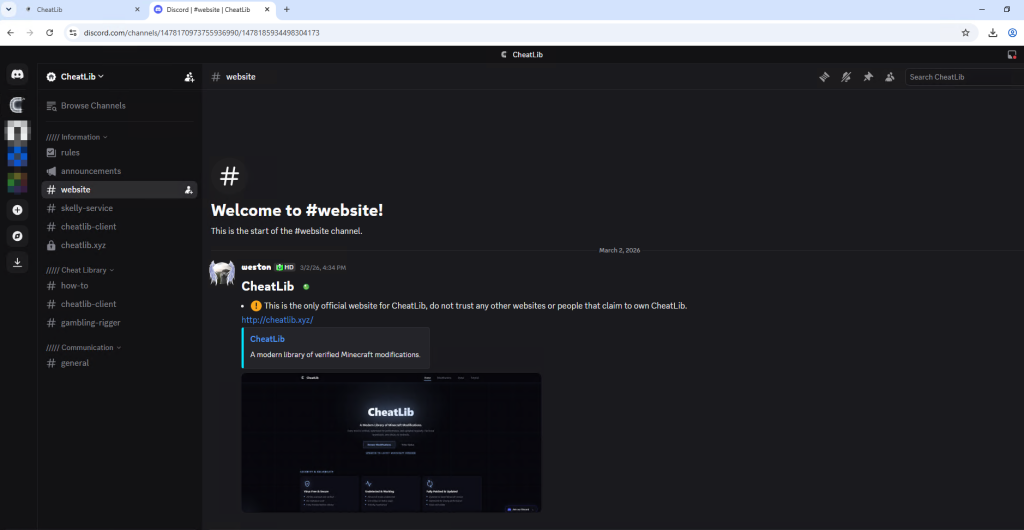
Example 6 – cheatlib.xyz
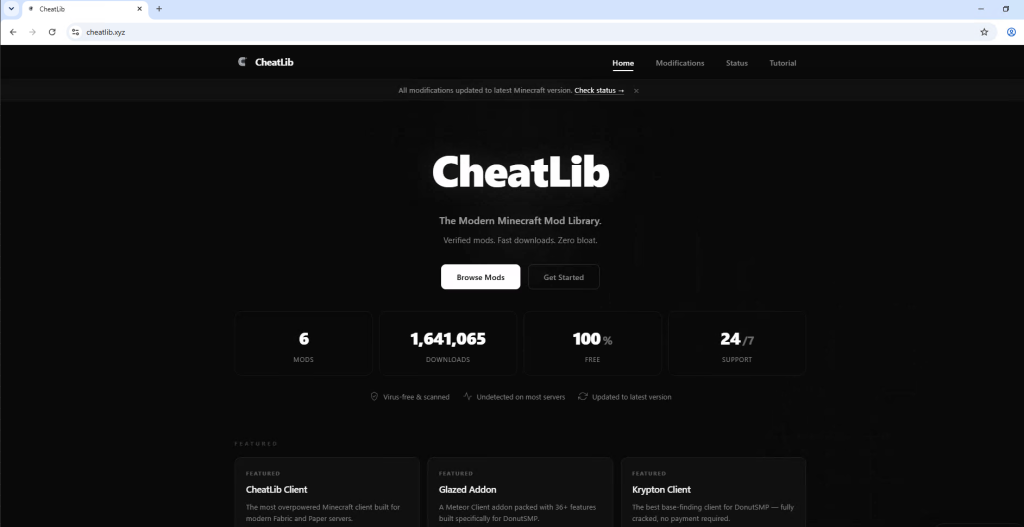
CheatLibadvertises that their clients have been downloaded over 1.6 million times,are free from malwareand offers round-the-clock support.
Figure 21: CheatLib’s landing page
Similar to other such websites, it also features a setup guide and a FAQ section to address common user issues.
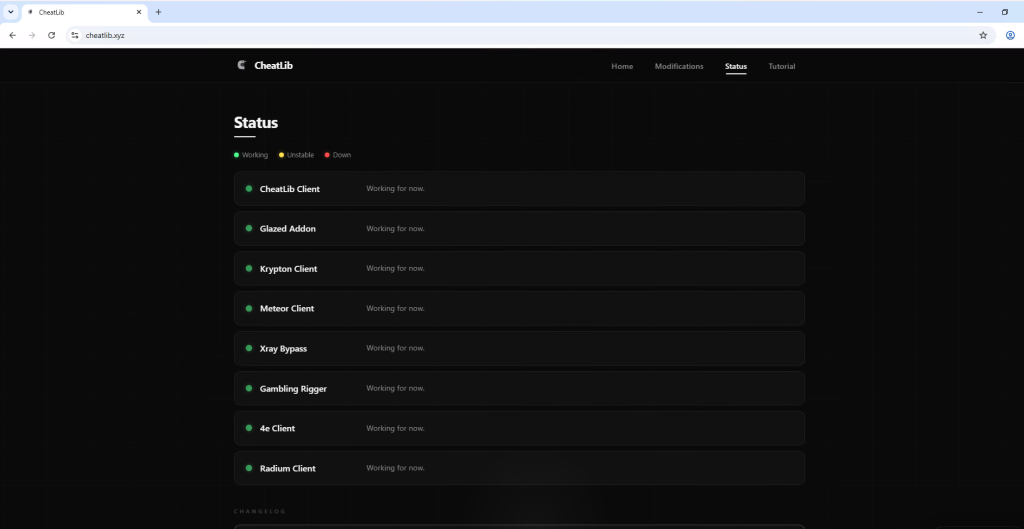
Figure 22: Status Section
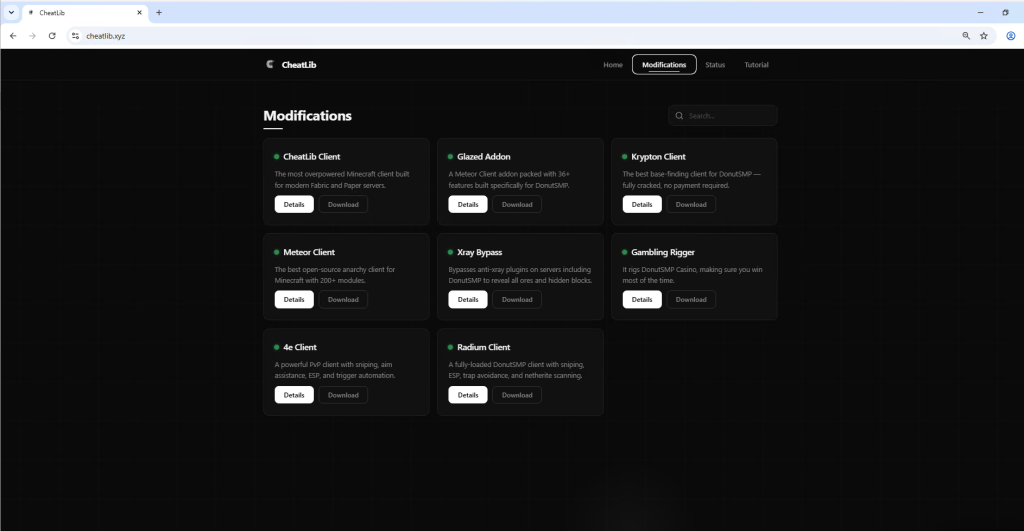
They provide eight Minecraft Mods and inform users which Minecraft servers and anti-cheat systems they can bypass, as well as the current status of each mod.
Figure 23: Download Section
Although the website offers eight distinct mods, all eight files share the same hash and distribute the WeedHack payload.
Figure 24: CheatLib Discord Channel
This website also links to a Discord channel called ‘CheatLib’ with over 220 users, which also provides access to WeedHack infected mods.
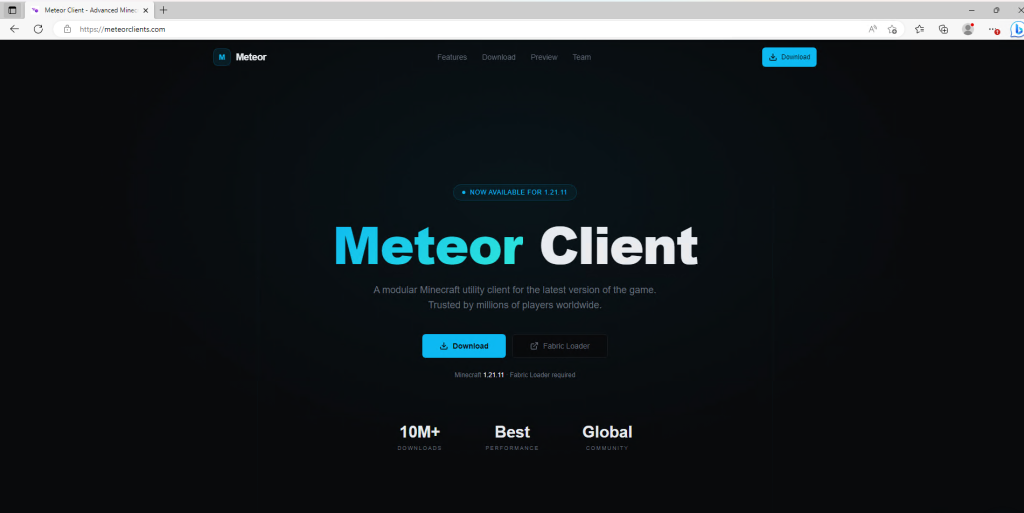
Example 7 – meteorclients.com
Figure 25: Meteor Client’s landing page
This malicious domain ‘meteorclients.com’ is impersonating a legitimate website ‘meteorclient.com’.They claim that this client has been downloaded over 10 million times and has over 15 thousand active users at any given time.
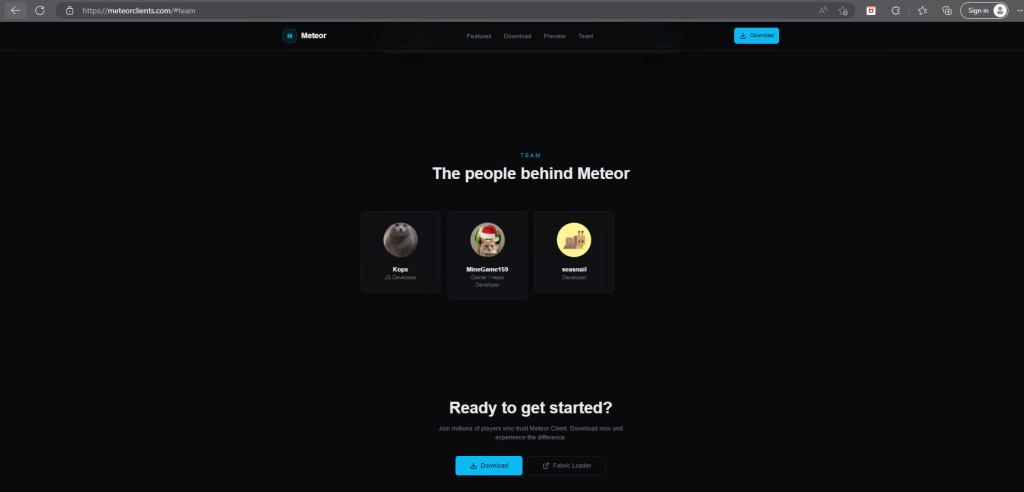
Figure 26: Team Section
The Team section contains the names of the legitimate Meteor Client developers, which appear to have been copied from the project’s official website,to create an appearance of authenticity.
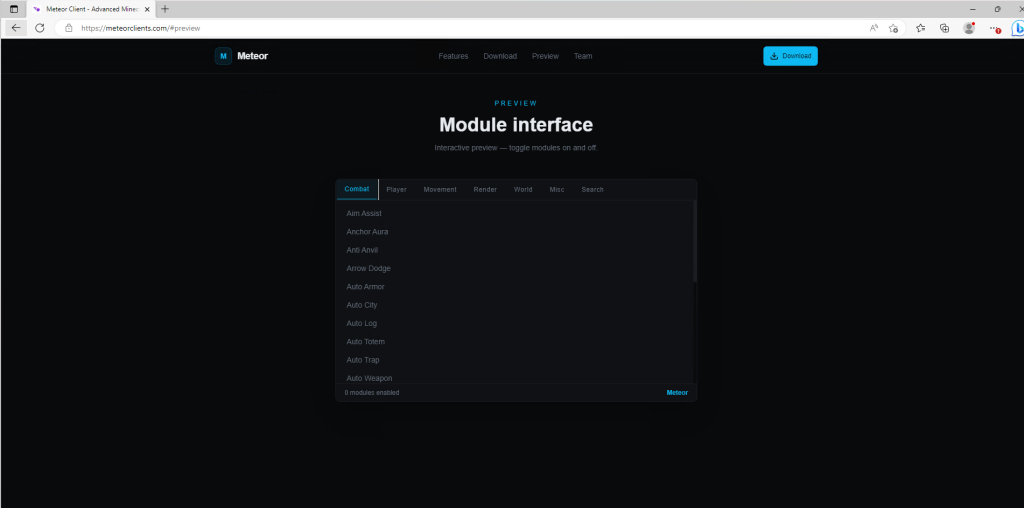
Figure 27: Preview Section
They also provide an interactive preview of Meteor client on the website, enabling users to test and familiarize themselves with the client.The website offers a single download option, which is infected with WeedHack.
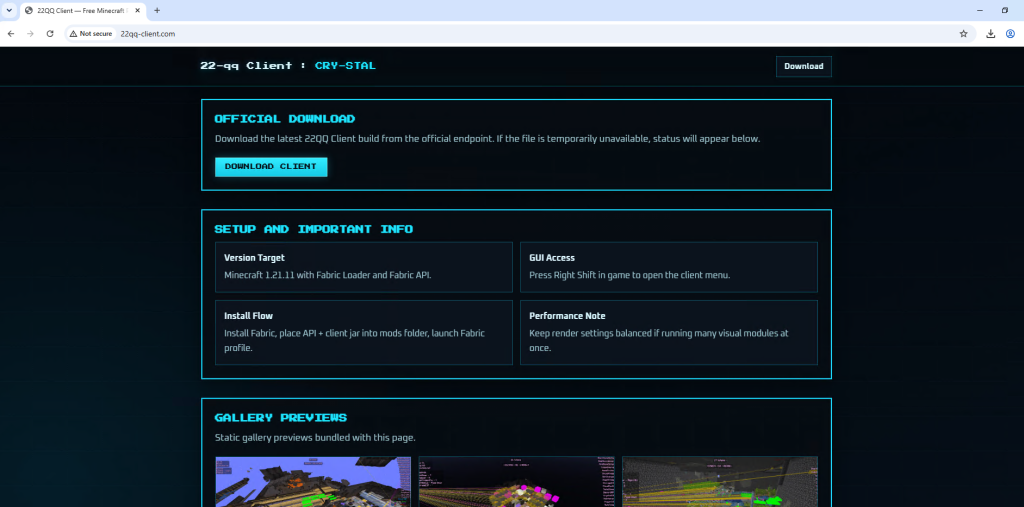
Example 8– 22qq-client.com
22qq-client is a Minecraft Mod for Crystal PVP servers.
Figure 28: 22qq-client’s Landing Page
This mod does not have a dedicated website, and attackers are exploiting this issue. This website is meant toserve as the official page for the client.
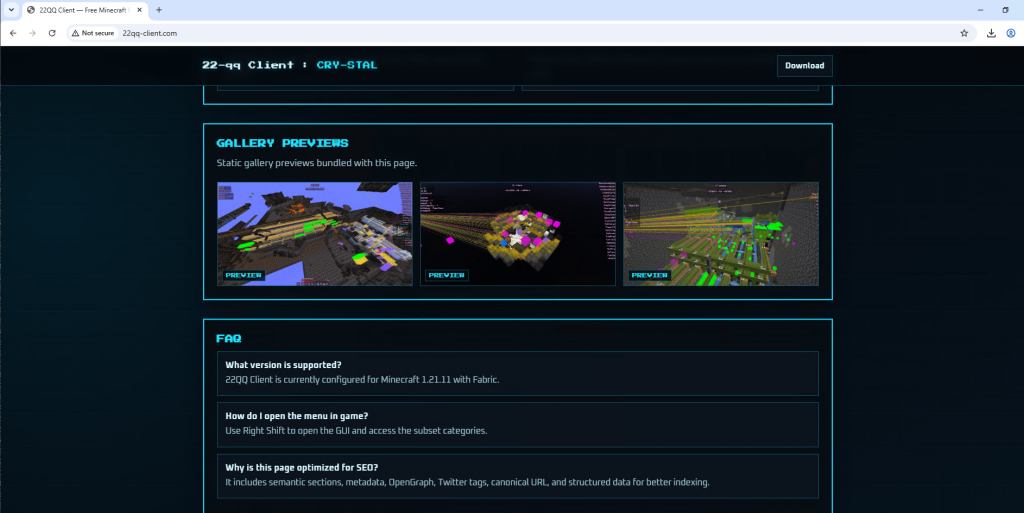
Figure 29: FAQ section.
The attackers attempt to establish credibility by using screenshots from the legitimate client.
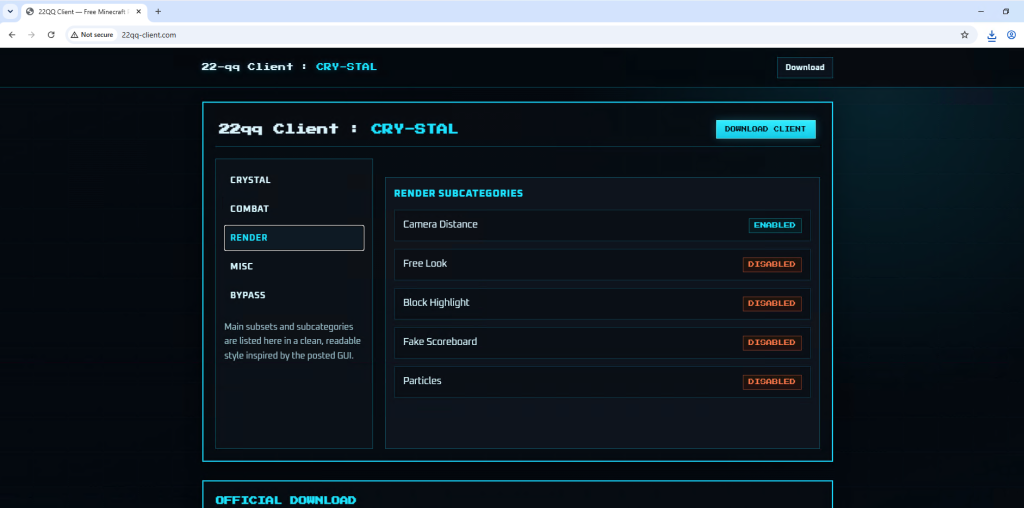
Figure 30: Preview of 22-qq.
They also offer an interactive preview of the client to give users an overview of its functionality. This website provides multiple download buttons, but all of them download the same JAR file, which is infected with WeedHack.
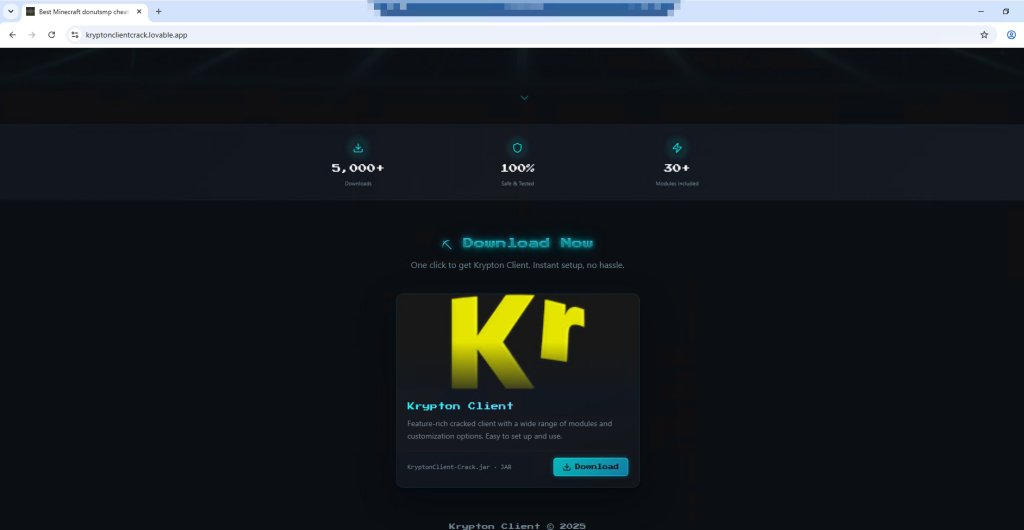
Example 9 – kryptonclientcrack.lovable.app
Krypton Client is a paid Minecraft tool for DonutSMP server, hosted on ‘kryptonclient.org’. This malicious counterpart claims to offer a cracked version of the tool.
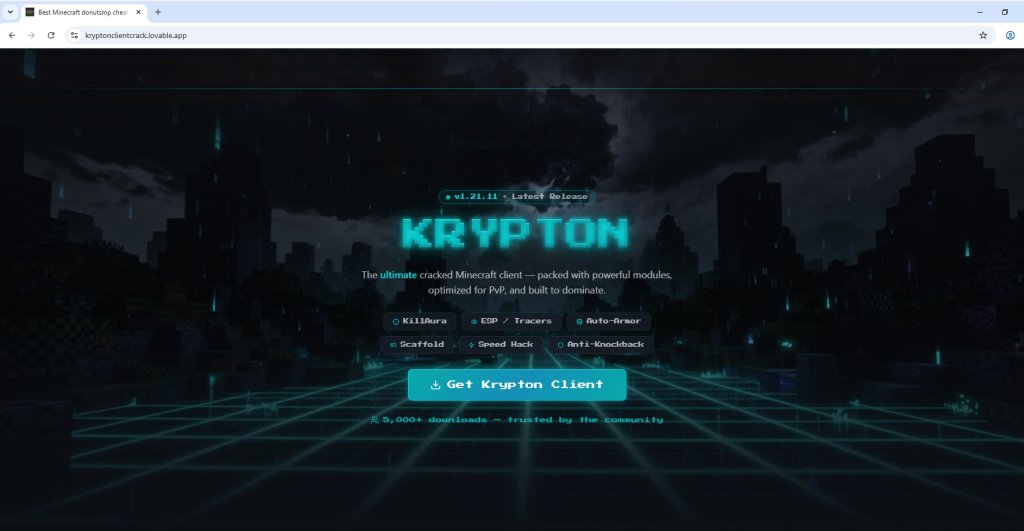
Figure 31: Krypton’s Landing Page
The attackers have used an AI-powered tool called ‘lovable.app’ that allows customers to build and launch functional web applications and websites, using natural language. Such toolsmake it easier for attackers to deploy new malicious domains on the fly.
Figure 32: Download Section
The website claims that the tool has been downloaded more than five thousand times and has been thoroughly tested for safety. They offer a single download option, which is infected with WeedHack.
Example 10 – File Hosting Services
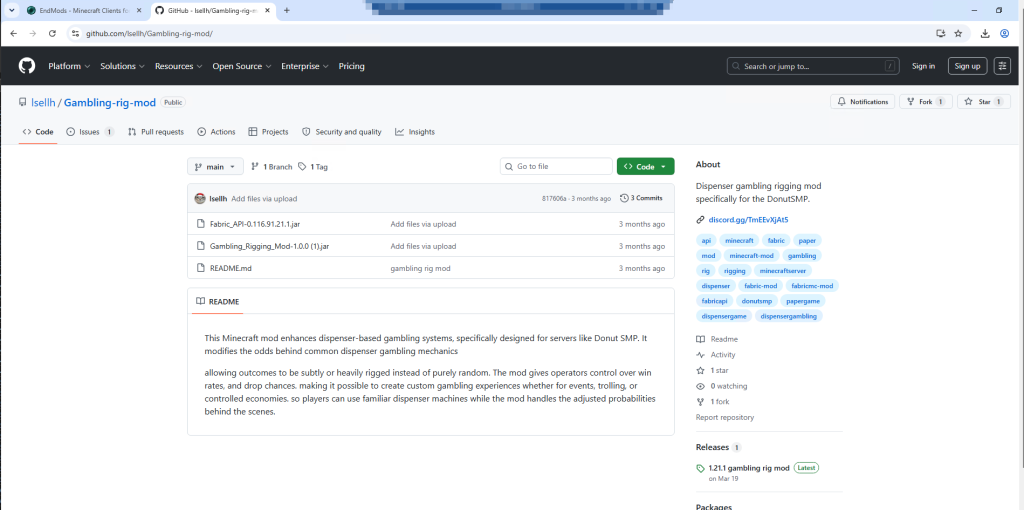
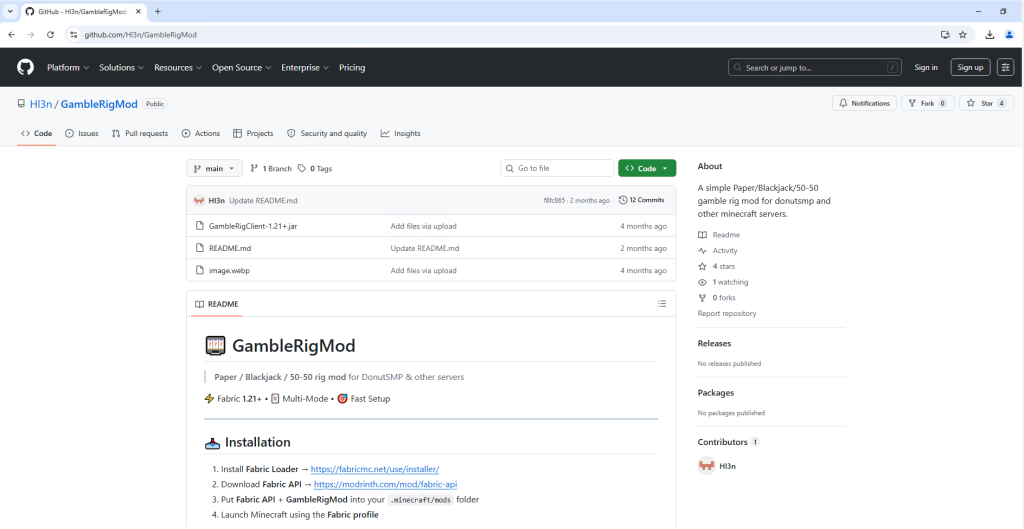
In the course of our investigation, we observed that multiple attackers were exploiting various file hosting services to spread malware.
Figure 33: GitHub Repository spreading WeedHack
Links to these websites are then distributed via different communication channels, such as Discord, Reddit and other online platforms.
Figure 34: GitHub Repository spreading WeedHack
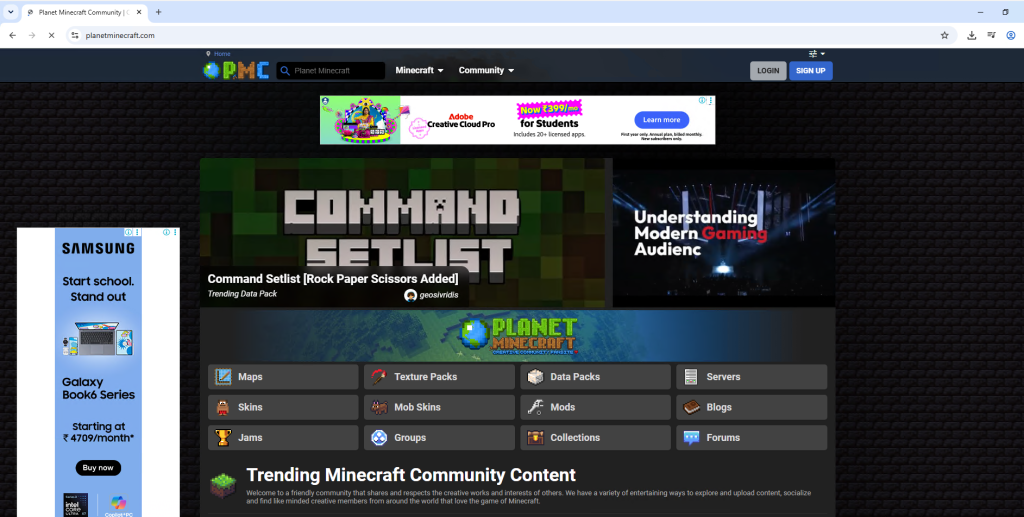
We also observed that threat actors extended their targeting beyond Minecraft clients, compromising various popular and independent community websites within the Minecraft ecosystem.
Figure 35: Planet Minecraft
At the time of this analysis, the following Planet Minecart links were spreading WeedHack malware.
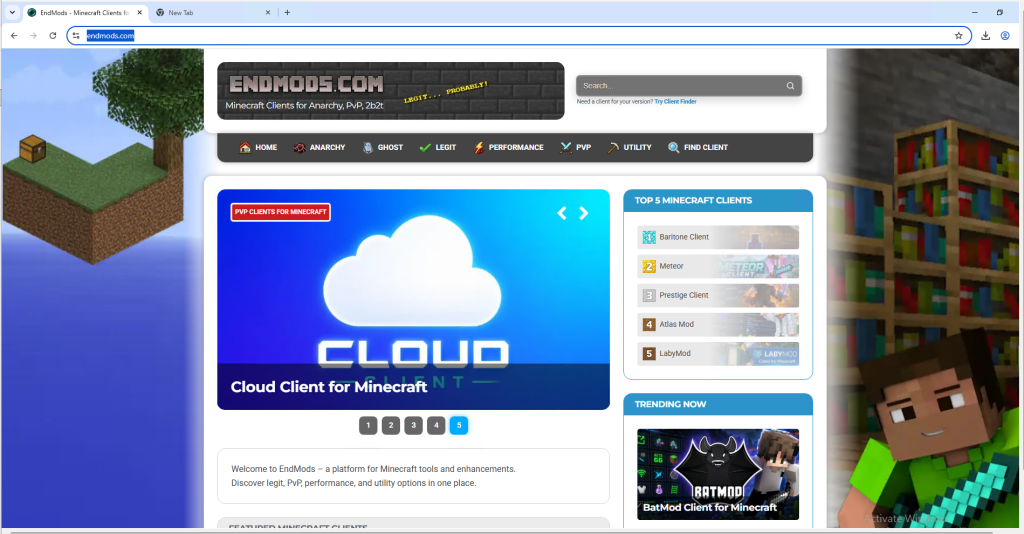
Similarly, we observed another community website, called EndMods was also targeted by WeedHack.
Figure 36: EndMods
The following link is still active, at the time of publication, and is still spreading the WeedHack malware. hxxps://endmods.com/wp-content/uploads/2026/02/KRYPTON-CLIENT1.0.zip
How To Protect Yourself Online
At McAfee Labs, we investigate threats across the digital landscape, and gamers are a frequent target. We’ve seen multiple malware-as-a-service campaigns similar to WeedHack use fake downloads, impersonated websites, malicious mods, and other lures to target gaming communities.
AI-powered tools can make it faster and easier for scammers to create convincing websites, imitate legitimate services, and launch new campaigns at scale. That makes it even more important to know what you’re downloading, and where it’s coming from.
Here are a few ways gamers can stay safer:
→ Stick to trusted sources. Download games, mods, clients, and other files from official developer websites or reputable mod platforms whenever possible. If you can’t verify the source, don’t download it.
→ Never turn off your security software for a download. Be suspicious of any mod, cheat, or client that tells you to disable your antivirus or other protections before installing it.
→ Scan files before opening them. Check downloaded mods, installers, and archives before running them — even if they came from a popular gaming community or website.
→ Be skeptical of offers that seem too good to be true. “Free” premium features, exclusive cheats, cracked software, or paid clients can be used as bait to convince gamers to download malware.
→ Check the URL before you download. Scammers can create lookalike domains and convincing copies of legitimate gaming sites. Small changes in a web address can be a sign you’re on an impersonation site.
→ Pay attention to security warnings. If your antivirus flags a download, don’t automatically assume it’s a false positive. Stop and investigate before allowing the file to run.
→ Keep your devices and software updated. Install updates for your operating system, browser, games, and security software to help protect against known vulnerabilities.
France's tax authority says attackers may have stolen the contents of messages exchanged with hundreds of taxpayers during the data raid it confirmed last week. In an update published this week, the General Directorate of Public Finances (DGFiP) said lists of messages exchanged with the authority were exposed. For around 250 people, the compromised information also included the messages themselves. Slightly more than 350,000 individuals were affected. The other exposed data included tax identification numbers, marital status, email and postal addresses, and phone numbers. Tax records also exposed details such as household composition, number of dependents, family quotient, reference tax income, and withholding rates. Beyond the personal and tax information, DGFiP said the other affected datasets contained information that was already publicly available. For approximately 250,000 businesses and professionals, the affected data was limited to company names and SIREN numbers, the unique nine-digit identifiers assigned to French businesses. The compromised cadastral data was limited to property addresses and dimensions, which DGFiP said were already publicly available. DGFiP said it was notifying affected taxpayers by email or post this week. DGFiP's latest FAQ pegs the total number of affected parties at roughly 600,000. That appears lower than the 678,000 "individuals and professionals" DGFiP said were affected last week, shortly after the alleged cybercriminal behind the attack, "ZeroBytes," claimed to have stolen data belonging to more than 2 million. The authority did not explain the discrepancy. The notifications warn that criminals could use the stolen details to make phishing attempts appear more convincing. DGFiP highlighted impersonation attempts, CEO fraud, and scams involving bogus bank advisers as possible follow-on attacks. The authority said it would never ask taxpayers to provide sensitive information such as PINs or identity documents by phone, text message, or email, and would request such material only through its secure portal. Separately, the tax authority disclosed a "technical vulnerability" in the government's Vacant Successions Portal (PSV), which is used to search for estates without known heirs. DGFiP suspended the service after discovering the flaw. It said there was no evidence so far that personal data had leaked, although its investigation into possible exposure of applicants' details continues. The incident adds to a torrid year for cybersecurity across France's public sector. In February, the finance ministry, which oversees DGFiP, 'fessed up to an intrusion into a database containing citizens' bank details that affected 1.2 million people. The Health Ministry confirmed in March that 15.8 million administrative files, 165,000 of which contained doctors' notes, were stolen during an attack on healthtech company Cegedim Santé. A month later, a 15-year-old allegedly carried out an attack on France Titres, which handles the country's identity documents. The attacker claimed the breach affected between 18 million and 19 million people. In June, France also began probing an alleged breach of Tchap, the government's encrypted messaging platform, after attackers claimed to have accessed 73,000 user accounts, 643,000 messages, and nearly 60,000 media files. ®
PWNED Welcome back to PWNED, the column where we make fun of those who are security self-owned, so hopefully you don’t do the same. This week, we have a story that’s hot off the presses about a company almost sabotaging its security by using AI for programming. Have a story about someone leaving a gaping hole in their network? Share it with us at pwned@sitpub.com. Anonymity is available upon request. Our tale of machine learning malfeasance comes courtesy of Sergiy Fitsak, managing director of Softjourn, a consulting and software development company. He reminds us that, when it comes to AI, don’t trust: verify. During the course of business, one engineer asked an AI agent to recommend a package that they needed for a common task. The agent came back with the name of a legitimate-sounding package, which was formatted like a familiar library. At many organizations, this would have been the end of the story. The developer would have taken the AI agent’s advice and downloaded and installed the recommended package. However, at Softjourn, the company has a policy which they actually followed: double-check any software recommendations made by AI to make sure they are legit. The developer skimmed the recommended package’s source code on GitHub and noticed that it had few downloads and had just been created a few days earlier. In other words, it was suspicious. According to Fitsak, attackers have found a way to exploit package names hallucinated by AI models. “The problem is that AI models sometimes invent package names that sound plausible but don't exist, a pattern security researchers have started calling 'slopsquatting,'” he told us. “Attackers have caught on and now register real packages under those exact invented names, betting that a developer under deadline pressure will install first and check later.” If Softjourn hadn’t been so careful, they could have installed a malware package. We don’t know the exact payload, but this malware package could have given crims a backdoor into their systems and the ability to steal data or wreak other havoc. “We caught it because we'd already built a habit of verifying download counts and reviewing source code on GitHub before installing anything an AI recommends, even when it looks routine,” Fitsak said. “It takes a few extra minutes. Skipping that step once is how a team ends up explaining a supply chain compromise instead of shipping a feature on time.” The lesson here is a very simple one: Don’t trust the package names that AI agents recommend. Have a human check the supply chain. And always have a human in the loop so they can take the time to stop and approve any outside code that comes into a project. ®
Attackers are using AI-generated exploitation scripts to break into internet-exposed Siemens S7 Series programmable logic controllers (PLCs) at water, manufacturing, energy, and other critical facilities, in what five US federal agencies on Wednesday called an “active threat.” In this latest round of intrusions against American critical infrastructure, the attackers use open source industrial automation libraries – specifically snap7.dll/python-snap7 – combined with AI coding assistants. Armed with the open source libraries and AI, the miscreants create custom tools that mimic operational technology (OT) monitoring software and provide read/write access to the PLC devices’ memory, configuration data, and ladder logic programs via the S7comm protocol. “This is not a theoretical risk – it is an active threat,” the feds warned. While the joint alert from the National Security Agency (NSA), Cybersecurity and Infrastructure Security Agency (CISA), Federal Bureau of Investigation (FBI), Department of Energy (DOE), and Environmental Protection Agency (EPA) doesn’t attribute the threats to a particular government or criminal group, Iranian cyber operatives are suspected of being behind recent attacks targeting PLCs at water and wastewater facilities across at least 12 states, including a cyberattack that disrupted more than 30 community water systems in Minnesota in late July. “This appears to be a continuation of the same suite of activity we suspect is affiliated with Iran targeting PLCs,” Cynthia Kaiser, Halcyon Ransomware Research Center SVP, told The Register. “Iran-affiliated actors and adversaries are actively targeting a wide swath of operational technology because these PLCs underpin essential health, safety, and critical infrastructure across society.” National security and infosec experts last week told The Register that while there is no indication that the water-system hackers used AI in their intrusions, they worried that attackers would soon add AI to their arsenals for attacks against critical infrastructure. Now, that threat appears to be here. “What the advisory highlights with regard to AI usage aligns with what we’ve expected: state-sponsored adversaries are leveraging AI across the board for discrete tasks, like code checks and scripting, to scale their operations and move faster,” Kaiser, a former FBI cyber division deputy assistant director, told us on Wednesday. “The advisory reflects the broader reality that threat actors are using AI to increase their efficiency.” Siemens S7 Series PLCs under fire According to the Wednesday security alert, the latest attacks specifically target internet-exposed Siemens S7 Series PLCs across critical manufacturing, energy, water and wastewater, chemical, food and agriculture, and commercial facilities – in other words: most of the critical industries providing goods and services that Americans use in their daily lives. “Additionally, Siemens S7 Series PLCs are used in other sectors, including the Defense Industrial Base (DIB), and could be targeted there as well,” the feds warned. The Register reached out to the agencies for additional information about the attacks but did not receive any response to our questions. Attackers use internet-scanning services such as Censys and ZoomEye to find exposed, “poorly protected” PLCs running outdated software or using default passwords – and now they’ve got an AI boost. “Threat actors are using AI assistance to generate exploitation scripts using publicly available information on these Siemens S7 Series PLCs for initial access, credential access, denial of service, and other objectives,” the agencies said. “If these PLCs are exposed to the Internet or insufficiently segmented, then threat actors can exploit various critical and high severity known vulnerabilities in these PLCs.” The use of AI also indicates “an evolution in threat actor capabilities,” reducing the need for advanced technical knowledge about OT, and allowing the attacker to more rapidly develop working industrial control system malware and attack chains, the alert says. “I think that the bigger issue is still how exposed OT environments are,” Benny Czarny, CEO and founder of critical infrastructure security firm Opswat, told The Register in an email. “AI makes it much easier for an attacker to create and modify scripts targeting PLCs, so the barrier to attacking industrial systems continues to fall. But for me the answer is not simply better AI detection.” To mitigate this threat, the feds say critical infrastructure owners and operators should first – immediately – inventory all Siemens S7 Series PLCs in their environment, apply security patches as needed, and make sure no PLCs are accessible from the internet. It's also worth checking for anomalous S7comm behavior, including connections from non-engineering workstations, unusual data block access patterns, or write operations outside change windows, the feds suggest. Sequential IP scanning on port 102 and repeated connection attempts with varying parameters can indicate attackers conducting reconnaissance, and Snap7.dll library usage outside approved workstations may also indicate the presence of intruders on the network – so be sure to use these and the rest of the detection strategies detailed in the government security advisory to hunt for anomalies that may indicate a compromise. In addition to looking for indicators of compromise relevant to these intrusions, Czarny said it's critical to reduce the OT attack surface. “If data only needs to leave an OT network, use a data diode,” he said. “There should be no network path back to the PLC for an attacker to exploit. Yes, AI makes this more urgent. But the real lesson for me is still the same: stop giving attackers a path to the critical system in the first place. And do not rely on antivirus and sandboxes to protect your data flow.” ®
Some ICE employees seemingly needed a reminder not to wear their Meta pervert glasses to work. Because only ICE can spy on ICE. Meta smart glasses are essentially “body-worn cameras,” as they can covertly record video and audio, David Venturella, Immigration and Customs Enforcement acting director, reportedly reminded agency employees on Tuesday. “The use of Meta Glasses or similar devices could unintentionally capture, record or transmit sensitive information, potentially compromising privacy and legal protections,” Venturella said in a Tuesday memo, according to a New York Times report. ICE policy [PDF] prohibits employees from using personal body-worn cameras in the workplace. As such, ICE employees’ personal Meta glasses - along with similar wearable devices capable of recording audio or video - are banned from use on the job. An ICE spokesperson told us that ICE, on occasion, reminds its employees of existing policies like this one, and that the agency takes privacy and operational security seriously. “This isn’t news - nothing has changed,” an ICE spokesperson said. “Personally owned body-worn cameras and unauthorized recording are prohibited, as they always have been.” The spokesperson declined to answer The Register’s questions including what prompted the reminder and whether more ICE agents have been bringing their Meta glasses to work. Meta said it had no comment on the story. While the ICE policy isn’t new, the outright ban on Meta’s so-called pervert glasses has been trending upward since DEF CON told hackers to leave any glasses equipped with recording capabilities at home. “Be sure to pack non-violating eyewear if you need them,” DEF CON organizers told conference attendees ahead of the annual August event. Several restaurants, pubs, and private clubs including Soho House and UK pub chain Wetherspoons have also prohibited - or strongly discouraged - patrons from wearing these types of smart glasses in their establishments, citing privacy concerns. Apart from CCTV cameras, “the general code that applies in our pubs, and most pubs, is that you can't film customers or employees without their permission,” a Wetherspoons spokesperson previously told The Register. “Meta glasses seem to breach this code, and common sense, by enabling surreptitious surveillance, so our instinct is to say turn off the cameras.” Some National Basketball Association arenas have also reportedly told fans to go put their glasses with recording capabilities inside their vehicles and not wear them at NBA games. Meanwhile, the UK's privacy watchdog in March began investigating Meta's smart glasses after reports that human contractors reviewing recordings from the devices were exposed to extremely private moments captured by unsuspecting users. ®
Surveillance tech company Flock has struggled with its public image for years, but the problem has become particularly acute in recent weeks. Its network of ALPRs has long attracted criticism over mass surveillance and the retention of location data belonging to motorists who are not suspected of any offense. Days after its CEO apologized for documented abuses of the company's system, The Register contacted the company's usually responsive media team about an online campaign calling for its automated license plate readers (ALPRs) to be vandalized on Halloween, and received an automated response. "Thanks for reaching out to Flock. Our media team is currently touching grass and taking a break," the email said. "Unlike our cameras, we can't work 24/7, so we'll get back to you when we've had a snack and regained the ability to form coherent sentences." The media handlers have a lot on their plate. More recently, reports of ICE agents accessing local police forces' Flock systems, and police officers using the technology to stalk former partners, have coincided with an increase in vandalism targeting the cameras. This week, US social media users began promoting Halloween 2026 as a night of action against Flock's ALPRs, which continue to attract negative coverage. X grouped posts about the so-called "De-Flock America" campaign into a dedicated trending story, which recorded more than 36,500 posts over two days. Similar calls have appeared on other major social platforms. Posts encourage participants to wear costumes, leave their smartphones at home, and disable nearby ALPRs while concealing their identities. The Reg asked Flock whether it was aware of the campaign and planned any countermeasures, but received only the automated response. Apologies and changes Last week, Flock CEO Garrett Langley apologized after a woman was stalked using his company's ALPR system. "It kills me that she went through that," he told CBS News in an interview, less than two weeks after The Washington Post published a story highlighting 46 cases involving US police officers abusing their access to Flock's system. Some allegedly involved officers abusing that power to stalk women. Langley gave the interview after Flock announced an array of changes, including reducing its standard data retention period from 30 days to seven. Customers may retain information for longer, however. A new "Evidence Mode" allows law enforcement to retain data beyond that seven-day period if it's required for ongoing casework. Flock also introduced controls allowing police agencies to restrict the types of searches that outside forces can run against their data. For example, City A might request permission to search data belonging to City B as part of an investigation. With the new feature, City B can restrict City A from making searches related to "immigration enforcement," a nod to ICE agents accessing police Flock systems without a dedicated contract. Flock will also require customers to enable its existing Audit Assistance feature by year-end. The tool detects unusual search activity and flags it for review. It is currently optional but will become mandatory by year-end, having been "associated with arrests of several law enforcement officers who allegedly abused the system." Flock said more than a third of customers have voluntarily opted in to Audit Assistance so far. Langley's interview appeared one day after People reported that Haines City police officer Christopher Goodson, 31, allegedly used Flock to search for his estranged wife's license plate 717 times. The searches took place between September 1, 2024, and June 30, 2026, according to a probable cause affidavit. Goodson was suspended with pay pending further investigation. ®
Comcast has folded its Wi-Fi-based intruder detection feature into Xfinity Shield, a repackaged bundle of physical and cybersecurity offerings. The US telco launched WiFi Motion in 2025. Xfinity Shield also includes cybersecurity protections built into the Xfinity Gateway router. The Wi-Fi sensing technology harnesses the radio waves beamed around a user's home to detect motion and potential intruders. "Using Xfinity Gateway intelligence, WiFi Motion detects changes in the home's radio frequency signal between the Xfinity Gateway and a Wi-Fi connected device, then sends instant notifications to customers through the Xfinity app when unexpected activity is detected," Comcast said. "It provides an added layer of awareness without recording video, capturing images or identifying individuals." The company does not consider this a home security service, merely a feature, because it is not managed by a dedicated security provider. Not every connected device can support the sensing feature. It uses the Xfinity Gateway, Xfinity Wi-Fi extenders, and up to three other compatible devices around the home. Crucially, these devices must be stationary. Think thermostats and home speakers, not smartphones or toothbrushes. Comcast advises users to position the router and extenders so that their signals pass through the areas where they want to detect motion. Open spaces such as hallways work best, and the company urges routine testing to ensure coverage is maintained. A setting in the Xfinity app allows WiFi Motion to ignore small pets. Animals weighing around 18 kg (40 pounds) or less will not trigger alerts when this setting is enabled, and the app warns this may also exclude small children. Customers can also adjust the sensitivity of the motion detection, choosing from low, medium, and high-sensitivity modes. Comcast says the latter works best in single-family, detached homes, whereas those who share walls with neighbors may want to choose the less-sensitive settings to avoid meaningless notifications. The telco also assured customers that WiFi Motion does not track individuals or their precise movements, and cannot identify specific people. It added that it "does not monitor motion and/or notifications generated by the service." The small print, which also accompanied the 2025 launch, suggests the service may not be quite as private as the marketing implies. Comcast states: "Subject to applicable law, Comcast may disclose information generated by your WiFi Motion to third parties without further notice to you in connection with any law enforcement investigation or proceeding, any dispute to which Comcast is a party, or pursuant to a court order or subpoena." Comcast does not specify what information may be disclosed or which "third parties," beyond law enforcement, might receive it. How it works Users can establish "sensing areas" by placing Wi-Fi devices around parts of the home with regular foot traffic. Comcast describes each sensing area as a long oval extending between two connected devices. Sensing areas can be established through walls separating rooms, although in two-storey or multi-storey homes, the telco encourages customers to avoid placing Wi-Fi equipment directly above or below each other. "Motion is detected within the sensing area when movement disrupts the wireless signals that travel between your Xfinity WiFi equipment and selected WiFi-connected devices within the sensing area," said Comcast. "Notifications will be sent only when motion disrupts the wireless signals in the sensing area between the WiFi equipment and your connected devices." Not a novel feature Comcast is the latest, but not the first, to harness Wi-Fi radio waves for motion detection. Companies such as Cognitive Systems and Origin Wireless have been developing other uses for wireless signals. Beyond domestic intruder alerts, the technology can measure occupancy and foot traffic in commercial buildings, helping operators reduce energy consumption and make better use of leased space. Wireless signals can also be used to support caregivers in places like assisted living centers. Wi-Fi transmissions can help track activity patterns and build a greater understanding of patients' fall risks, for example. Boffins began working on an official Wi-Fi sensing standard in 2020. Following a draft published by the IEEE in 2023, the 802.11bf standard was ratified in 2025. Major chipmakers including MediaTek, Qualcomm, and others are now working on embedding the standard into their Wi-Fi 7 chips and beyond. SaaS biz Plume, which provides smart home services to consumers and ISPs, has offered Wi-Fi sensing since 2020, around the time the 802.11bf working group began devising the standard. ®
The people-search tool ClarityCheck says its reverse image search service is “private and secure”—but it left a database containing more than 9 million image files exposed.
Flock’s surveillance cameras have already sparked outrage. WIRED reconstructed its next-generation AI system, already in use by some police, to confirm it goes much further than tracking license plates.
Researchers affiliated with the University of Massachusetts Amherst have found that you can get payments out of certain expired contactless credit cards, a process detailed at the recent USENIX Security 2026 conference. Raja Hasnain Anwar, Gerard DeCunha, and Muhammad Taqi Raza describe their findings in a paper titled "Zombie Cards Back Online: Reviving Expired Credit Cards for Contactless Payments." Credit cards, the authors explain in their paper, have expiration dates, but the way these dates get checked and enforced isn't consistent. Thus, they were able to devise an attack that makes expired contactless cards appear to be valid to payment terminals. The Europay, Mastercard, and Visa (EMV) payment process involves a payment card (card or digital wallet in a phone) and a point-of-sale terminal communicating over a direct NFC channel, linked to a payment network (eg, Visa, Mastercard, Discover) that links the merchant to a bank and a card issuer. The transaction process relies on the EMV contactless protocol, which the authors say is fragile because the transaction flow is selectively authenticated – some of the data gets sent between the card and terminal in plaintext and is only later linked to cryptographic verification using Offline Data Authentication (ODA) and issuer-verified cryptograms. This leaves an opening for unwanted intermediary interference, which requires only the necessary knowledge and mobile phones acting as NFC proxies. And indeed, the researchers demonstrated that they could meddle in a way that revives expired contactless payment cards to make purchases. "Our results show that Visa contactless transactions are susceptible to man-in-the-middle tampering due to a lack of effective integrity protection," the authors state in their paper. What's more, they say, the wallet Card Transaction Qualifiers settings steer transactions toward online authorization checks instead of rejecting the transaction immediately. That shifts the enforcement burden to the card issuer where behavior varies and may rely on the POS terminal evaluation rather than conducting a full security check during transaction authorization. The EMV protocol is implemented in EMV kernels. American Express, Discover, Mastercard, and Visa each run their own kernels. Visa's kernel, the authors observe, is a bit more permissive than others. It doesn't bind the expiration date cryptographically. The Visa kernel allows the POS terminal to evaluate processing restrictions based on the Application Expiration Date, the authors explain. But the card issuer relies on an expiration date from a different data field in the online authorization request. These two dates should be cryptographically bound to each other, but they're not. This gap allowed the researchers to devise an attack using NFC proxy devices, as demonstrated in this video. Mastercard, American Express, and Discover configurations resisted the attack; Visa contactless cards did not. "The card gives the checkout terminal an expiry date to read," the authors explain in a summary of their work. "In the Visa contactless configuration we tested, that particular date was not covered by the card’s digital signature. Someone positioned between the card and terminal could therefore alter what the terminal sees while leaving the card’s normal security checks looking valid." Since Visa's approach kicks the authentication handling down the road to the bank involved, the attack's success depended on how the bank handled the transaction. Some of the banks tested succumbed, while others didn't. Raja Hasnain Anwar, lead author and a doctoral candidate at UMass Amherst, told The Register in an email that the reason Visa cards are affected by this attack has to do with the way different card manufacturers have different protocols for handling contactless transactions. "These protocols have most messages in common to ensure global acceptance on different types of terminals; however, each manufacturer has their design choices to make for additional mechanisms," he said. "Often, these design choices end up in a compromise to ensure backward compatibility with old POS terminals, and also to meet their performance criteria. "The security checks are in place, however, only a subset of these security mechanisms are invoked to make the transaction faster and smoother. There are other research studies that have shown issues with Mastercards as well. It comes down to the trade-off between performance and security, and often leaves room for this kind of vulnerability. No design is inherently bad." The authors say that they notified Visa of their findings in May 2025 and followed up in December 2025. Neither Visa nor the banks notified have confirmed that they've mitigated the expiration issue. Visa did not immediately respond to a request for comment. Let the dumpster dive for discarded cards begin. ®
The ChatGPT maker says its upcoming Astra model may have reached “critical” cyber capabilities, prompting it to halt a significant number of training runs while it tightens internal safeguards.
CISA says attackers are exploiting a critical 2025 vulnerability in Ray, the widely used open source framework for scaling Python and machine-learning workloads. Tracked as CVE-2025-62593 and rated 9.4 under CVSS v4, the bug was first disclosed in November 2025. It allows an attacker to use Firefox or Safari to achieve remote code execution (RCE) on a vulnerable Ray system. The open source distributed computing framework is used and supported by major tech companies, including Amazon, Apple, and OpenAI. Vulnerable Ray versions try to identify and block browser requests by checking whether the User-Agent header begins with "Mozilla." Firefox and Safari, however, allow scripts using the Fetch API to modify that header. A developer running Ray could trigger the exploit simply by visiting a dodgy website or receiving a malicious ad in an affected browser. The attacker can then use DNS rebinding to reach the local Ray service. "This vulnerability impacts developers running development/testing environments with Ray," the project's developers explained. "If they fall victim to a phishing attack, or are served a malicious ad, they can be exploited, and arbitrary shell code can be executed on their developer machine. "This attack can also be leveraged to attack network-adjacent instances of Ray by leveraging the browser as a confused deputy intermediary to attack Ray instances running inside a private corporate network." Ray 2.52.0 fixes the flaw. CISA gave US federal civilian executive branch agencies three days to remediate it, rather than the standard 14. CISA did not explain the urgency, and marked the catalog's "known to be used in ransomware campaigns" field as "unknown." However, Binding Operational Directive 26-04 allows the agency to impose a three-day remediation window on vulnerabilities it considers especially risky. Ray is an open source framework that helps developers scale Python and machine-learning workloads from a local environment to a cluster with minimal code changes. Now managed by the Linux Foundation's PyTorch Foundation, the project started at UC Berkeley and was commercialized via Anyscale, the startup founded by Ray's developers in 2019. According to Anyscale's figures as of October 2025, Ray had more than 237 million total downloads, and 7 million per week – representing a near-tenfold growth year-on-year. Product analysis site NextSprints estimates that Ray has 1 million monthly active users and is used by 60 percent of Fortune 500 companies. The security advisory blamed Ray's longstanding lack of authentication on critical endpoints for making the attack possible. Ray's security model historically assumed that clusters would run inside a trusted, isolated network, leaving authentication and access control to the surrounding infrastructure. Ray 2.52.0 introduced optional token-based authentication as an additional defense against unauthorized access, although it remains disabled by default. The project continues to recommend deploying clusters inside a controlled network rather than treating authentication as a substitute for isolation. ®
Apple has released a batch of vulnerability fixes for iPhones, iPads, and Macs, including an image-processing flaw that experts say has the hallmarks of a spyware delivery vector. The most notable patch is for CVE-2026-65346, a defect in the ImageIO framework Apple uses to parse image files. Discovered and reported by Nik Tsytsarkin of Meta's Red Team X, CVE-2026-65346 is an integer-overflow bug that could allow arbitrary code execution when an affected device processes an image. The bug affects macOS Tahoe, iPhone 11 and later, and supported iPad Pro, iPad Air, iPad, and iPad mini models. Apple said it addressed the flaw with improved input validation, and experts urged users to install the August 17 updates as soon as possible. Adam Boynton, senior enterprise strategy manager at Jamf, said: "iOS 26.6.1's standout fix is CVE-2026-65346, an integer overflow in ImageIO. This is Apple's system framework for decoding images and exploiting it could allow an attacker to write memory where they shouldn't and gain code execution. "Image parsing flaws have historically been the delivery mechanism for zero-click spyware targeting executives and other high-value individuals." Several of the most damaging spyware campaigns in recent years have used zero-click smartphone exploits triggered by malicious files delivered through messaging services. Operation Triangulation, which Russia's FSB claimed was the work of the NSA, used such tactics. So did FORCEDENTRY, an exploit used to deliver NSO Group's Pegasus spyware through Apple's image-processing software. The Register asked Apple if it was aware of CVE-2026-65346 being used in spyware campaigns, but it did not immediately respond. Most of the other vulnerabilities in the iOS 26.6.1 update are, surprise, surprise, in WebKit – arguably Apple's most pummeled framework. Boynton also highlighted CVE-2026-65329 as one of the batch's more concerning flaws. Affecting iPhone 11 and later, the vulnerability lies in Apple's Telephony component and could allow an attacker to intercept network traffic. Apple said an attacker would need a privileged network position to exploit the bug, bypass IPsec authentication, and intercept traffic. Boynton described the flaw as "rarer and more serious for organisations relying on IPSec-based connectivity." Cupertino put it down to an authentication issue that it fixed with improved state management. The iGiant also released iOS 18.7.10 and iPadOS 18.7.10 for older devices that cannot run iOS 26, including the iPhone XS, XS Max, and XR. Monday's releases extended to visionOS 26.6.1 as well, although Apple's security updates page still lists the details as "coming soon." ®
One advertisement featured a pornographic video with a deepfake closely resembling a prominent US politician. Apple removed the app from the App Store after an inquiry from WIRED.

 Login
Login