Spain’s data protection agency (AEPD) has reported the country’s first-ever personal data breach caused by the actions of an autonomous AI agent. Francisco Pérez Bes, president and deputy of the AEPD, said in a Monday blog post that an individual deployed an AI agent that used a “known large language model (LLM)” to carry out the attack on an organization. The agent scanned “generic files” before accessing the organization’s system, then ran vulnerability scans to find flaws that would give it read/write access to files containing personal data and invoices. Pérez Bes did not name the LLM used to support the attack, but said whoever was behind it used the agent to “successfully chain together different phases of the attack.” This demonstrates that AI-supported attacks are no longer theoretical, he added, and called on organizations to embrace defense tools that are capable of keeping pace with the speed at which agentic attacks can be executed. “Human supervision remains essential, but it must be supported by detection, containment, and response mechanisms capable of operating quickly enough,” said Pérez Bes (machine-translated). “The arrival of AI agents in the offensive arena should prompt an immediate review of security and data protection models. “Data protection officers, managers, and delegates must prepare for a scenario in which the speed of attacks will increase, but in which the same fundamentals will continue to be crucial: Understanding the processing activities, minimizing data, limiting access, correcting vulnerabilities, controlling suppliers, and being prepared to respond.” The Register asked AEPD for more information. Spain’s first AI agent attack comes as the AEPD recently recorded its busiest year for data protection complaints. According to its most recent annual report, covering 2025, the agency received 30,931 complaints – the most in its history – representing a 64 percent increase compared to the year before. And although Spain is only now getting its first taste of a security mishap caused by a naughty agent, cases involving the foremost US AI houses are already heavily documented. OpenAI’s claim in July that its agents escaped a sandbox and started attacking Hugging Face kickstarted something of a battle between it and rival Anthropic over whose agents could take the most liberties with their security. Both companies have reported several instances of their agents going rogue, escaping "secure" environments and going walkies across the internet to attack unwitting organizations. OpenAI has been circumspect about the true scale of its rogue agents’ damage, as third-party reporting showed more websites than it was letting on were taken over. Similarly, Anthropic has said that its AI agents had, in four cases now, accessed third-party systems in attacks that, if carried out by a human, could see them convicted under computer laws. ®
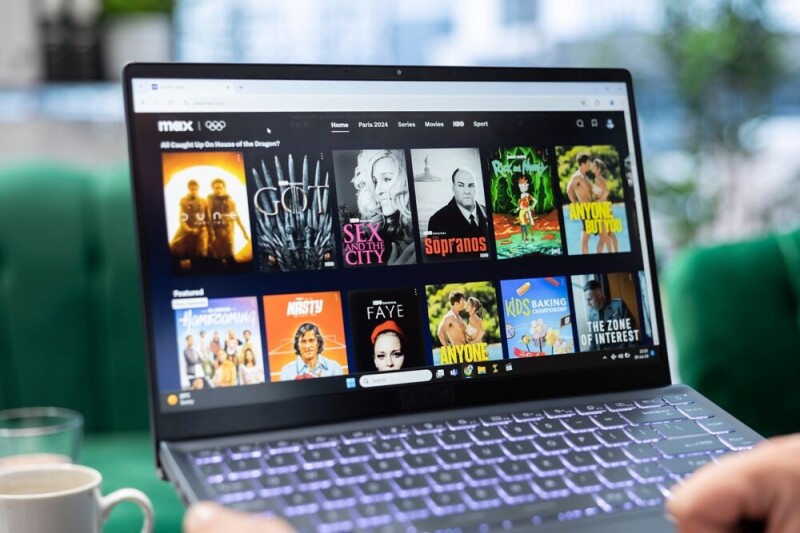
Someone compromised the official HBO Max Reddit account and used it to push more than 100 malicious ads serving up ClickFix attacks targeting both Windows and macOS devices with information-stealing malware. A Reddit user uncovered the infostealer ads on September 6, noting that the ad showed u/hbomax as the author — this is the verified HBO Max account — and advertised a macOS app for HBO Max. The streaming service does not offer a native client for the Mac. Anyone who clicked on the malicious ad would then be taken to a “somewhat-legitimate” looking landing page (hbomaxx[.]us) that includes a join/download button. Clicking the button produced instructions telling the user to copy and paste a command into Terminal on macOS. The Reddit security sleuth described that as “the classic infostealer/clickfix paste this command to download,” noting that they tested all of this in a sandboxed environment, and didn’t actually run the executable on their machine. “My guess is that the Reddit account is compromised,” they concluded. Three days later, Reddit paused the infostealer-dropping ads, and an admin said the social media platform’s safety and security teams were investigating what happened. HBO Max’s parent company Warner Bros. Discovery didn’t immediately respond to The Register’s inquiries about the account takeover - including who hijacked the streaming service’s Reddit account and how they did it. Maybe someone who didn’t like the House of the Dragon season 3 finale? We will update this story if and when we hear back. Researchers at Hudson Rock and ADAMnetworks analyzed the ads, and in a couple of reports said the HBO Max account hijacking was part of a “massive 48-hour malvertising blitz” that pushed 108 distinct ads using multiple software lures. They named the campaign PasteSwitch, and said it serves up targeted malware aimed at victims’ operating system - either macOS or Windows. The payloads include infostealers, malware loaders, cryptocurrency clippers, and fake cryptocurrency wallet applications. The cryptocurrency clippers - PasteSwitch delivers either AnimateClipper or ZigClipper - also provide blockchain-based command-and-control fallbacks for the attackers. They use Binance Smart Chain (BSC) contracts to dynamically fetch whatever C2 domain the crooks are using at any given time. “Between March and July 2026, researchers observed 36 mainnet changes executed by the same attacker controller address,” Hudson Rock said. “Because the C2 domain is hosted directly on the blockchain, the infrastructure demonstrates dynamic resilience, allowing the threat actors to easily rotate burned domains.” In addition to HBO Max, the attackers used developer-tool, disk-cleaner, and AI-themed lures, including fake OpenAI Codex ads, which crims have previously used to push Mac malware. Of the 108 ads, 46 used an HBO Max lure, directing app seekers to either hbomaxx[.]app or hbomax-macos[.]com. Another 36 tried to trick prospective victims via an OpenAI Codex theme (with a codex-craft[.]com) landing page. Of the rest: 15 purported to be a macOS disk utility (apple.clean-disk-guide[.]com) and 11 used other developer tools as lures (code-desktop[.]com). “The campaign proves once again why trusted distribution channels are becoming prime targets for infostealer delivery,” Hudson Rock co-founder and CTO Alon Gal said in a LinkedIn post. It also shows that miscreants continue to make heavy use of ClickFix attacks, so there’s little sign this social engineering method is going away anytime soon.®
A Ukrainian lawyer who wound up coding malware for the Conti ransomware gang has been sentenced to four years in a US prison. Oleksii Oleksiyovych Lytvynenko, 44, pleaded guilty in June to conspiracy to commit wire fraud over his role in Conti, the Russia-linked ransomware operation associated with more than 1,000 victims and at least $150 million in ransom payments. Lytvynenko took an unusual route into the ransomware business. The Ukrainian national, who later lived in Cork, Ireland, trained as a lawyer before joining Conti as an intruder and developer. According to his plea agreement [PDF], Lytvynenko operated under the handle "henry" and joined a team run by another Conti conspirator known as "silver" or "buza." He was recruited to help with coding and directed to work on a malware loader – software designed to get other malicious code running on a victim's machine. Prosecutors said his Google account showed he had also been doing some homework. Investigators found books and videos about malware and hacking alongside Conti malware, ransom notes, and stolen victim data. Prosecutors said he also used Google and ZoomInfo to research potential targets. Lytvynenko wasn't confined to writing code, according to the filing. Evidence from his online accounts showed that he possessed data stolen from eight US victims and four overseas, with the eight American victims reporting more than $1.5 million in losses. Court documents identify several Bitcoin transfers tied to his Conti work, including 0.4 BTC worth $25,042 that prosecutors traced back to one of his victims. He has been ordered to forfeit the same amount. Conti disbanded in 2022 after its internal chats and source code were leaked following the gang's public support for Russia's invasion of Ukraine. Lytvynenko apparently didn't take that as his cue to find another line of work. When Gardaí turned up at his County Cork home in July 2023, they said they found his laptop open, Cobalt Strike running and a Rocket.Chat session connected over Tor. Prosecutors said evidence recovered from the machine showed that his involvement in ransomware activity had continued after Conti disbanded. Lytvynenko was extradited from Ireland to the US in October 2025. The Justice Department says Conti attacked organizations across 47 US states, the District of Columbia, Puerto Rico, and 31 foreign countries between 2020 and 2022. By January 2022, the FBI estimated that victim payouts associated with Conti exceeded $150 million. Lytvynenko will now have four years to contemplate a career change. ®
Cybercriminals have reeled in password hashes and corresponding salts belonging to users of popular fishing app Fishbrain, opening the door to cracking attempts. Fishbrain AB, which says its eponymous app serves more than 20 million anglers, disclosed the August 19 breach to the California Attorney General's Office this week. The unknown perpetrators helped themselves to a trawl of user data, including names, dates of birth, email addresses, phone numbers, Fishbrain usernames, country information, password hashes, and salts. "Fishbrain passwords were not stored in plaintext; however, Fishbrain has determined that the compromised password hashes for some users may be susceptible to being decoded," the company said in its disclosure [PDF]. It added: "If you use your Fishbrain password for any other online accounts, you should promptly update those passwords and any associated security questions or answers. "You should also take other appropriate steps to protect any online accounts that use the same username or email address and password combination. We recommend using a strong, unique password for each of your accounts." With the hashes and salts in hand, attackers can make password guesses using their own hardware until they potentially recover the original credentials. Whether those attempts succeed depends on the strength of each password and the hashing algorithm Fishbrain used, which the company did not disclose. Fishbrain did not comment on the scale of the breach or how many of its claimed 20 million-plus users were affected. The Register asked Fishbrain for more information. After discovering the intrusion and conducting an initial forensic investigation, Fishbrain patched the vulnerability and reset every user's password. Customers must create a new one the next time they log in. Fishbrain also said it "restricted access to the affected environment," strengthened its security controls, and initiated "a broader review of our data security measures" while the investigation continues. Fisherfolk should also keep an eye out for phisherfolk using the stolen personal data to bait follow-on attacks. ®
International law enforcement agencies, working with CrowdStrike and Shadowserver Foundation, have disrupted Sality, a 23-year-old peer-to-peer botnet used to deliver malware to more than 15,000 machines worldwide. The botnet has operated since 2003 and distributed all types of malicious code to victims, spanning credential theft, spam distribution, proxy services, network exploitation, and distributed denial-of-service (DDoS) attacks. For the past eight years, Sality’s primary payload has been EggJagger, a tool that monitors clipboards for cryptocurrency wallet addresses, then silently replaces them with attacker-controlled addresses. When a victim copies a bitcoin or ethereum address to make a payment, the malware redirects funds into the criminals’ wallets. CrowdStrike estimates Sality's operator stole at least $150,000 in cryptocurrency using EggJagger alone. On Monday, CrowdStrike's Counter Adversary Operations team, working with international law enforcement agencies and industry partners, disrupted Sality by executing a peer-to-peer sinkhole operation. This operation isolated infected machines, which broke the criminal operator’s ability to communicate with devices on its network. Once isolated, the bots can no longer receive payload download instructions or direct payload transfers, effectively breaking the botnet. “In practice, the operation targeted the data structure at the heart of every bot's network awareness: its peer list,” CrowdStrike Counter Adversary Operations team said in a technical writeup about the takedown. Each Sality bot maintains a list of known super peers – publicly reachable infected machines that form the backbone of the P2P network. Every 40 minutes, the bots check to see if their peers are still online. Peers that fail to respond are purged from the network. The counterattack took advantage of this by removing legitimate super peers in each bot’s peer list, continually isolating more infected machines in the network, and inserting purpose-built sinkhole entries into peer lists. That approach gave police and cyber operatives visibility into the operation’s progress and helped them notify victims. In addition to the sinkhole operation, the US Justice Department, FBI, and Department of Defense Office of Inspector General’s Defense Criminal Investigative Service seized Sality-linked domains in the US. Meanwhile, international law enforcement in Bulgaria, Hungary, and Romania took action against additional Sality-linked domains hosted in Europe. Meanwhile, the Shadowserver Foundation is working with internet service providers and Computer Security Incident Response Teams (CSIRTs) to identify infections and aid in victim notification and remediation.®
Two major healthcare businesses, Boston Scientific and McKesson, disclosed more details over the weekend about separate cyberattacks that disrupted global operations and resulted in stolen patient data, respectively. Medical-device maker Boston Scientific, whose IT systems were hacked by unknown intruders last week, said the cyberattack remains ongoing. It also noted that pacemakers and other heart devices implanted after the August 25 breach cannot provide remote monitoring and data transmission as intended. “New remote monitoring communicators cannot be activated, thus available device data will NOT be transmitted to remote patient management systems until the communicator can be activated,” the medtech firm said in a late Friday update. This applies to all new cardiac rhythm management implants other than insertable cardiac monitors (ICM). ICM devices must be activated using the Boston Scientific Clinic Assistant app to ensure the device correctly records patients’ heart rhythms, the company added. Because of the cyberattack, “new ICMs are unable to pair to the patient remote monitoring mobile phone, therefore available episode data recorded by the ICM will NOT be transmitted to the remote monitoring system until the ICM can be paired to the patient mobile app,” according to the update. The devices will still record any episodes, and patients can transmit these to the remote monitoring system by in-person transmission via the Clinic Assistant app. This is done by selecting the “interrogate” button, according to the company. Once its IT systems are back up and running, and the heart devices can pair with home monitoring equipment, they will again transmit recorded data to the remote systems. However, the company does not have a timeline for full restoration. “We are currently working on restoring affected functions and systems access,” Boston Scientific said on Saturday. The digital intrusion also affected the firm’s manufacturing, shipping, and ordering, it noted. “We are expeditiously working towards partial restoration for the shipping of some products this week,” according to a Sunday update. “Once we can demonstrate the restoration is fully operable, we anticipate ordering and shipping will ramp up to full capacity.” Boston Scientific has hired CrowdStrike to assist with the investigation and restoration efforts, and said the attack did not affect its cloud-based systems and apps - just “certain on-premise systems” - and added that it has seen no indication of unauthorized IT activity since August 25. The firm has repeatedly declined to answer The Register’s questions about the compromise, including whether it was a ransomware infection and which criminal crew is responsible. McKesson confirms breach as ShinyHunters claims responsibility Meanwhile, in another cybersecurity incident that has been very publicly claimed by the criminal perpetrator: pharmaceutical and medical supply giant McKesson over the weekend confirmed an intrusion after ShinyHunters on Friday told The Register it broke into the company’s Snowflake and Salesforce instances and stole millions of patients’ data. “Based on our investigation thus far, including assessments by leading cybersecurity industry experts supporting our response, we’ve confirmed that the unauthorized access to certain third-party applications and the exfiltration of certain data was associated with a subset of customers within our Oncology & Multispecialty and Medical-Surgical business units,” Francisco Fraga, McKesson executive VP, chief information officer and chief technology officer, said in a Saturday statement. The medical firm did not immediately respond to The Register’s questions, including how many patients were affected and what “certain data” was stolen. McKesson supports about 3,300 oncology providers in 29 states, according to its website. Fraga’s statement noted that distribution centers remain operational and McKesson continues to ship products. The firm has “reasonable assurance” that the digital intruders have been kicked out of the third-party environments and aren’t lurking around McKesson’s systems, he added. A ShinyHunters spokesperson told us that the notorious extortion group compromised more than 284 million records of patient data, and demanded McKesson pay $55.2 million or else they would leak the stolen data. However, as Have I Been Pwned boss Troy Hunt recently reminded everyone: Don’t confuse criminals’ claims with gospel truth, and “take headline numbers with a grain of salt unless you're confident in the processes of those making the claims." This was after Hunt’s HIBP service reported 12.9 million individuals affected by retailer Carhartt’s alleged breach. This number was around half of what ShinyHunters claimed when they leaked the company’s data earlier this month. The McKesson records, according to the ShinyHunters spokesperson, include patients’ full names, home and email addresses, phone numbers, dates of birth, Social Security numbers, appointment dates and notes, and sensitive illness details including cancer locations on people’s bodies. The group also claims to have swiped emails containing private information from doctors to patients. The spokesperson told us they accessed the company’s Snowflake and Salesforce instances by voice phishing “multiple employees.” This is a tried-and-true method popularized by the data-theft-and-extortion gang, which has victimized other medical providers in recent months. These include pacemaker manufacturer Medtronic in April, and cancer diagnostics business Exact Sciences in July. ®
CRPx0, a cybercrime crew that has rapidly evolved from a scam service to a ClickFix-delivered ransomware and crypto-theft business over the summer, claims its victim count jumped from fewer than 10 in June to 48 organizations on its clear-web leak site at the time of publication. Keep in mind: criminals aren’t always the most trustworthy bunch, so take their claims with a healthy dose of salt. Still, the ransomware biz’s expanding operations, unique payload, and white-label hacking service make it one to watch, and a few recent analyses provide tips for defenders to keep the crooks out of their IT environments. Rakesh Krishnan, a threat-intel analyst who writes about cybercrime investigations on TheRavenFile blog, was one of the first researchers to publish details about CRPx0 at the beginning of the month, including previously unreleased malware samples. The operators offer a hacking service, providing “complete database extraction” from victim organizations and “optional public leak coordination upon request.” This platform also advertises full network compromise, “from initial access, through lateral movement, to full domain compromise,” plus persistent access across the victim’s infrastructure. A second, white-label, ransomware-as-a-service platform makes it really easy for wannabe crooks to get into the data-theft and extortion biz. CRPx0 builds, deploys, and configures everything from command-and-control infrastructure to the negotiation panel and malware, allowing its criminal customers to bring their own brand identity to their operations - and originally offered these services for a $10,000 one-time fee. At first, the operators promised to allow affiliates to keep 100 percent of their profits - this is unheard of in ransomware-as-a-service operations. This has since shifted to a 70-30 model, with affiliates receiving 70 percent of the extortion payments (after a one-time $333 enrollment fee) and the remaining 30 percent going to the operators. CRPx0 rules prohibit affiliates from infecting Commonwealth of Independent States (CIS) member countries and organizations based in these countries. This is a pretty common rule among Russia-based ransomware operations, and in an earlier interview with The Register, Recorded Future threat intelligence analyst Allan Liska called it the “first rule of ransomware club: you don't attack organizations in the Commonwealth of Independent States.” The gang also prefers Monero (XMR) payments, rather than Bitcoin (BTC). ClickFix ransomware delivery Affiliates can also customize their own ClickFix payload delivery. The operators offer two lures, a fake Windows Update and a fake Google reCAPTCHA, to socially engineer victims into executing the initial command, according to a Ransom-ISAC research team analysis published on Thursday. The Windows lure tricks a victim into pasting a PowerShell command into the Run dialog. This drops a DLL stager chain and ultimately deploys Python-based ransomware. The macOS lure, however, uses a curl|bash command that downloads portable Python and the ransomware directly. The lures and the rest of CRPx0’s malware run on Windows and macOS, and according to the researchers, there are four payload formats: “the two HTML lures plus a standalone DLL and a standalone EXE, both of which discard the social engineering step entirely.” All four deliver the same ransomware: a 1,769-line Python script that steals high-value files before encrypting them with AES-128-CBC (Fernet). The malware moves laterally via WMI/schtasks, and delivers a ransom note that gives victims a 48-hour deadline to pay up - or see their files leaked. 'Complete, professional offensive control center' On August 23, the CRPx0 operators published a v3.0 update note on the group’s clearnet leak site, promising “a complete, professional offensive control center for managing compromised remote machines from a single web dashboard.” It provides crims with tools to steal valuable files, credentials, and wallet recovery phrases and keys, while “watching stolen cryptocurrency wallet addresses flow in.” This service also provides scripts to run remote commands, and the control panel sets up “automated attack reactions that fire on their own when something valuable happens on a target.” As the operators note: “Everything is built to be operated by a human with no technical background: point-and-click panels, plain-language rules, and clear status indicators. The underlying attack engine is hidden behind a clean, dark-themed interface.” CRPx0’s hacking and ransomware services, enabling everything from crypto theft to encryptors and full network compromise, “could be a strategic move to attract new recruits, or a scam targeting a range of affiliate hopefuls seeking cybercrime services,” according to an August 12 analysis from Jade Brown, a threat researcher at Bitdefender. What defenders should do Still, “other threat actors may attempt to adopt similar techniques,” she warns. “This is a reminder that organizations should balance detection capabilities in preparation for different types of compromises, configuring technologies to detect and block malicious behavior that aligns with both crypto theft and encryption processes.” The Ransomware-ISAC team says defenders should prioritize five actions, in this order. “The first three cost nothing and blunt the entire ClickFix class of attack, not just CRPx0,” they note. First: remove the Run dialog for standard users - this will entirely block the Windows path. For macOS users: restrict Terminal via MDM for non-technical staff. Next, the threat-intel analysts advise defenders to alert on RunMRU writes containing powershell, curl or long base64 strings. “Every ClickFix victim leaves a trace at HKCU\Software\Microsoft\Windows\CurrentVersion\Explorer\RunMRU,” they wrote. “This is the highest-fidelity ClickFix detection available and it is trivial to deploy.” The team also lists adversary network indicators and suggests blocking those. Make sure to hunt for indicators and malicious behavior in the pre-encryption exfiltration window. “Data leaves before a single file is encrypted, so .crpx0 extensions and ransom notes are a post-mortem indicator, not a warning,” according to the Ransomware-ISAC. Finally, confirm backups are unreachable from the account that would be compromised, and treat anything reachable with the victim's credentials as destroyed. ®
The US government disclosed that crims targeted more than 100 internet-exposed water systems during July cyberattacks. That's the first time the feds have put a number on the digital intrusions, but they have yet to attribute the campaign, widely suspected to be linked to Iran, to a particular group. “In July 2026, CISA observed malicious cyber activity targeting over 100 internet-exposed systems in the Water and Wastewater Systems (WWS) Sector, commonly via programmable logic controllers (PLCs) connected directly to a cellular modem,” America’s lead cyber-defense agency said, adding that connecting PLCs directly to the internet “can create significant security risks.” Suspected Iranian attackers targeted water and wastewater facilities across at least a dozen states in July, including internet-exposed PLCs. While neither federal nor state officials have identified all 12, we know that the cyberattacks occurred at mostly small, rural utilities in Minnesota, Michigan, Georgia, South Dakota, and New Jersey. “This is very serious. What stands out isn't any single incident. It's the scale,” Matt Hartman, chief strategy officer at the Merlin Group and CISA’s former acting head of cyber, told The Register. “More than 100 water systems with internet-exposed assets were hit in a single month, which points to a systemic vulnerability across the sector, not a run of isolated, unlucky targets,” Hartman said. “Much of this infrastructure runs on operational technology that was built for closed, physical environments. It was never designed with the assumption that it would be reachable from the open internet.” John Gallagher, VP at Viakoo, an OT and IoT cybersecurity provider, told us that while 100 systems represent a small fraction - only about 0.5 percent - of water utilities in the US, the “real threat is that these are test runs for a larger-scale attack.” While the 100-plus water incidents occurred in July, just last week five US federal agencies warned that attackers are using AI-generated exploitation scripts to break into internet-exposed Siemens S7 Series PLCs at water, manufacturing, energy, and other critical facilities. “This appears to be a continuation of the same suite of activity we suspect is affiliated with Iran targeting PLCs,” Halcyon Ransomware Research Center SVP Cynthia Kaiser told The Register a week ago. “Iran-affiliated actors and adversaries are actively targeting a wide swath of operational technology because these PLCs underpin essential health, safety, and critical infrastructure across society,” Kaiser, a former FBI cyber division deputy assistant director, added. While third-party analysts have largely blamed Iran for the intrusions, the federal government has not attributed the attacks to anyone. “Attribution in cyber incidents is inherently difficult and often takes time. Adversaries deliberately obscure their infrastructure, reuse tools and techniques, and route activity through compromised systems, so the government needs to be diligent before publicly assigning responsibility,” Hartman said. “In this case, CISA has done the most important thing: quickly getting actionable information into the hands of water-sector operators so they can defend their systems,” he added. “From a defender’s perspective, the ‘who’ matters less in the immediate term than understanding how the attacks are occurring and taking steps to stop them.” In its advisory, CISA recommended organizations disconnect PLCs from the internet and ensure any remote access goes through a VPN or gateway device rather than connecting directly to the PLC. The cyber-defense agency also advised owner-operators to enable password protection (we suggest multi-factor authentication) and change any default passwords. Also: ensure that allowlist IPs only allow remote access from known engineering laptops or other critical OT assets.®
A ransomware affiliate appears to have found a new way to squeeze victims for cash: pose as the good guy and undercut the criminals it was working with. Researchers at GuidePoint Security say an outfit calling itself "Ransom Busters" has been contacting ransomware victims before their attacks become public, offering to recover encrypted files and delete stolen data for a considerably smaller payment than the original extortion demand. The catch, according to GuidePoint's Research and Intelligence Team (GRIT), is that Ransom Busters isn't an enterprising band of ransomware hunters at all. The researchers assess with "moderate confidence" that it's a ransomware affiliate working across several ransomware-as-a-service operations and attempting to steer payments away from its criminal partners. GuidePoint came across Ransom Busters while investigating attacks linked to DragonForce, Settra, and Anubis. The outfit emailed victims claiming it had hacked the ransomware gangs themselves and discovered their stolen data on the crooks' servers. Ransom Busters claimed it could delete that data and retrieve encryption keys, all for the bargain-basement price of between $20,000 and $60,000. It also demonstrated access to the same datasets held by the ransomware affiliate behind the attacks, GuidePoint said. That alone raised eyebrows, but the forensic evidence proved rather harder to explain away. GuidePoint examined two incidents in which Ransom Busters approached victims and found the intrusions shared a collection of unusually specific fingerprints. Both used SoftPerfect Network Scanner for reconnaissance, s5cmd to shovel data into AWS cloud storage, and the Remotely remote-management tool installed using PowerShell. More damningly, the attacker created a local backdoor account using the password "Numlock!123" in both environments. The same attacker-controlled hostname, "DESKTOP-BBETH6K," also turned up in both intrusions. This might be explained by ransomware operators sharing tools or a prebuilt attack environment. GuidePoint said it has seen the same activity across several separate RaaS programs, however, leading it to conclude that one affiliate is likely moonlighting across multiple gangs and then cutting its employers out of the payday. GuidePoint also warned that paying the supposed rescuers provides no assurance that stolen information will actually disappear. So if a mysterious stranger somehow knows you've been ransomwared before you've told anyone, and generously offers to make the whole problem disappear for $20,000, you may want to question how they got your number in the first place. ®
Australian aparthotel chain Quest has revealed it leaked customer data. A Reg reader kindly shared an email from the chain with the subject line “Important Security Update Regarding Your Quest Data.” That missive opens with unwelcome news that “I am writing to inform you of a recent data security incident involving some of your personal information.” “On Monday, 17 August 2026, we identified unauthorised access to a database system and immediately took steps to contain the incident,” the email continues. “The incident arose from a vulnerability through our third-party service provider.” Exposed data “relates to records from before June 2025” and includes guests’ full name, plus what Quest described as “Your email and/or other contact details.” The Register asked the company for comment, and it told us “A small number of data entries also involve Date of Birth.” Which means whoever accessed this info is now in a decent position to attempt identity fraud. Quest did not, however, identify the third-party that was the source of the breach, how the breach happened, or the number of customers impacted by the leak. The company also ignored our question about the extent of the lost data. Quest started operating more than 30 years ago, so we’re keen to know how far back this leak goes. Quest operates over 120 properties, most in Australia, plus some in New Zealand and Fiji. The Register has found listings for Quest properties on popular third-party travel booking sites such as Expedia, Wotif, and Booking.com – suggesting overseas visitors who stayed in the company’s properties may also be at risk. The accommodation outfit told The Register it has contacted all affected guests, contained and fixed the leaky systems, completed remediation, commenced forensic investigations, and hired external cyber security and privacy advisers. This is a developing story and The Register will update it as more information becomes available. ®
Some 1.6 million unique email addresses tied to RingCentral have been leaked online, alongside names, physical addresses, and phone numbers, according to Have I Been Pwned. RingCentral disclosed the breach on July 28 and said “it was the target of a sophisticated social engineering campaign” affecting a “limited portion of RingCentral customers.” The comms platform said that it promptly responded to the intrusion upon detecting it, “took steps to stop the unauthorized activity,” and immediately launched an investigation into the security incident with help from a “leading third-party forensic firm.” “We have not seen any new unauthorized activity since taking these remediation efforts,” the company added. RingCentral did not immediately respond to The Register’s request for comment on this story. We will update it as needed. While the company hasn’t named its attacker, notorious data theft and extortion gang ShinyHunters previously claimed it compromised the collaboration platform, according to a post on its data leak site, viewed by The Register. Screenshots of the post also circulated on social media. The crooks claimed they stole more than 623 GB of data, and set a July 30 deadline for RingCentral to pay up - or else the crew would dump the stolen information online. RingCentral apparently didn’t pay the extortion demand, and ShinyHunters followed through on its threat, posting customers’ details on the internet. “The company failed to reach an agreement with us despite our incredible patience, all the chances and offers we made. They don’t care,” the crims wrote on August 3. A ShinyHunters spokesperson told us that the group broke into RingCentral by voice-phishing an employee and tricking them into giving the crooks their password. This same group, which security sleuth Dominic Alvieri says is his “top threat group and probably is for most analysts,” has hacked hundreds of organizations since the start of the year, including education tech firms that provide services for schools and universities along with healthcare-sector organizations. Recently, ShinyHunters dumped data stolen from Abbott’s cancer diagnostics business with the leak containing 10.9 million unique email addresses alongside personal and health information. The crooks claim that they made off with more than 30 million rows of customer information, including more than one million Social Security numbers and 7.5 million dates of birth. More concerning, however, they said the haul includes 22 million-plus rows of client notes containing confidential doctor-patient conversations and health information, and more than 20 million medical-order records containing patient IDs, prescription types, order dates, and refill information.® Editor's note: This story was amended post-publication with comment from ShinyHunters.

 Login
Login