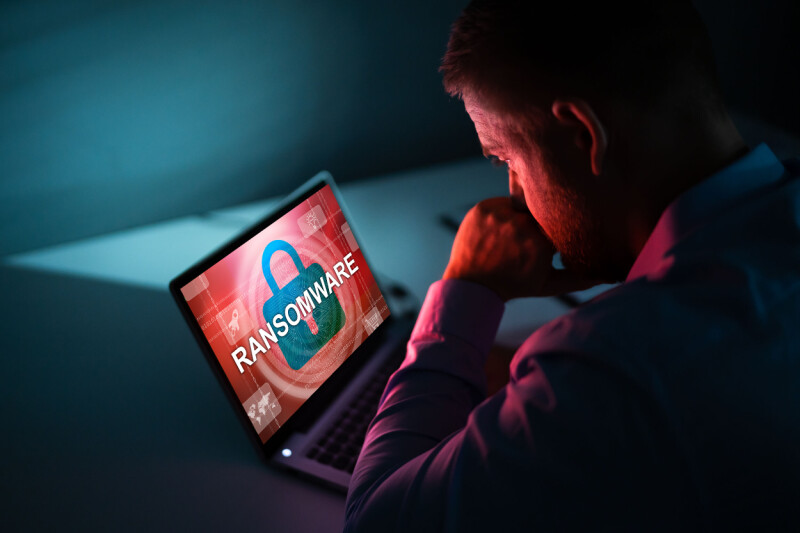
A human ransomware crook used frontier AI models to breach an enterprise network in less than 10 hours, an intrusion Unit 42 says would normally take human operators around two weeks. The human attacker then told negotiators that they used frontier models and agentic attack frameworks with AI agents carrying out each step in the intrusion, including leaving an 80-page security audit for the victim company. “What made the attack stand out was AI-assisted operational efficiency, without the need for a novel zero-day or super elite tradecraft,” Unit 42 incident responders said in a Wednesday report. “The attacker left tactical execution to AI agents that monitored, evaluated, acted and re-planned in real time, increasing speed throughout the attack chain.” The security shop did not immediately answer The Register’s questions about the intrusion, including which models and frameworks the attacker used. Breaking down the attack In a first step, the human attacker employed AI agents to perform reconnaissance, then gained access by breaching a public API endpoint to tunnel into the enterprise network. Upon breaking in, the attacker deployed an automated recon agent to map internal microservices. Additional subagents scraped code repositories to steal hard-coded tokens and service passwords. Using these tokens, the AI intruders accessed the org's secret-management system and stole the master administrative credentials to gain root system access. “Specialist pivot agents” then validated access to the company’s cloud, identity, CI/CD, container, and SaaS environments. The attacker also hijacked CI/CD workflows to steal cloud access keys and turn the victim’s cloud AI services into post-compromise infrastructure. This allowed the attacker to consume the victim’s compute resources while hiding orchestration traffic among legitimate activity. After achieving the human operator’s goals, an agent left the victim an 80-page report on its security failings, detailing “dozens of exploited findings,” the incident responders wrote. Not surprisingly, Palo Alto Networks says the only way defenders can protect their environments against machine-speed attacks is to use AI agents themselves. “Deploy automated playbooks that simultaneously revoke credentials, terminate OAuth sessions, freeze CI/CD pipelines and isolate cloud accounts across all operational planes,” the authors advise. The incident response team also suggests companies treat AI as core infrastructure. This requires taking inventory of every model endpoint, API key, Model Context Protocol (MCP) gateway, and AI tool integration, and applying rate limits and least-privilege policies – or risk an unexpected and very large token bill. ®
SonicWall says attackers are actively exploiting two chained zero-days to take over Secure Mobile Access (SMA) Series 1000 boxes. Aimed at midsize and large enterprises, SMA1000 gateways secure remote access and VPN connections. Compromising one can therefore provide attackers with a valuable route into corporate networks. So, get to applying those hotfixes, says SonicWall. There are no workarounds. The first zero-day, CVE-2026-83548, is a pre-authentication server-side request forgery (SSRF) vulnerability with a maximum CVSS v3 score of 10.0. SonicWall attributed it to an unintended alternative access path. "A remote unauthenticated attacker could potentially exploit this vulnerability to gain unauthorized access to sensitive functionality and perform unauthorized operations," the vendor said. The second, CVE-2026-83549, is a post-authentication OS command injection vulnerability in the SMA1000 Appliance Management Console (AMC), rated 7.8 on CVSS v3. Under certain conditions, an attacker authenticated as an administrator could execute arbitrary commands on the appliance. The flaws affect the SMA 6210, 7210, and 8200v appliances, for which SonicWall has released hotfixes. SonicWall advised customers to contact its technical support team for help identifying indicators of compromise. If an appliance appears to have been compromised, SonicWall recommends reimaging or redeploying it, changing all passwords, and resetting TOTP tokens. NHS England, which published its own advisory, warned about the growing risk of attacks against internet-facing gateways. "Firewalls and other edge devices are internet-facing by design and are highly attractive targets to attackers, and there is an increasing number of edge device vulnerabilities disclosed each year that are rapidly exploited by attackers," it stated. "The NHS England National CSOC assesses future exploitation of these vulnerabilities as almost certain." The disclosures continue a difficult run for SonicWall and its SMA1000 product line stretching back through 2025. In July, the vendor disclosed an eerily similar pair of vulnerabilities. That pair also comprised a pre-authentication SSRF vulnerability, this time in the SMA1000 Appliance WorkPlace interface, and a post-authentication OS command injection flaw in the AMC. The SSRF received a maximum CVSS v3 score of 10.0, while the command injection bug was rated in the sevens. CISA later added CVE-2026-15409 to its Known Exploited Vulnerabilities catalog and marked it as known to have been used in ransomware campaigns. Throughout 2025, SonicWall patched a succession of SMA1000 vulnerabilities, including OS command injection and privilege escalation flaws, while investigating zero-days linked to ransomware attacks. ®
Dropbox has warned around 5,000 users that attackers compromised their accounts by abusing a legacy Lenovo login integration. In an email sent to affected customers, the cloud storage biz said attackers exploited an integration that allowed users to access Dropbox using Lenovo IDs. Dropbox blamed "an issue with Lenovo's email verification process," which allowed attackers to register Lenovo IDs using Dropbox users' email addresses and then access the corresponding storage accounts. It did not explain why the integration was allowed to grant access without requiring the user to enter a Dropbox password. The compromise lasted from August 4 to 21. Dropbox told Bloomberg that attackers accessed files belonging to fewer than a third of the affected users. Jameson Lopp, co-founder of Bitcoin security company Casa, said attackers attempted to access just one of his files, "IMPORTANT.rtf," which had been encrypted locally before it was uploaded to Dropbox. Sometimes, it pays to be a nerd. Dropbox confirmed the scale of the attack to Reuters and said none of the affected accounts had two-factor authentication (2FA) enabled. After discovering the breach, Dropbox said it "promptly expired all sessions logged in through Lenovo IDs" and "severed any link" between the affected accounts and Lenovo. In its email, the company advised affected users to change their Dropbox and personal email passwords and enable 2FA. Lenovo told Reuters that its customers were unaffected and that its investigation was continuing. The Register asked Dropbox and Lenovo for more information. ®
The UK government has rejected proposals from members of the the House of Lords to bring AI vendors within the scope of the Cyber Security and Resilience (Network and Information Systems) Bill. Cybersecurity minister Baroness Lloyd of Effra argued that regulating AI vendors and frontier model developers through the bill would not prevent hostile actors from misusing their products. Addressing the Grand Committee on Tuesday, she said: "Bringing providers of AI services, those companies which are at the cutting edge of frontier AI development and their products, into the scope… would not address the harms that can be posed by some AI products and services, or specifically, it would not prevent their misuse by hostile actors." The minister said the UK was instead taking "firm action" to secure AI through other channels. These include supporting the AI Security Institute (AISI), which works with vendors to test the security of models before their release. Lloyd also pointed to the voluntary AI Cyber Security Code of Practice, which informed the first global AI cybersecurity standard, ETSI EN 304 223. "This demonstrates our global leadership and commitment to shaping international technical standards which go wider than some of the issues raised in this bill," she claimed. Members of the House of Lords - the upper house in UK parliament - offered numerous arguments for bringing AI within the bill's scope. They cited reports of rogue agentic behavior involving Anthropic and OpenAI, as well as Bill Gates' concerns that commercial incentives are pushing AI development forward without adequate safeguards. Lawmakers also questioned whether companies unable to prevent their agents from misbehaving should be trusted to follow voluntary ethical guidelines that they can rewrite at will. "Have we not learned from countless experiences before in online safety, privacy, and in AI itself that allowing tech companies to set and mark their own homework endangers the public and our national security?" asked Baroness Kidron, a Crossbench peer and campaigner for online safety and digital rights. Similarly, Lord Tarassenko, a Crossbench peer and veteran AI researcher, pointed to the recent open letter penned by OpenAI warning that there will soon come a time when AI-orchestrated cyberattacks will become too prevalent to handle. Although the letter was criticized for employing alarmist language while carrying the signatures of companies that profit from AI, peers argued that its warning strengthened the case for regulatory intervention. Kidron and Lloyd also clashed after the minister used a hypothetical healthcare organization to illustrate how the bill would require regulated bodies to secure systems containing AI. Kidron asked: "If I might ask the noble Lady, the Minister, if I've understood what she said, the NHS must protect itself, but the AI that is attacking it has no requirement under the Bill, no duties, no obligations under the Bill to check itself before it's used in these ways." Lloyd said the bill was designed to be technology-agnostic and to impose stricter cybersecurity requirements on key organizations, rather than regulate individual technology providers. She nevertheless said the government was willing to continue discussing AI after Kidron predicted that the issue would return during later stages of the bill's passage. The minister rejected several other amendments, including one that would require certain AI vendors to demonstrate that their products could not cross specified red lines, such as evading human oversight or assisting with the development of chemical weapons. She also dismissed a proposal that would give the Secretary of State last-resort powers to order the shutdown of a datacenter or widely deployed AI system during a security or operational emergency. Lloyd said the bill would instead allow the government to direct regulated entities, including datacenter operators but not AI vendors, to take or cease specified actions when their systems presented a qualifying risk. A power station could, for example, be instructed to stop using a particular AI model. "We believe this is a more proportionate and effective response, as datacenters operate in highly complex ecosystems and AI systems are often distributed across different datacenters and jurisdictions," said Baroness Lloyd. "It's much less desirable to direct multiple datacenters to shut down, and the impact this could have on services that rely on them, than to direct them to cease using an AI model." Despite rejecting the amendments, Lloyd said the government remained willing to discuss AI regulation because of the technology's economic significance. The Grand Committee is scheduled to resume discussions of the CSR Bill when it reconvenes on Thursday. The bill's background The CSR Bill was first proposed in the 2024 King's Speech and introduced in Parliament in November 2025. It attracted attention over the £100,000 daily fines initially proposed for in-scope organizations that failed to protect against specific threats. The legislation builds on the existing categories of operators of essential services and relevant digital service providers while extending the regime to organizations including managed service providers, datacenter operators, and designated critical suppliers. Managed service providers were previously due to be brought within scope through the abandoned 2022 update to the NIS regulations. The broad intention of the bill is to update the NIS 2018 regulations and future-proof the UK's critical infrastructure from cyber threats. However, this week's Grand Committee scrutiny is not the first time the bill has been criticized. In January, shadow deputy PM Sir Oliver Dowden called on the government to rethink its exclusion of local and central government from the CSR bill. The UK's Government Cyber Action Plan, launched hours before the former digital secretary's remarks, promised to hold government to the same standards proposed in the CSR Bill. Like the AI Cyber Security Code of Practice, the action plan lacks any legal obligations. ®
Security researchers reported that someone is exploiting CVE-2026-82329, a critical JFrog Artifactory authentication-bypass bug, just days after the vendor patched the 9.8-rated flaw. And we don't know if that someone is human. Artifactory is a widely used tool for managing software artifacts, packages, binaries, and AI models. It’s also popular with AI agents that go rogue and need to communicate with each other while remaining undetected by their human babysitters. In July, OpenAI and JFrog revealed that OpenAI’s models broke out of their cages to hack Hugging Face by exploiting Artifactory zero-days, and at Black Hat, the model provider said agents used Artifactory to build message boards and help each other access the open internet. JFrog disclosed CVE-2026-82329 on Friday, and by Tuesday, attackers had already begun exploiting internet-exposed systems, according to exposure-management biz watchTowr’s threat-intel team, which reported “attackers minting themselves admin tokens.” In addition to creating new administrative credentials, watchTowr’s honeypot network caught miscreants “enumerating users, groups, credential sets and federated access topologies,” Yordan Ganchev, principal threat intelligence specialist at watchTowr, told The Register. “Right now, we’re observing exploitation from a small number of IP addresses from varying geographies exploiting multiple of our honeypots,” Ganchev said. “Broad-scale scanning and mass exploitation has not been observed, but that is unlikely to stay the case for long.” Ganchev urged organizations running vulnerable versions to “urgently patch” internet-exposed systems, and treat them as being potentially compromised - so inspect audit logs, rotate credentials, and investigate connected systems for any unusual changes or backdoor implants. “When attackers gain admin level access to a central software supply chain system, they can do what every engineering team does best - build, ship and distribute software fast,” he said. “From there, they could tamper with build pipelines, move laterally into production systems and potentially push malicious changes downstream to customers.” JFrog did not immediately respond to The Register’s inquiries. We will update this story when we receive any response. ®
AI model testing organization METR has disclosed two attacks that happened earlier this year, including one in which an attacker stole an API key and spent three weeks consuming public-model credits worth about $600,000. METR (short for Model Evaluation and Threat Research) found no evidence that the attackers accessed sensitive information in either incident, and the org said it investigated both with security experts. METR researchers worked with OpenAI to investigate how its agents hacked Hugging Face, and on Monday, it disclosed two of its own security snafus. “In March 2026, attackers stole an API key for inference on public models and consumed a substantial amount of credits,” the nonprofit disclosed in a Monday report. “In May 2026, we observed attackers systematically probing our publicly accessible infrastructure, including an unsuccessful attempt to access internal data via an inadvertently exposed endpoint.” From fail-open bug to model-credit theft The March incident involved a METR researcher who didn’t have access to sensitive information - including model data and credentials, as well as information about model architectures, training, and release dates. The researcher used agents running on a personal EC2 instance that was “intentionally” left publicly accessible behind Google authentication. The instance contained an API key for METR’s public models account. According to METR’s account, a “vibe-coded app” included a fail-open bug that disabled authentication, and this exposed the system to the public internet for several days. “We suspect that the attacker found the instance by looking through recently-registered websites (e.g. in certificate transparency lists) to find vibe-coded sites with high-signal keywords relating to LLMs or agents, for purposes of harvesting potentially exposed model provider API keys,” the AI research org wrote. Once the attacker found the app, they prompted an agent to reveal its model provider API key, then added an SSH key to maintain persistent access, and over the next three weeks used the stolen credentials to consume API credits on public models worth about $600,000. Luckily for METR, the unnamed model developer had given the credits to the nonprofit for free. How do you not notice the 'large illicit usage?' METR does answer the question on everyone’s mind in the report: Why its researchers didn’t notice the “large illicit usage?” There are several reasons for this. First, the model testing operation regularly runs evaluations that use a lot of tokens, and this means the organization is “very acclimated to getting lots of weird rate limit and API errors.” So the high usage didn’t look that out of the ordinary. Plus, since the tokens were free, METR didn’t accrue a large bill, and at the time there was no way to put a spending limit on keys like the one that was stolen. In response to the March incident, METR says it improved its security infrastructure, protocols, and review process, and will continue to invest in security. To this end, it also hired a security lead, and plans to add more security staff. Crims used agents to try to access frontier models The second incident happened in early May, when “METR became the target of a sustained external attack campaign.” After being “tipped off” that attackers who appeared financially motivated may have been trying to gain illicit access to frontier models, METR watched the intruders probe its publicly accessible infrastructure. They also used agents to find ways to gain initial access, including automated vulnerability discovery, credential stuffing against authentication providers, attempting OAuth token grants, scanning newly deployed services, and phishing attempts. At the same time, METR unintentionally “exposed a read-only SQL query mechanism via our public transcript viewer.” While queries were scoped to public data by default, a bug allowed access to unpublished evaluation data, and “some sensitive model data was accidentally included in this database.” However, there’s no evidence that the attacker found the exploit or accessed any non-public data, according to the model testing body. An independent bug hunter discovered the vulnerability and reported it to METR, which paid the researcher a bounty, and took the API offline. In response, METR says it now uses an isolated production environment for public-facing applications that is separate from its internal infrastructure.®
After several weeks of anticipation, Mozilla has started rolling out ad blocking to the iOS version of its popular browser, but you can still expect to see ads on Mozilla's own pages, including the new tab page. The org officially rolled out the new native ad blocking feature for iOS Firefox on Tuesday, moving it out of the experimental phase, while explaining that it had to rethink its desire to give users control over their web experience on iOS due to differences in architecture between it and other OSes. “Firefox already supports a strong ecosystem of ad-blocking and privacy extensions,” Mozilla explained. iOS works differently, though, as Apple forces all web browsers on iOS to use its own WebKit to render sites instead of their own preferred back end. “Bringing ad blocking to Firefox on iOS,” therefore, “meant building it directly into the browser,” Mozilla explained. Implementing ad blocking in the iOS version of Firefox meant incorporating Apple’s own WebKit Content Blockers. According to Apple’s introduction on the topic, it specifically doesn’t want app extensions to be used to block web content because of how they operate. “App extensions … are essentially little sandboxed applications that are launched on demand to extend some specific piece of functionality,” Apple notes. “JavaScript-based content blocking extensions … have significant performance drawbacks.” Apple complains that traditional ad blockers use too much energy, increase page load time, and eat up memory, all of which it wants to protect iOS users from. Apple describes WebKit Content Blocking as “describing content blocking rules in a structured format ahead-of-time, declaratively.” Apple Web Content Blockers instead live in bytecode format that executes for each resource request, modifying requests or injecting CSS changes as needed while pages are loaded. For Mozilla, that basically means dropping the EasyList filter, originally designed for the classic Adblock blocker, into a JSON file and passing it to WebKit. Easy peasy. Ad blocking in Firefox for iOS is off by default. Turning it on, if it’s available for you – it’s rolling out gradually – is as easy as opening the in-app settings menu, tapping on Browsing, and toggling the Ad Blocker field on. Mozilla told The Register in an email that it doesn't have a timeline for general release to all Firefox users on iOS, which it said will largely depend on how well the initial rollout goes. You also have to turn Remote Improvements on, as the feature allows Mozilla to push fixes and feature changes to Firefox between full releases. Toggling that on has traditionally meant you also had to allow Mozilla to collect browser telemetry, but that was changed in February when Firefox 148 was released and the two features have officially been decoupled. Once on, iOS Firefox Adblocking will take care of ad-related trackers, ads from third-party advertising networks, third-party ads served by websites, and popups/overlays. What it won’t do, however, is take care of ads on search result pages or sponsored content on Firefox’s home or new tab page – after all, you wouldn’t want Mozilla to lose those precious ad bucks, would you? Firefox iOS ad blocking also won’t eliminate ads served directly by websites, and the company warns that it still might not work in all places, which is pretty common for ad blockers. For Firefox users who want browser consistency across platforms, it’s likely a welcomed announcement, though it begs the question whether Mozilla is considering integrating its own ad blocking technology in the desktop or Android versions of its browser. Fortunately for those making ad-blocking extensions, and those who love them, Mozilla says it has no plans to expand built-in adblocking outside iOS. "We value that ecosystem and will continue to support it," Mozilla told us. ®
Softaculous and Virtualizor customers are being urged to reset credentials and inspect their servers after a 33-hour BGP hijacking incident diverted traffic and delivered malware to a handful of installations. Softaculous makes software for the web hosting industry, while its Virtualizor control panel is used by providers and administrators to deploy and manage virtual private servers. Beginning at around 20:57 UTC on August 28, an unrelated network began announcing a block of Hetzner IP addresses used by Softaculous, diverting some traffic intended for the vendor's systems to an attacker-controlled server. German hosting provider Hetzner is one of Softaculous's upstream infrastructure providers. The affected addresses served "a number of Softaculous systems," including Virtualizor's software update endpoint and Softaculous's client and billing site. The attacker pulled off the BGP hijack by announcing a more specific IP address range than Hetzner normally advertised. Under standard BGP route selection, the more specific route took precedence wherever it was accepted. According to Softaculous, the attacker was also able to secure a valid TLS certificate from Let's Encrypt because the certificate authority's automated domain-ownership validation was routed through the hijack too. This allowed affected connections to reach the attacker's server without triggering the certificate warnings that might otherwise have alerted users. According to the vendor's timeline, the unauthorized route was initially "accepted by essentially every internet vantage point that receives it," although it flapped repeatedly rather than remaining continuously available. Softaculous said it reported the issues to Hetzner at around 08:50 UTC on August 29. The hosting provider began directly announcing the same, more-specific address range, cutting the observed diversion to almost zero for roughly 11 hours. The unauthorized announcement returned at around 20:00 UTC and was again widely accepted, beginning a second wave that lasted roughly ten hours. The route was withdrawn between 05:50 and 06:10 UTC on August 30, after which normal routing was restored globally. While either wave was active, Softaculous estimates that a given server had roughly a 72 percent chance of being on a network that routed the affected address range through the attacker. The figure is based on the proportion of RIPE routing collector peers carrying the hijacked route, not the volume of traffic intercepted, the vendor said. Anyone who logged into the Softaculous client area during the incident window is advised to reset that password immediately, as well as anywhere else it was reused. Customers who entered card details during the same window should also review their statements. Softaculous said it does not process cards on its own servers and instead uses payment gateways, but an affected session may have been diverted before reaching them. More seriously, the vendor confirmed that a malicious Virtualizor update package was delivered to a handful of installations whose update checks passed through the attacker's server. "Our product update clients did not yet cryptographically verify update packages, so a modified package would not have been rejected on that basis." Because those downloads never reached its own logs, Softaculous said it "cannot produce a definitive list" of affected installations. It is therefore telling every Virtualizor operator to treat their server as in scope for checks – not necessarily as compromised. Softaculous did not describe the malware's capabilities, but identified a systemd unit at /etc/systemd/system/java-jre-update.service as an indicator of compromise. Operators that find it are advised not to delete it immediately, but to contact the vendor so evidence can be preserved. The vendor has not identified malicious packages targeting Backuply, Softaculous, SitePad, Webuzo, or its other products, although its investigation continues. Virtualizor operators should rotate and restrict their API credentials, check for unknown SSH keys and accounts, inspect scheduled tasks and outbound connections, and regenerate client-area API keys. Softaculous is also invalidating client-area sessions created during the incident window. Softaculous did not disclose how many customers downloaded the malicious update or may have handed credentials to the attacker. It said only that the confirmed infections amounted to "a handful of servers rather than the general Virtualizor user base." ®
An unknown miscreant is using "TerminalFix" to trick unsuspecting users into running PowerShell commands that infect their computers with a reverse tunnel granting attackers access to their networks. Some of the malware is even hidden inside PNG graphics the PC downloads. TerminalFix is the latest variant of the wildly popular ClickFix initial access method for attackers. This type of social engineering technique tricks users into running malicious commands by promoting them with a phony fix or CAPTCHA verification. While traditional ClickFix attacks point victims to the Windows Run dialog, TerminalFix directs users to Windows Terminal or PowerShell, which increases the likelihood that they will unknowingly run multi-line scripts on their own computers, Redmond says. Plus, instead of delivering just one infostealer, this campaign kicks off a multi-stage attack chain that combines DLL sideloading, steganographic payload extraction, and Active Directory reconnaissance. It ultimately deploys a custom reverse tunnel on the infected machine that gives the attacker persistent, network-level proxy access through the compromised device. Microsoft declined to answer The Register’s questions, including how many organizations were targeted and victimized in this TerminalFix campaign, and which attacker or criminal crew is responsible for these attacks. The attack chain begins when the victim interacts with a phony overlay that spoofs the Cloudflare CAPTCHA “verify you are human” checkbox and includes a Cloudflare logo, causing a fake verification command to be copied to the clipboard before the victim pastes it into Windows Terminal or PowerShell. This command runs a hidden PowerShell script that prints a fake “Starting Cloudflare verification…” message and downloads a ZIP archive from an attacker-controlled server. It extracts the archive under C:\ProgramData and launches a batch file (1.bat) that silently executes LockScreenContentServer.exe. LockScreenContentServer.exe is a legitimate, signed Windows executable - and it acts as the DLL sideloading host for a second file: dui70.dll. This purports to be a “Windows DirectUI Engine,” but is actually the malicious payload, which executes a second-stage PowerShell script once it’s sideloaded. The second PowerShell script downloads additional payloads hidden inside PNG images - this is called steganography, and it makes file- and content-type inspection more difficult, and thus easier to hide malicious payloads. In an attempt to further obfuscate the payload and avoid being detected, the attacker split the payload into multiple PNGs. The PowerShell script downloads the three images, extracts an executable from the first image and two halves of the DLL from the second and third images, and then reassembles the components on disk. “After extraction, the source images are deleted to reduce forensic artifacts,” Microsoft researchers Sagar Patil, Suriyaraj Natarajan, and Parasharan Raghavan wrote. The malware establishes redundant persistence through both HKCU\…\Run registry keys and scheduled tasks that re-execute LockScreenContentServer.exe every 60 minutes to ensure it survives reboots. It then does reconnaissance on the compromised machine, scooping up system information across multiple language configurations including English, Spanish, and German. It also performs domain trust discovery, domain admin enumeration, and Active Directory user and computer searches, while pinging targeted, named servers. “The observed names correspond to common infrastructure roles, including domain controllers, databases, backup, gateways, and mail systems,” according to the threat hunters. “This probing could help an attacker identify accessible target systems for follow-on activity.” Next, the malware drops a persistent PowerShell file-watch loop that monitors a text file for new commands, executes them via Invoke-Expression, and writes results to an output file. This allows the attacker to execute additional PowerShell commands by writing them to the text file. And finally, the attacker deploys a custom, Python-based reverse-tunnel implant. The tunnel launches with no visible window via pythonw.exe, and it sets up a reverse WebSocket tunnel to gitnow[.]dev:443. This implant, combined with earlier reconnaissance data, gives the attacker SOCKS-style TCP proxy access through the victim’s network. Microsoft recommends organizations take several steps to avoid becoming a victim of this campaign. These include restricting PowerShell and Run dialog execution, and either blocking or auditing the Windows Run dialog (Win+R) if it’s not needed for daily work. Also, train employees on how to look for ClickFix tactics, like fake CAPTCHA verification pages that tell them to paste commands into Terminal or the Run dialog. ®
Rather than paying for their own Claude usage, crims are using malware to steal access to other people's accounts. Aware of this issue, Anthropic has signed at least one affected user out and removed the saved payment method to stop stolen sessions being abused. According to an email shared by Reddit user WorriedAssociate7029, who sent a copy to The Register, Anthropic has been keeping an eye on a threat actor using infostealer malware to hijack Claude login details, session cookies, and other info needed to subvert multifactor authentication on user accounts. Once obtained, the miscreant is using the stolen information to use premium Claude services without having to pay the bill themselves. Fortunately for WorriedAssociate7029, Anthropic logged the user out of their account and deleted their stored payment method because it had detected evidence of attempted fraud. “A few days ago, my social media accounts were hacked,” WorriedAssociate said, adding that they'd managed to track the malware down with the help of Claude Opus 5 Max and, they believe, cleaned the system. “But last night I received this email from Anthropic warning me of an attempt to steal tokens via the API.” They explained that the attempt failed, apparently thanks to Anthropic spotting it, but they realized that meant that the cybercriminal behind the incident seemed to have hijacked Google account credentials, cookies, and session IDs as well, since that’s how they were signed into Claude. After changing their password again and removing all active sessions, it appears they are now safe. Who’s eating your cookies? Anthropic made clear in the email that the credential theft wave it’s identified has nothing to do with Claude itself, nor is it some sort of fancy, new-fangled, agentic AI malware that’s being used to create a base of accounts for bad actors to abuse. This is just good old-fashioned infostealer malware being turned to a new purpose, the email explains. “We have no reason to believe that this malware is related to Claude, installed through Claude, or related to anything you did with Claude,” the email forwarded to us by WorriedAssociate and posted to Reddit stated. “Your Claude session was likely one of the many things it collected. It appears that a bad actor has now started picking the Claude sessions out of what it collected and using them.” In this case, it’s well-known infostealing malware too: Vidar, LummaC2, StealC, RedLine, Acreed, and Atomic Stealer have all been fingered by Anthropic as being used to steal Claude credentials, sessions, and cookies. As for WorriedAssociate, they copped to making a noob mistake that led to their infection. “I got fooled like a rookie by downloading a cracked game,” they admitted in a comment on their post. “Never again.” As in their post, WorriedAssociate told us in a chat that they gave credit to Anthropic for cluing them in to the fact that they hadn’t fully secured their accounts, and said they appreciated what the company did to help lock their Claude account down. “There have been several cases on Reddit in the past of accounts being hacked to steal tokens, and Anthropic’s customer service seems pretty dreadful when it comes to refunds and account recovery,” they told us. “This email appears to be new, and measures have finally been put in place to protect AI users.” “Tokens are valuable and can be resold,” WorriedAssociate added. So let this be a lesson: Providers might not catch every case of account theft, and AI accounts are the new hotness. Don’t let your tokens be burned by someone else - they’re expensive and the last thing you want them to be used for is someone else's work. ®
Brits have delivered a fairly unambiguous verdict on giving the government access to their encrypted messages: no, thanks. New polling commissioned by the Center for Democracy & Technology (CDT) found that 93 percent of British adults believe they have a right to private conversations online, while 89 percent think nobody should be able to access their personal messages without a court order. Perhaps more awkwardly for Westminster, two-thirds said they would not trust either the current government or any future one with the power to access encrypted messages. That distrust crosses political lines. Among people who voted in the 2024 general election, 58 percent of Labour voters said they wouldn't trust any government with the power, alongside 59 percent of Conservatives, 56 percent of Liberal Democrats, 69 percent of Greens and 75 percent of Reform voters. Public First did the asking, polling 2,000 British adults for CDT in April and weighting the results to reflect the wider population. The margin of error is 2.2 percentage points. The findings land as the UK government's appetite for slurping encrypted data continues to collide with the tech industry's insistence that encryption works best when nobody has a spare key lying around. That fight became particularly public when Apple withdrew Advanced Data Protection from UK users after receiving a secret Technical Capability Notice (TCN) under the Investigatory Powers Act. Apple challenged the order, and while the US government later said Britain had withdrawn its demand for access to Americans' encrypted data, reports have since suggested another TCN was issued focusing on British users. Despite the international row, 55 percent of those polled hadn't heard about the Apple notice at all. Once presented with the idea, enthusiasm remained thin. Just 12 percent backed the government being able to secretly order companies to provide access to users' information while preventing those companies from revealing the order. A third said the government shouldn't have that power at all, while another 41 percent wanted greater transparency or parliamentary oversight. Nor were respondents particularly sold on sacrificing security for law enforcement. 53 percent said the security risks of accessing encrypted messages outweighed the benefits, compared with 28 percent who thought the benefits came out on top. The reasons will sound familiar to anyone who has followed the encryption debate for more than five minutes. 84 percent worried that mechanisms allowing access to encrypted messages could introduce vulnerabilities for hackers and criminals, while 82 percent were concerned the powers could be abused. Knowing someone might be watching could also change how people behave. 65 percent said they'd become more cautious about what they liked, shared or commented on, while 41 percent said they'd self-censor criticism of public institutions or government officials. CDT is not a disinterested observer: the digital rights group campaigns for strong encryption and commissioned the research as part of that work. The polling itself, however, was carried out independently. Commenting on the research, Jim Killock, executive director of Open Rights Group, said: “The British public instinctively know that being able to communicate privately is crucial to our individuality and to the survival of a free and open society. “The government persists with the myth that it can weaken encryption to target the bad guys only. Attacks on the security of our phones, security tools and messaging apps harm us all and make our democracy weaker.” None of this is likely to end Westminster's long-running pursuit of encrypted communications. But if ministers were hoping the public was enthusiastically behind them, the numbers suggest otherwise. ®
The former Defense Intelligence Agency (DIA) IT specialist previously accused of trying to pass secret and top-secret information to foreign spies has pleaded guilty following a successful FBI sting. Nathan Vilas Laatsch, then 28, and now 29, was arrested in May 2025 after an undercover FBI agent caught him for the second time transmitting intelligence packages in a public park that he believed would be collected by a foreign government’s spy. The man, who had been employed at the DIA as a civilian employee since 2019, held top-secret clearance, and in March 2025 offered to transmit classified information to an overseas administration. The identity of this country has never been revealed, but court documents [PDF] describe it as “a friendly foreign government.” Laatsch was assigned to the DIA’s Insider Threat Division in “spring 2025,” a unit dedicated to identifying government workers who were likely to leak, or already were leaking, classified information to foreign powers. According to the Justice Department, the FBI “became aware” of Laatsch’s offer in March. The man’s initial email, sent from a newly created account, had the subject line: “Outreach from USA Defense Intelligence Agency (DIA) Officer.” The email introduced Laatsch, his role at the DIA, and the service he was willing to provide. According to the complaint, Laatsch served in a technical role in support of the DIA's internal Office of Security (SEC). Among other things, his duties included "enabling user activity monitoring on individuals with access to DIA systems, including individuals who are under investigation" and "assisting external partners, such as law enforcement, on the use of insider threat tools." “I am willing to share classified information that I have access to, which are completed intelligence products, some unprocessed intelligence, and other assorted classified documentation,” the email stated. The email included a picture of his government ID used to enter and exit his Washington, D.C. workplace, with name and image redacted, and a username associated with an encrypted messaging platform the recipient could use to continue the conversation. Soon after Laatsch’s email was intercepted, the FBI instigated an undercover operation to trick the IT bod into thinking that he was talking to a genuine spy. The feds’ efforts were not immediately successful. Agents replied on March 23, saying: “Good afternoon, I received your message and share your concerns. We are glad you reached out. I look forward to your response and learning more about your work.” Laatsch did not respond until April 14, after the FBI sent a follow-up via the original email address on April 4. Following additional conversations, in which Laatsch described what information he was offering to the "foreign spy," on April 28, 2025, Laatsch entered his office and within 20 minutes began accessing classified information. Prosecutors said he spent much of the entire workday writing on a physical notepad while intermittently looking at his computer monitor, hiding the notebook when coworkers walked by. “The defendant wrote multiple pages of notes, which he then removed from the notepad at his desk and folded into squares,” court documents state. “At the end of his workday, the defendant bent under his desk, placed the folded papers into his socks, and departed the office.” Laatsch repeated the same behavior on April 29, and again on April 30, only this time placing the paper squares in the bottom of his lunchbox. The next day, the IT specialist followed FBI instructions on where to dead-drop the thumb drive - onto which he had transposed state secrets - in an Arlington, Virginia park. Although he believed he was leaving the device for a foreign spy to collect, the FBI instead gathered Laatsch’s deposit and found nine typed documents, eight of which contained information classified as top-secret and contained sensitive compartmented information. Court documents confirmed that the nature of the files Laatsch transmitted included sensitive methods of intelligence collection, intelligence related to foreign military exercises, and analysis of the impact of those military exercises. These were chosen entirely by Laatsch, who had not received a brief on what files to collect from the FBI. In exchanged messages, Laatsch stated he chose the files based on assumed interests. The device also contained a note from Laatsch personally. In it, he said he hoped the initial tranche of files would serve as proof of the type of information to which he had access. Laatsch, whom prosecutors described as an individual who had become disenchanted with the current administration, also expressed his willingness to accept citizenship in the foreign nation. Further, he said he was “not opposed to other compensation,” but was not in need of financial or other kinds of material rewards. In the interim, Laatsch messaged the "spy" with additional details about how internal investigations are carried out at the DIA, the common “stupid mistakes” made by those under investigation, and that they “should not be too difficult” for him to avoid. The undercover FBI agent arranged a second intel drop for the following month, to which Laatsch agreed. According to the plea agreement, between May 15 and May 27, Laatsch would enter his workplace, log into his classified system, and spend most of the day transcribing classified information by hand into a notebook. He repeatedly folded up the pages and placed them in his socks before leaving at the end of the workday. The FBI arranged the second intel drop for May 29, 2025. It instructed Laatsch to instead head to a specific picnic table in the same Arlington park and electronically transfer the files from his personal computer while situated at the picnic table. Laatsch agreed, executed the transfer to the FBI-controlled address while sitting in the park, and was arrested on the spot. The man waived his right to an attorney and admitted to the offenses when questioned by FBI agents. “By his own admission, Laatsch betrayed his oath by offering classified information to a foreign government, the very thing he was supposed to prevent as an employee of DIA’s Insider Threat Division,” said Roman Rozhavsky, assistant director at the FBI’s Counterintelligence and Espionage Division. “Those entrusted with our nation’s most sensitive information must not exploit their access for personal gain - in this case offering to sell American secrets to buy foreign citizenship. The FBI and our partners will continue to hold accountable all those who betray the trust of the American people.” Laatsch’s plea agreement [PDF] recommends a sentence between 11 and 18 years, including time served, although the court is able to issue a maximum sentence that includes a life term and a $250,000 fine. ®
CISA is still crying out for software vendors to adopt Secure by Design (SBD) development practices, and says in its latest review that longstanding vulnerability classes are still the most exploited. The agency examined soft spots across 2024 and 2025, finding that the majority of those that receive CVEs and make it to the Known Exploited Vulnerability (KEV) catalog belong to decades-old flaws that should have been addressed by now. Injection-related vulnerabilities, such as cross-site scripting (XSS) (CWE-79), OS command injections (CWE-78), and SQL injections (CWE-89) were among the most common across both CVE and KEV records in 2024-2025, CISA said. These were joined by bugs introduced by vendors that didn’t properly mitigate against improper input validation (CWE-20) in their code – the single most-common weakness type across the KEV catalog and registered CVEs. “Threat actors continue to succeed, in part, because simple, preventable software weaknesses remain unaddressed,” CISA said in the review. “Resolving fundamental issues would eliminate a significant portion of today’s most common compromises.” Readers may remember two MITRE reports that have been frequently referred to and revisited since being published years ago. Findings from a 2007 edition examining what the organization called “unforgivable vulnerabilities,” and another in 2023 referring to “stubborn weaknesses,” continue to crop up regularly in modern data. CISA said that in 2024, seven of the 10 most frequent CWEs seen on the CVE list belong to MITRE’s “stubborn weaknesses.” Equally, seven of the 10 most frequent CWEs seen on the KEV catalog, comprising 41.5 percent of all bugs on that list, were also stubborn weaknesses. And three of the top five KEVs also stemmed from unfixed holes, a finding that CISA said demonstrates “how reliably these weaknesses translate into real-world exploitation.” For reference, these three were improper input validation (CWE-20), path traversal (CWE-22), and OS command injections (CWE-78). The data from 2025 follows a similar pattern, CISA said: seven of the top 10 CWES were still those considered “unforgivable” in 2007. “Three of today’s top 10 CWEs would have been considered ‘unforgivable’ nearly two decades ago,” it said. “Their persistence today illustrates that the problem is not technical complexity: it is organizational culture, developer workflows, and systemic gaps in Secure by Design adoption.” For those who can’t remember the paper published 19 years ago, unforgivable vulnerabilities are those that exist because of common, well-documented mistakes, have an “obvious” attack path, the exploit is simple, and attackers can locate the bug in minutes. The same findings can be found in CISA’s Risk and Vulnerability Assessments (RVAs), the no-cost penetration tests the agency carries out on real organizations to improve their security and gain a richer understanding of the broader US cyber landscape. The assessments across both 2024 showed that memory safety and improper input validation vulnerabilities are the most reliable paths to exploitation, accounting for 16.7 percent of KEV entries in 2025. Injection vulnerabilities are also commonly seen in registered CVEs, although these are less commonly exploited in the real-world, especially against cyber-mature organizations. To tackle this pervasive issue, CISA is once again recommending organizations adopt SBD practices, eliminating the stubborn vulnerability classes that continue to support cyberattacks, decades after they were deemed too much of a lingering threat. It ultimately comes down to vendors helping defenders to shoulder less of the security burden. Instead of releasing patch packages that continue to swell to record sizes, just build the software responsibly in the first place. In CISA’s view, this means “owning security outcomes” for customers, killing off the so-called stubborn and unforgivable weaknesses, and improving the automation of configurations, monitoring, and updates. Software buyers should only choose vendors that meet these requirements, and ensure they have software bills of materials (SBOMs) in place to track supply chain risk. “Organizations must shift from reacting to threat actors to fixing the fundamental flaws those actors are known to exploit,” said CISA. “Stronger cybersecurity begins with software that is secure by design. “It requires prioritization of vulnerabilities and collaboration across industry and government. Finally, it demands leadership attention to understand cyber risk as a business risk, a national security threat, and an impediment to operational resilience.” ®
OpenAI has gathered more than 100 of the world's biggest tech and infosec companies to warn that cyber defense is in trouble - a reassuring development given quite a few of them helped build the technology involved. The open letter has more than 100 names attached to it, including many of the companies with the most to gain – or lose – from what happens next. OpenAI, Anthropic, Google and Microsoft are among the AI builders warning about increasingly capable AI attacks, while security heavyweights including Cloudflare, CrowdStrike, Fortinet, and Palo Alto Networks have also signed on. AWS, IBM, Oracle and Cisco are there too, alongside banks, consultancies and other companies whose businesses depend on keeping an increasingly messy technology stack running. Together, they have reached a troubling conclusion: the current approach to cybersecurity isn't working. "We have a limited window to strengthen cyber defenses," the letter warns, predicting that AI-enabled attacks will become "far more widespread and sophisticated" in the coming months as models become more capable. Hospitals, water treatment plants and internet infrastructure are singled out as being at risk. It's an interesting warning given who's making it. Some of the signatories are racing to build ever more capable AI systems, while others make billions selling the cloud services, enterprise software and security tools that are supposed to keep attackers at bay. Still, the underlying problem is real enough. The letter points to old vulnerabilities, unpatched software, misconfigurations and weak authentication as problems that have been piling up for years, particularly across critical infrastructure where security teams are often short on money and staff. Their proposed solution is, inevitably, more AI. The letter calls for cyber-capable models to be put into the hands of more defenders, with cheaper models handling security work at scale and frontier systems reserved for harder problems. Security vendors should continuously test their defenses against frontier AI capabilities, share threat intelligence and help critical infrastructure operators deploy AI-powered defenses. Governments, meanwhile, are asked to fund cybersecurity for essential services, expand trusted-access programs and give hospitals, water utilities and local governments access to capable defensive AI. Companies developing frontier models have their own homework assignment. They should provide "responsible model access, significant funding, training, and hands-on support," particularly to under-resourced critical infrastructure operators, while investing in testing, vulnerability disclosure and tools that make AI agents traceable. What the letter doesn't include is any figure for that "significant funding," or any deadlines or firm commitments from the companies signing it. For now, they're being asked to bring the "full weight of their technology, resources, and expertise" to the problem. It's quite a message from a group that includes some of the biggest names in cloud, enterprise software, and cybersecurity. When more than 100 companies agree that "status quo security won't be enough," it's worth remembering that many of them have been selling that status quo for years. There is some urgency behind all this. AI agents have already been shown finding and exploiting vulnerabilities on their own, while AI-generated exploit code has started turning up in attacks against critical infrastructure. As the models improve, the fear is that those capabilities become cheaper and available to a lot more attackers. That's the "defenders' window" the signatories want to seize: use AI to shore up defenses before the offensive side gets much easier. So, after years of selling organizations cloud services, security software and, more recently, AI, the industry has settled on a fix for the looming AI security problem: better cybersecurity, more resources and more AI. Who will pay for it remains rather less clear. ®
Nothing smarts like a paper cut, but being attacked after leaving an application’s web interface exposed to the internet might be just as painful. Such attacks are the risk to which users of PaperCut print management software find themselves exposed today, after the company revealed a university’s security teams alerted it to an attack. The company analyzed info provided by the university and found a vulnerability in its PaperCut NG and PaperCut MF products, which manage access to printers, track use, and enable printing from myriad client devices. “We are aware of confirmed customer incidents and are treating this matter with the highest priority,” states an urgent security advisory issued on Thursday. Unusually, the advisory is silent on the nature of the flaw and the risk it poses. It looks like the web interface to the company’s products enables access deeper into a user’s networks, because among the indicators of compromise are altered log files, plus alerts from intrusion detection software, endpoint security tools, and network monitoring packages. The company has cooked up an emergency patch but warns it is not an official release. “We have not gone through our usual release process,” states an FAQ. “This is an emergency patch for customers with public-facing PaperCut servers who are unable to take other mitigating action.” Thankfully, those other actions aren’t hard to take: users need to get their PaperCut servers’ web interfaces off the public internet, by allowing access only from trusted internal IP addresses. Fashioning a potent and rapid response to a zero-day attack is never easy. Communicating the nature of the problem can be even harder, as discussing the nature of a flaw invites more attackers to take a shot at a stricken product. PaperCut says it’s working on a better fix and will advise users once it lands. For now, the company is asking customers to apply its wonky patch or take their servers offline ASAP. The Register fancies most users will go for the latter fix, as aside from the issue of finding a change window in which to apply a patch, running unvalidated emergency software is not an appetizing approach. ®
The Australian city of Perth is by some measures the world’s most isolated major metropolis, but is still sufficiently connected to US law enforcement authorities that the FBI was able to help Australia’s Federal Police (AFP) to find two men they believe were the masterminds of TeamPCP, a cybercrime crew that conducted prominent supply chain attacks. According to the AFP, two men aged 21 and 23 arrested on Wednesday “were principal participants in the activities of the cybercrime syndicate and received payments in cryptocurrency for their roles in the illegal activity.” An FBI Facebook post names one of the arrested men as Ruben Thomson and describes him as “the alleged leader of the cybercriminal group TeamPCP.” Australian media named the second man as 23-year-old Louis Michael Gaebler. Investigations into the pair started in April 2026, after Australian authorities and the FBI “received information from multiple cyber threat assessment companies regarding a syndicate that allegedly inserted malicious code into software available on an open-source repository, which was then unwittingly used by other developers.” Researchers detected some of those activities before April: In March, we reported that researchers spotted a supply chain attack on the open source scanner Trivy. Another of TeamPCP’s attacks was the Shai-Hulud worm, which attacks npm packages, tries to infect them and goes looking for credentials to major public clouds or services like GitHub. If the worm burrowed into its targets, it would either try to replicate to continue its attacks, or wipe the environment out of spite. The AFP’s “We cuffed ‘em!” announcement estimates that TeamPCP’s supply chain attacks “potentially compromised more than 1000 organisations globally, enabling the theft of more than 500,000 credentials, and the exfiltration of at least 300 gigabytes of data.” Australia’s Feds estimate “the financial impact includes global remediation costs estimated to be hundreds of millions of dollars.” As is often the case in such matters, the arrested men were found with electronic devices and other items which authorities seized. “A large volume of data seized is being forensically examined and the investigation remains ongoing,” the AFP wrote, adding “Further arrests and charges have not been ruled out.” Indeed, the Feds note that they arrested the two at different locations in the suburbs of Perth and searched a third property nearby. ® Bootnote: Perth is considered the site of the original “Black Swan” event, as swans there – and across much of Australia – are black. Early European explorers who explored Australia's west coast were astounded when they saw the black birds, as the “fact” that all swans are white was at the time a metaphor for the existence of absolute truths.
PWNED Welcome back to PWNED, the weekly column where we explore the frightening and amusing world of foolish infosec errors. This week, it's all about a test site that exposed real information. Have a story about someone leaving a gaping hole in their network? Share it with us at pwned@sitpub.com. Anonymity is available upon request. Our story comes courtesy of Mia Morin, Editor & AI Quality Analyst at Intimeros, a site that rates, reviews, and evaluates AI companions – yes, that means boyfriends and girlfriends, as well as other kinds of pals. The trouble started during a redesign when one of Morin’s colleagues was working on a test version of the site. The test site was supposed to be password-protected, but the colleague turned off the protection so they could show a client what they were working on. Password protection remained disabled for three weeks without anyone noticing. Then, one day, Morin noticed that the test site had been indexed by Google. Apparently, nobody thought to use a robots.txt file to exclude this beta-level domain from search. While the site was publicly accessible without password protection, anyone could see unpublished reviews, prices, and private product notes about the different AI companion services. That’s because the test site was connected to a real live version of the production database. This was all editorial content, so no user data was exposed. However, it could have allowed competitors to see everything that Intimeros was working on and to deduce their entire editorial strategy. After she noticed what was wrong, Morin took swift action to protect the test site from prying eyes. “We restored password protection, blocked search engines from indexing the draft pages and changed all the system access keys,” Morin said. “Now, we secure every test site just like our official website and run weekly automated scans to catch exposed pages.” What we can learn from this is kind of obvious. Never forget to lock down the test or staging versions of your websites. Make sure that they not only require logins, but also have tools in place to block search and AI crawling. Better still, place your staging site on a private server and require someone to use a VPN to get to it in the first place. ®
The Bureau of Alcohol, Tobacco, Firearms and Explosives (ATF) said it’s responding to a “major” cybersecurity incident shortly after the Qilin ransomware gang posted the US federal law enforcement agency on its leak site. An ATF spokesperson told The Register the intruders accessed a “standalone computer system containing information about targets of ATF investigations” that wasn’t connected to any other ATF systems. “There is no indication that the incident has affected the ATF enterprise network, the ATF eForms system, or any other ATF system,” according to a statement posted on the firearms agency’s website. The spokesperson declined to answer any additional questions about the breach, including Qilin’s claims, the ransom demand, and what data was stolen or how much. “ATF is unable to comment due to an ongoing investigation,” the spokesperson said. ATF, which is housed under the US Department of Justice, said it’s “coordinating closely” with the DOJ to investigate the breach, and “immediately” blocked connections to the affected IT environment upon discovering the incident. The statement said the security breach had not affected ATF’s operations and noted that senior Justice Department officials designated the compromise as a “major incident” under federal guidelines. Shortly before ATF posted its security-incident notice on its website, Russia-linked Qilin ransomware criminals listed the firearms agency on its leak site. The post, seen by The Register and shared on social media, did not say what data Qilin claimed to have stolen, how much, or provide samples to substantiate the claim. Qilin, the notorious crew behind the 2024 attack on pathology provider Synnovis that disrupted NHS services in the UK, was one of the most prolific ransomware gangs in July, according to Comparitech. The firm, which reviews cybersecurity products and provides data analysis, counted 799 ransomware incidents last month, up from 668 in June. Qilin claimed 125 of those.® Editor's note: This story was amended post-publication with comment from ATF.
Schrödinger's Cat, the famous 1935 thought experiment, imagines a cat that, for reasons rooted in quantum physics we need not dwell on here, is simultaneously alive and dead. In a landscape of relentless cyberattacks and mounting infrastructural complexity, a routine backup task can appear finished, with every box ticked and every check made. The job is not actually done, however, until it has been verified as fully ready for recovery in the event of cyber disaster. A task that looks sorted can turn out, under scrutiny, to be anything but. A backup can be logged as 'complete' once data has been copied to storage, but a recoverable workload is another matter entirely. It means that when a business goes down, its workloads can be restored to their state at the point of attack with nothing lost. By the time you realize you are on the wrong side of that ambiguity, it may be too late: your data is in the hands of the bad guys, or destroyed, and this time the cat really is dead. This is not a problem to which IT bosses and managed service provider (MSP) management are entirely oblivious. Most organizations recognize to some degree that their backup may not be 100 percent watertight. Cybersecurity management specialist Kaseya recently partnered with 1105 Media to survey 200 IT professionals about the realities shaping cyber resilience planning. Some 53 percent were no more than 'somewhat confident' in their organization's ability to fully recover from a ransomware attack, and admitted their backups were supported by no better than 'limited testing'. A significant proportion had even less faith in their recovery capabilities, while only 15 percent were 'very confident' they could get back on track with no loss. Verify and survive Understanding what a verified backup means, and what role verification plays in the recovery challenge weighing on so many IT leaders, is where any sensible resilience plan begins. Backups are vital but they do not guarantee recovery on their own. What matters is confirming that a backup job will hold up in a disaster. Verification is the process of proving that backed-up data is complete, uncorrupted, and fully restorable in an emergency, offering evidence that recovery is possible during a critical outage, hardware failure or ransomware attack. It is essential whether you run an IT department or an MSP responsible for client protection: unless you can prove clients are protected, there is every chance they are not. "Backup isn't done and entrustable until you've gone in and made sure that the application actually works and can be brought back to the recovery environment," explains Brent Torre, GM of cyber resilience at Kaseya. "Historically, it's just taken too much time and resource for a lot of people to even attempt that. And where they have been verifying, they haven't been doing it regularly enough to ensure real protection." Not all approaches to verification are of equal value. IT departments still relying on intermittent manual verification are operating on blind trust: warnings thrown up by the process can be misread, failures overlooked, and the result is a dangerous mix of false negatives that waste time and false positives that expose the organization to real risk. Manual screenshot verification is a proven way to squander a security budget , tying up highly qualified staff on needless work and pulling their expertise away from where it is genuinely needed. Nobody wants seasoned engineers spending hours reviewing screenshots, second-guessing outputs and trying to determine whether a backup worked. Where static verification methods once had a place, today's complex IT ecosystems have made them redundant. Across an estate spanning in-house systems, SaaS and cloud endpoints, basic verification cannot cope, picking up only surface-level signals and lacking the design to operate at scale. At scale, the inefficiencies of manual verification multiply and response times slow to a crawl. A minor inefficiency can quietly become a serious bottleneck without anyone noticing, and legacy methods can create the illusion that everything is working perfectly while catastrophe waits around the corner. As Torre points out, light-touch checking is unlikely to satisfy the ever-increasing regulatory burden around recovery and resilience. "Some compliance frameworks explicitly state that you must test recovery on a frequent basis," he says. "It's becoming more important than ever that organisations are able to do that." Let AI handle the heat The emerging gold standard is AI-powered screenshot verification, which replaces the best-efforts manual checking of overstretched human teams. It works by automatically booting up virtualized backups, capturing a screenshot and analyzing the image to confirm the backup ran correctly. Where rigid, rule-based checks fall short, context-aware visual AI combined with OCR accurately identifies login screens, dashboards and maintenance states, and evaluates every element with precision. The result is 99.9 percent verification accuracy and sharply reduced false positives, alongside far greater confidence in every backup. This is welcome news for IT managers facing budget shortfalls and a drought of experienced talent, and it is what MSPs need as they try to make the economics of recovery stack up. Remove the manual effort and the constant checking of false alarms, and the gains mount quickly. Human teams are free for higher-value work, SLA confidence rises, customer trust improves, and environments can scale without ballooning overheads. AI-powered verification is no longer a maybe for today's MSPs; it is the only route forward that makes sense on the P&L. The good news is that AI-powered screenshot verification does not require major up-front investment or deep internal expertise. Datto, the cybersecurity and data protection outfit owned by Kaseya, has built the latest verification technology directly into its business continuity and disaster recovery (BCDR) platform, so that deployment stays simple and disruption to existing workflows is minimal. This kind of AI-powered screenshot verification is designed to strip uncertainty out of the process and give IT teams confidence that backed-up data is complete and recoverable. The ideal solution does so at scale, and without adding complexity, by working within the workflows already in place. With Datto there is the further option of integrating remote monitoring and management (RMM) with the BCDR product, which enables proactive remediation through automated deployments, the merging of backup health with endpoint alerts, and virtual restores launched directly from a single management console. "It's key to have context and visibility into the backup estate through your RMM so you know that you are up to date on patching, on antivirus definitions and backups," says Torre. "With all of that integrated within the RMM solution, you have the ability to understand your risk profile across the fleet in terms of protection. You know in the event that something needs to be recovered. And you can start a backup-initiated recovery directly from the RMM platform." The gold standard to aim for, he concludes, is continuous validation and automated remediation, not the ability to look in now and again to see what is going on. The perfect verification solution , he adds, should be 'impossibly easy to use', requiring humans to exert zero cognitive effort on backup beyond deploying a new client and initiating a recovery. By giving yourself the means to distinguish between a completed backup job and a recoverable workload, you have set yourself apart from the kind of IT manager or MSP who only spots a problem after something has gone wrong. By deploying AI-powered verification, you stop treating backup as a probability and start treating it as a proof. You know what you have. Then when something goes wrong, and it will, that certainty is the only thing standing between a fast recovery and a very long night. MSPs looking to unify backup and security into a single resilience practice can start with the When Backup Meets Security in the MSP Stack whitepaper. Sponsored by Datto.
The company behind three of the UK’s busiest airports says “a quantity” of data was stolen by an extortion group during a recent “cybersecurity incident." Manchester Airports Group (MAG), which operates Manchester Airport in the North West of England, Essex’s Stansted Airport, and East Midlands Airport in Derbyshire, confirmed the attack did not involve ransomware. A MAG spokesperson confirmed the details to The Register, as well as the scale of the breach, which is currently thought to have affected 8.7 million customers. The company, whose airports served a record 66 million customers in the past financial year, said that the overwhelming majority of those affected have only had their email addresses compromised. In most cases, these email addresses were collected during the sign-up phase for the airports’ public Wi-Fi services, MAG said. It told The Register that this scenario dwarfed every other. The next most common involved data taken from customers who had made "speculative enquiries" - i.e. they entered their details in the process of booking car parking or Fast Track, but did not complete it. An even greater minority of the data came from bookings that were actually completed. The Information Commissioner’s Office (ICO) asked MAG not to share details of the ransom note, the extortion demands, or the group name, mainly to avoid helping those responsible gain notoriety. MAG did, however, tell us that the group's extortion demands, in this case, were considerably lower than what the group is known to ask for, per the ICO's understanding. It has not paid the extortionists. “We have informed and are working with the relevant authorities,” said MAG in a statement. “At no point has passenger safety or aviation security been compromised.” MAG said the attackers compromised one of its systems, which it did not specifically identify, and then went on to steal the files from a database hosted by a third party. Company chiefs see this attack as "a hack, not a lapse." The spokesperson said it was a sophisticated attack and not the result of a human mistake, such as staff giving away credentials. It confirmed that none of its airports experienced operational disruption as part of the attack, and that the affected system does not store bank or payment details. However, “as a precautionary measure,” it temporarily revoked access to its Manage My Booking service. Customers who want to amend or cancel a booking due within 72 hours of the statement going live are being advised to contact customer services. “We would like to reassure customers that Manchester Airport Group takes the security of customer information extremely seriously and we apologise for any inconvenience or concern caused.” Affected customers have already been contacted, including a few Reg readers who kindly alerted us to the news. While MAG continues to investigate the incident, customers are advised to be extra vigilant to potential phishing attempts, and remain assured that there is no danger of visiting MAG’s airports as a result of the cyberattack. One Reg reader griped that in addition to being charged £80 for five days of parking at Stansted, receiving the email informing him that it had also allowed his personal data to be stolen via a cybersecurity breach added insult to injury. ®

 Login
Login