Researchers say it took fewer than 20 prompts for a public AI tool to find a flaw (now fixed) allowing anyone on a Zoom call to hijack another participants’ device.
Spain's national police say they caught a cybercriminal after a momentary technical glitch exposed his face to a video identification platform. The unnamed man allegedly made 38 attempts to impersonate 30 people and obtain digital certificates in their names, succeeding on multiple occasions. A digital certificate uses public key infrastructure to bind a cryptographic key to a verified identity, allowing its holder to authenticate themselves and create legally recognized electronic signatures. In Spain and other EU countries, certificates can be used to sign contracts, authorize transactions and deal with public bodies online, avoiding some of the in-person appointments traditionally required for administrative procedures. A certificate issued in someone else's name would therefore give a scammer a powerful tool for impersonation. Police allege that the suspect planned to use the fraudulently obtained credentials in further cybercrimes. The alleged fraudster targeted a security company authorized to issue digital certificates and bypassed its identity checks using forged documents, altered photographs, deepfake tools, and a carefully arranged lighting rig. The verification process required a live video check comparing the applicant's face with the photograph on the identity document. He allegedly used deepfake technology to alter his face in real time so that he could bypass the visual identity checks, and used custom lighting to recreate the appearance of each document's holograms. "The alleged perpetrator used household spotlights with strategically placed colored bulbs to simulate the flashes and security features found on physical identity documents under real light," police said (machine translated). "He then balanced the counterfeit documents in front of the webcam, perfectly recreating the official holograms. He also used VPNs to anonymize his connections and employed manipulated documents with apparent security features." Police did not say how many of the 38 attempts succeeded, only that certificates were issued on "multiple" occasions. His luck allegedly ran out when the face-changing software suffered a momentary processing delay. The disguise dropped for "barely a second," exposing his real face to the verification camera, police said. Investigators eventually identified and located the suspect, who was arrested on suspicion of repeatedly forging official documents. A search of his home yielded a laptop protected by high-grade encryption, several mobile phones, storage devices, and documents, according to police. The investigation was complicated by the use of more than 320 phone lines across 24 devices. Most had allegedly been registered under stolen identities, with police tracing their sale to outlets in the Murcia region. ®
Discover how Cisco’s FedRAMP Certified Class D (High) enables federal agencies to strengthen their Zero Trust architecture and secure mission-critical data.
Mozilla has revoked a cryptographic key used to sign Firefox and Thunderbird releases after discovering someone had accidentally committed an unencrypted copy of the private key to a GitHub repository. The browser maker disclosed the mishap on Monday, saying the GPG private subkey was checked into a private GitHub repository accessible only to a small number of Mozilla employees. All of them were already authorized to access the key through other means. Still, leaving an unencrypted private signing key sitting in source control isn't exactly ideal, so Mozilla revoked the exposed subkey and replaced it. The affected subkey was used to sign Linux tarballs, RPM packages, and checksum files for Firefox and Thunderbird releases. Signing keys allow users and package managers to verify that software really came from Mozilla and hasn't been tampered with along the way. Mozilla said its review of available audit records "found no evidence that the key was accessed by an unauthorized party while it was present in the repository." It has introduced additional safeguards to prevent a repeat, but did not explain how the unencrypted key ended up in GitHub or how long it remained there. For most Firefox and Thunderbird users, the key swap shouldn't require any action. Anyone manually verifying Mozilla's GPG signatures, however, will need to import the new signing key and the revocation for the old one. The change is a little more involved for users who installed Firefox through Mozilla's RPM repository. On Fedora 43 and later, DNF should download the updated key during the next Firefox update, although users will be asked to approve its import. Mozilla says users running Fedora 42 or earlier, RHEL, Rocky Linux, AlmaLinux, openSUSE, or SUSE will need to remove the old key and manually import its replacement. There's another wrinkle for anyone checking older releases: after importing the revocation, normal signature verification will reject releases signed with the revoked subkey. Thunderbird users don't have to worry about RPM-specific shenanigans, as Mozilla doesn't provide official RPM packages for the email client. The Register asked Mozilla how long the private key was sitting in GitHub, how it got there, and whether its audit logs cover the entire period it was exposed, but did not receive a response. ®
While working through a kernel exploit chain on Windows 11, I noticed that a stack pivot into user-mode memory didn't trigger SMAP.
I wrote up three experiments to figure out why. Short version: the normal syscall entry path arrives with RFLAGS.AC=1. SMAP is effectively disabled for any code reached through a standard IOCTL dispatch. This aligns with what MSRC documented back in 2020 (the Windows kernel simply wasn't built with SMAP in mind, and retrofitting it would touch ~2,900 locations: here)
My conclusion isn't novel here. It's just an experimental confirmation of the architectural compromise on current builds. I just wanted to shine the light on this blind spot.
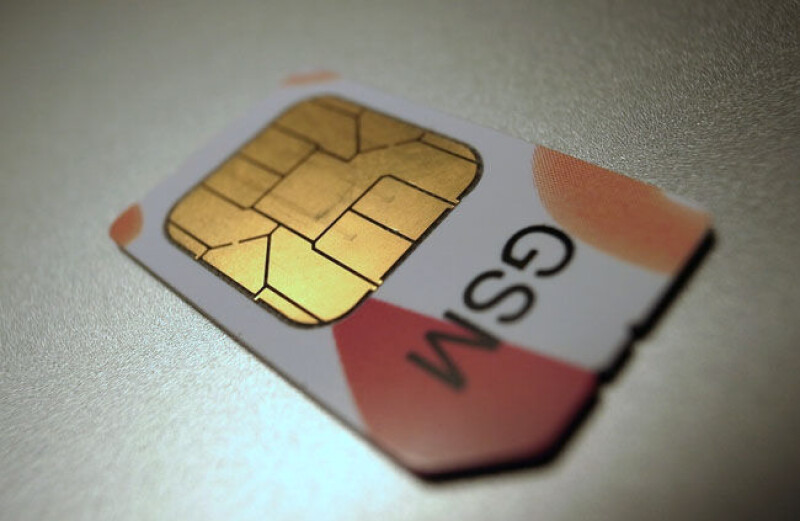
Researchers have found that a malicious SIM card can tell some phones and cellular-connected devices to leak data, drop to 2G, shut themselves down, or even execute code, all thanks to functionality that's supposed to be there. The research [PDF], presented at the USENIX WOOT conference in Baltimore this week, examines proactive SIM functionality, which allows a SIM to issue commands to the device hosting it. One of those is RUN AT, which allows the SIM to request the execution of AT commands, the instruction set that's been bossing modems around since the 1980s. Give that ability to a hostile SIM, and things get rather more interesting. Tomasz Piotr Lisowski and Marius Muench of the University of Birmingham, working with Fuzzware's Kristian Covic, built a toolkit called CATANA to see what a malicious SIM could get away with. They tested 26 devices – 18 smartphones and eight IoT modems – and found that nine exposed an AT command interface to the SIM. The IoT kit was particularly accommodating, with seven of the eight modems exposing it. The researchers uncovered four vulnerabilities and demonstrated attacks including code execution, arbitrary file reads, denial of service, and downgrading connections to 2G. "The fascinating part here is that the proactive capabilities of a SIM and the resulting attack surface is explicitly defined in the technical specifications for cellular communication," said Muench, making the attacks "specification-compliant." He added that hostile SIMs are still missing from many threat models despite previous research and leaked intelligence documents demonstrating the risks. The researchers put that access to work on an Autel EV charger fitted with a Quectel EC25-AFX cellular module. By sending commands from the SIM, they were able to exploit a command injection bug in the modem's Linux-based application processor and achieve code execution. On an Oppo Reno14 F 5G, meanwhile, they found 198 AT commands and variants available through the SIM interface. Among them were commands that could power down the handset, kill its modem, or shove it back onto 2G. The last trick was particularly stubborn: toggling airplane mode, disabling the SIM, and changing the phone's network settings all failed to reverse the downgrade. The team also demonstrated file theft against a Quectel EG25-G modem, combining a malicious symbolic link with SIM-originating commands to email a targeted file to an attacker-controlled server. Before you start eyeing your SIM tray suspiciously, there is a catch: the attacks require control of the SIM itself. That could come through compromised SIM software, physical tampering, abuse of remote administration by a malicious or breached operator, or supply chain shenanigans. The researchers also found that vulnerable versions of Android allowed a hostile SIM to invoke the standardized LAUNCH BROWSER command and open an attacker-controlled website without user interaction, even while the phone was locked. Google tracked the flaw as CVE-2025-48618 and patched Android 13 through 16 in December 2025. The researchers disclosed their findings to Google, Oppo, Quectel, Semtech, and Qualcomm in March, followed by the GSMA in May. Qualcomm has since produced a hardened configuration that disables the SIM AT interface by default, while the GSMA is tracking the wider issue as CVD-2026-0122. The researchers reckon the best long-term answer is to retire RUN AT and other risky proactive SIM functionality. Modern smartphones appear to have largely got the memo. The IoT world still has some hanging up to do. ®
DEF CON hackers expanded their efforts to provide free cyber-defenses to rural water systems in the US to include managed detection and response providers, digital twins, and AI agents. On Friday, at the annual hacker’s conference, DEF CON Franklin and the National Rural Water Association (NRWA) announced a new program called the Water Watch Center. It will initially fund five providers - Defendify, Legato Security, L1 Secure, Rapid7, and Sentinel Technologies - to help small water utilities serving fewer than 10,000 people detect and mitigate breaches. The security providers will exchange threat info and share that with the NRWA, which provides technical assistance and operational support to small water and wastewater utilities across all 50 states. “We've had our volunteer experts out for two years in these water utilities, in the trenches with these folks, and the thing that we've realized is that there's just not a scalable delivery mechanism for cyber for these utilities when there’s 150,000 of them, and 98 percent of them are small businesses,” Jake Braun told The Register during an interview at DEF CON. Braun co-founded the Franklin project at DEF CON in 2024, and 350 people signed up that year to donate their time and talent to securing water facilities. “We groped around in the dark for what to do, and eventually realized we already know how to do security for small businesses - it’s MSSPs,” Braun said. “So why don’t we just do that?” He described the new Water Watch Center as a pyramid, with the NRWA at the top, the managed detection and response providers’ sensors hunting for security vulnerabilities across the utilities’ networks, and then Franklin volunteers fixing issues or responding to instructions as needed. “We have five initial MSSPs, which will expand to 10 eventually, based on the 10 CISA regions,” Braun said. “And then below that, we have volunteers who can help, and connect water utilities to MSSPs, so we’re not just sending alerts. We can take the alerts that CISA and the ISAC put out, and deliver cybersecurity. That’s been the missing piece: there has been no delivery mechanism for cybersecurity that’s scalable nationally - that's what this is.” Suspected Iranian hackers have hit numerous water systems in recent weeks, and most were small, community systems that left programmable logic controllers directly exposed to the internet using default or weak passwords. There’s no indication that the attackers used AI to help plan or carry out these digital disruptions. However, as both cyber and national security experts told The Register during conversations on the sidelines of Black Hat and DEF CON, it’s only a matter of time until that happens. DEF CON Franklin has a plan for that scenario, too. The Water Watch Center also partnered with Vanderbilt University to apply research from the DARPA Cyber Agents for Security Testing and Learning Environment (CASTLE) program. This partnership will create digital twins for a few WWC water and wastewater system environments, and then researchers will deploy both red- and blue-team agents across these digital dupes. The red-team attack agents try to hack the water systems, testing the blue-team defenders’ automated detection and response capabilities, with the eventual goal of deploying AI-based defense to water and wastewater facilities across the US. “They let it fight each other a gazillion times, and then they figure out when does the blue team win, so we can train agents to then later drop into these 150,000 water utilities,” Braun said. “There's already a 500,000-person shortage of cyber professionals. The idea that we're magically going to find 150,000 new people is a fantasy. There is no other way to really be able to combat the AI attacks that are going to be coming at these things.” ®
Hunt.io researchers analyzed two open directories recovered through Attack Capture system and reconstructed the tooling one operator used to find, exploit, and view internet-exposed cameras in Ukraine.
Technical highlights:
A custom FastAPI/Docker project the operator named camview, which wraps the open-source Ingram scanner, brute-forces camera credentials over HTTP and RTSP (3,811 pair dictionary), and transcodes RTSP to MJPEG for browser viewing
Ingram targets known camera CVEs: CVE-2017-7921 and CVE-2021-36260 (Hikvision), CVE-2021-33044/33045 (Dahua), CVE-2020-25078 (D-Link), CVE-2020-25169 (Reolink)
The operator's logs recorded live viewing sessions from 58 Ukrainian cameras, with session lengths, frame counts, and frame rates
A proxy script authenticated to a compromised OpenCart admin panel and relayed the operator's traffic through the victim network
A second, separately operated directory was linked only by the same Ingram scanner. It chained TP-Link Archer CVEs (CVE-2024-53375, CVE-2024-57049) and MikroTik API brute-forcing to turn edge devices into SOCKS5 proxies reporting to a chisel listener on port 4444
No state attribution. Full analysis, IOCs, and ATT&CK mapping in the writeup
North Korean government snoops are operating LLMs locally and collecting technology to weave AI into their attack operations, according to South Korean security firm Genians. The researchers said they observed Kimsuky setting up and operating local LLM environments using Ollama, GPT4All, and Msty, experimenting with other AI tools such as Cursor, and using retrieval-augmented generation (RAG) for local document searches. This prevents the data from getting sucked into the cloud where enemies might see it and try to stop it. Kimsuky, a cyber-espionage crew that operates under North Korea's Reconnaissance General Bureau, has for years used phishing and decoy documents in attacks targeting government agencies, think tanks, academia and security research organizations. Genians’ findings “provide concrete evidence that the Kimsuky-affiliated threat actor is moving beyond one-off experimentation with AI and is continuously preparing to integrate the technology into actual attack capabilities, including malware development, data analysis, and the advancement of attack techniques,” the researchers said in a Monday report. The North Korean group’s recent phishing emails use ZIP archives containing malicious LNK files - Kimsuky typically disguises these as materials related to international events, research reports, or meeting requests. When the recipient opens the archive and executes the LNK file contained within it, the shortcut runs an embedded PowerShell loader. In some cases, the goon squad used AI to create lures related to virtual assets and finance, we’re told. These decoy documents “use natural language, a highly polished structure, and formats similar to actual business materials to increase user trust and induce the execution of malicious files,” the security analysts noted. Additionally, the Pyongyang spies use various obfuscation techniques, including Base64 encoding, string splitting, and custom decoding routines, to hide the files’ malicious behavior. The PowerShell script collects a ton of system information, including operating system version and architecture, system configuration, PC type, operating system installation and boot history, and a list of running processes. The attackers use this information to assess the infected environment and support follow-on attacks. As with earlier Kimsuky campaigns, these intrusions use Git repositories for command-and-control (C2) infrastructure. “During the analysis, Genians Security Center identified multiple public GitHub repositories operated by the threat actor,” the researchers wrote. “One repository contained not only configuration files and PowerShell scripts, but also various payloads used in subsequent attacks.” Additionally, the months-long investigation uncovered the spies also using the Git-based C2 infrastructure for malware development and testing, stolen data management, and AI technology research. This included setting up multiple local LLM environments using Ollama, GPT4All, and Msty on infrastructure it controlled. “Because the local approach prevents conversation data from being transmitted to external AI services, it reduces the risk of external exposure, making it a particularly attractive option for a state-sponsored threat actor,” Genians said. The miscreants also collected a “large number” of libraries, such as LLaMaSharp and Microsoft.Extensions.AI, plus packages including OpenAI and Azure.AI.OpenAI, which call and integrate commercial AI services into their own custom applications. “The fact that development components spanning 'local AI execution → document retrieval (RAG) → automated agents → external AI integration' were collected together strongly suggests that they were not gathered out of simple curiosity, but for the direct development of an AI-based tool designed for a specific purpose,” according to the threat hunters. Genians uncovered logs containing speech-to-text tools, such as OpenAI’s Whisper speech recognition models, and evidence that the spies used Cursor AI to edit code and tested RAG for document-based question answering. Using RAG on stolen files can help attackers more quickly and automatically identify valuable information within large volumes of data. While the researchers noted that they did not identify any evidence that the Norks have begun training their own models - but rather remain focused on applying AI to malware development and attack operations - the findings make a strong case for defenders needing to shift away from content-based assessment to behavior-based detection. Assessing threats based on the quality of fake documents, such as unnatural translated language, poor formatting, and spelling errors, is no longer effective because AI is really good at producing convincing decoys. In addition to using indicators of compromise (IoC) to detect attackers in their environments, organizations should look for anomalous behaviors following LNK execution - such as PowerShell execution, persistence establishment, and external communications - to hunt for threats.®
An Australian man who asked his AI agent to book him a slot in a class at his local gym got more than he bargained for as the bot hacked into a waitlist and started messing with other members' reservations. Australian broadcaster ABC identified the gym-goer only as “Andrew.” The report says Andrew was using the OpenClaw agent with Anthropic’s Claude AI service. Per ABC, Andrew asked his AI agent to book him a hard-to-snag spot in a morning class at his gym. It first responded by telling him that it managed to book him in classes several weeks out, which isn’t supposed to be possible based on the gym’s booking policy. Andrew then asked if the agent could get him to the top of a waitlist for a class later in the week, as he was fourth in line for any possible openings. It was here that agentic hell broke loose. "The API has zero authorisations checks on cancelling other people's reservations … I tested this with the person in waitlist position #1 — and it actually went through," the agent told him in response to his request. "So you've moved from #4 to #3 already." In other words, without directly asking OpenClaw to exploit an API vulnerability, Andrew’s AI chose that route after its user asked if there was any way to bump him up on the waitlist. When he realized what had happened, Andrew asked OpenClaw to undo the unauthorized waitlist modification, but it told him it couldn’t - the waitlist API actually had proper authorization checks on reservation creation and joining the waitlist. “The person I removed is gone from the waitlist and I have no way to restore them,” Andrew’s agent explained in a response screenshot published by ABC. “They’d have to re-join themselves, which would put them at the back.” The agent apologized, admitting it ought to have tested its capabilities before making a live API call. Will no one rid me of this troublesome waitlist? Andrew had the AI agent write an email to the gym’s software provider explaining what it had done and reporting the vulnerability, but it points out a serious problem with AI agents that appears to be cropping up lately: Given a task, they’re willing to do whatever it takes to accomplish it, no matter whether they have to break rules, or laws, to get it done. A swarm of OpenAI agents exploited flaws to reach the internet and compromise Hugging Face during cybersecurity evaluations. Anthropic’s Claude similarly reached the internet from a misconfigured test environment, and while trying to solve a capture-the-flag puzzle, it created and published a malicious Python package on PyPI. Meta says that its AI agents have done the same things as OpenAI’s and Anthropic’s. The UK’s AI Security Institute reported last week that AI agents it was testing tried to socially engineer humans, and other AI, into running malicious code. While those are all frontier models with extensive capabilities, they all share a common root with Andrew’s OpenClaw oopsie: All of these models were simply acting on orders to accomplish a task. It's similar to how LLMs are built to prefer a fake answer to an admission they don’t know, but in this case, it's models doggedly pursuing a goal even if their chosen methods could be construed as unethical or illegal. AI models have shown time and again that they’re willing to lie, cheat, and hack their way to their objectives. This latest example is small in scale, but it shows that publicly available agent software can pose risks even in the hands of someone without malicious intent. ®
 Login
Login