It's a fascinating display of leverage: the ShinyHunters folks, with very limited resources and experience (their demographic will be teenagers to their early 20s), consistently gaining access to the data of massive brands. Not through technical ingenuity alone (although I'm sure there's a portion of that), but primarily through good ol' social engineering. That's coming through in the disclosure notices from the impacted companies, and Mandiant has a good write-up of it too:
These operations primarily leverage sophisticated voice phishing (vishing) and victim-branded credential harvesting sites to gain initial access to corporate environments by obtaining single sign-on (SSO) credentials and multi-factor authentication (MFA) codes
Question now is how long their run will go for. There's a very predictable ending if things keep going in this direction but right now, they show little sign of abating.
Graduating should feel like a fresh start, a time when the whole world is at your fingertips.
Unfortunately, scammers often see graduates and think “student loans.” Or more specifically “student loan scams.”
As student loan payments resume or repayment plans shift, scammers move in fast; posing as loan servicers, promising forgiveness, or offering to “simplify” your loans for a fee.
The tricky part? These messages often look real.
That’s where tools like McAfee’s Scam Detector come in. It flags suspicious emails, texts, links, and even deepfake-style messages, helping you spot what’s real before you click, respond, or pay.
Here’s how to spot these scams and stay safe with McAfee:
What Is a Student Loan Consolidation Scam?
Student loan consolidation itself is a legitimate option. It allows you to combine multiple federal loans into one, often to simplify payments.
Scammers exploit that confusion.
Instead of helping, they pose as government partners or “relief experts” and charge you for services you can do yourself…for free.
According to Federal Student Aid, you never have to pay for help managing or consolidating your federal student loans.
That’s the baseline truth most scams try to blur.
How These Scams Actually Work
Step
What Happens
Red Flags
What Scammers Want
1. The Outreach
You get an email, text, or call about “loan consolidation” or “forgiveness”
Urgent tone, unfamiliar sender, “final notice” language
Your attention and quick reaction
2. The Hook
They claim you qualify for a special program or limited-time offer
“Act now,” “guaranteed forgiveness,” or “new law” claims
Your trust
3. The Ask
They request payment or personal info
Upfront fees, requests for FSA ID or bank info
Money + account access
4. The Control
They may ask for authorization to manage your loans
Power of attorney forms, account takeover steps
Full control of your loan account
Luckily, for McAfee+ Advanced users, they have access to Scam Detector which alerts users to suspicious emails, messages, links, and deepfakes that are often employed by scammers in these student loan fraud scenarios.
The Most Common Lies to Watch For
Scammers tend to recycle the same scripts. Federal Student Aid warns about messages like:
“Act immediately to qualify for student loan forgiveness before the program is discontinued.”
“You’re eligible for total loan discharge. Call now.”
“Your loans are flagged for forgiveness pending verification.”
These messages are designed to create urgency, not clarity.
And importantly, they are notcoming from the U.S. Department of Education or its partners.
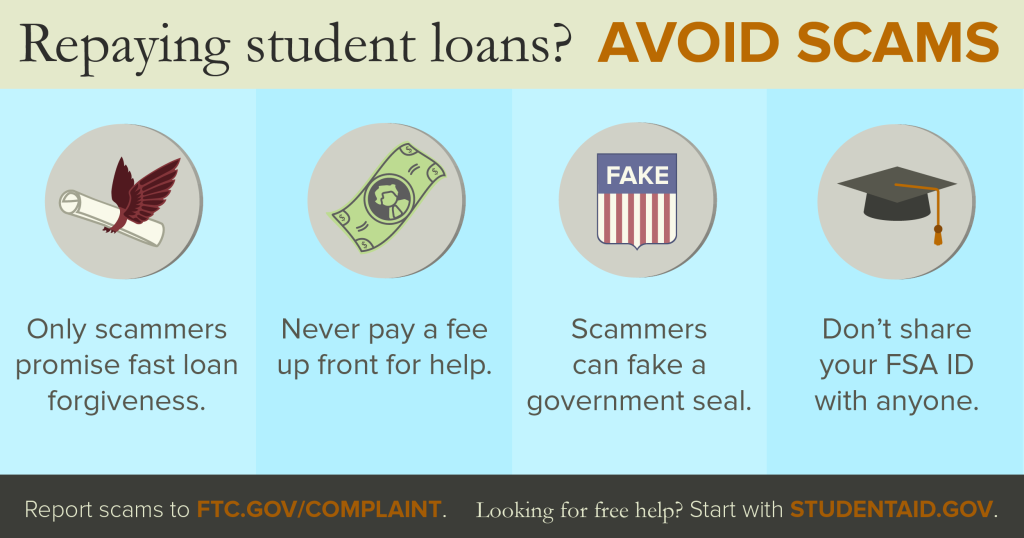
Image Courtesy of STUDENTAID.GOV.
Where McAfee’s Scam Detector Comes In
This is exactly the kind of gray-area messaging that trips people up.
Federal Student Aid also recommends reviewing your account activity and confirming no unauthorized changes were made.
The Bottom Line
Student loan consolidation scams don’t look like scams anymore.
They look like helpful emails. Official notices. Last chances.
That’s why protection today isn’t just about knowing the rules, it’s about having backup when something feels off.
With McAfee, you’re not left guessing. You can spot suspicious messages, understand the risks, and move forward with confidence, without handing your time, money, or identity to someone who doesn’t deserve it.
Because starting your post-grad life shouldn’t come with a scam attached.
ESET researchers have investigated an ongoing attack by the ScarCruft APT group that targets the Yanbian region via backdoor-laced Windows and Android games

 Login
Login