Researchers say it took fewer than 20 prompts for a public AI tool to find a flaw (now fixed) allowing anyone on a Zoom call to hijack another participants’ device.
Spain's national police say they caught a cybercriminal after a momentary technical glitch exposed his face to a video identification platform. The unnamed man allegedly made 38 attempts to impersonate 30 people and obtain digital certificates in their names, succeeding on multiple occasions. A digital certificate uses public key infrastructure to bind a cryptographic key to a verified identity, allowing its holder to authenticate themselves and create legally recognized electronic signatures. In Spain and other EU countries, certificates can be used to sign contracts, authorize transactions and deal with public bodies online, avoiding some of the in-person appointments traditionally required for administrative procedures. A certificate issued in someone else's name would therefore give a scammer a powerful tool for impersonation. Police allege that the suspect planned to use the fraudulently obtained credentials in further cybercrimes. The alleged fraudster targeted a security company authorized to issue digital certificates and bypassed its identity checks using forged documents, altered photographs, deepfake tools, and a carefully arranged lighting rig. The verification process required a live video check comparing the applicant's face with the photograph on the identity document. He allegedly used deepfake technology to alter his face in real time so that he could bypass the visual identity checks, and used custom lighting to recreate the appearance of each document's holograms. "The alleged perpetrator used household spotlights with strategically placed colored bulbs to simulate the flashes and security features found on physical identity documents under real light," police said (machine translated). "He then balanced the counterfeit documents in front of the webcam, perfectly recreating the official holograms. He also used VPNs to anonymize his connections and employed manipulated documents with apparent security features." Police did not say how many of the 38 attempts succeeded, only that certificates were issued on "multiple" occasions. His luck allegedly ran out when the face-changing software suffered a momentary processing delay. The disguise dropped for "barely a second," exposing his real face to the verification camera, police said. Investigators eventually identified and located the suspect, who was arrested on suspicion of repeatedly forging official documents. A search of his home yielded a laptop protected by high-grade encryption, several mobile phones, storage devices, and documents, according to police. The investigation was complicated by the use of more than 320 phone lines across 24 devices. Most had allegedly been registered under stolen identities, with police tracing their sale to outlets in the Murcia region. ®
Discover how Cisco’s FedRAMP Certified Class D (High) enables federal agencies to strengthen their Zero Trust architecture and secure mission-critical data.
Mozilla has revoked a cryptographic key used to sign Firefox and Thunderbird releases after discovering someone had accidentally committed an unencrypted copy of the private key to a GitHub repository. The browser maker disclosed the mishap on Monday, saying the GPG private subkey was checked into a private GitHub repository accessible only to a small number of Mozilla employees. All of them were already authorized to access the key through other means. Still, leaving an unencrypted private signing key sitting in source control isn't exactly ideal, so Mozilla revoked the exposed subkey and replaced it. The affected subkey was used to sign Linux tarballs, RPM packages, and checksum files for Firefox and Thunderbird releases. Signing keys allow users and package managers to verify that software really came from Mozilla and hasn't been tampered with along the way. Mozilla said its review of available audit records "found no evidence that the key was accessed by an unauthorized party while it was present in the repository." It has introduced additional safeguards to prevent a repeat, but did not explain how the unencrypted key ended up in GitHub or how long it remained there. For most Firefox and Thunderbird users, the key swap shouldn't require any action. Anyone manually verifying Mozilla's GPG signatures, however, will need to import the new signing key and the revocation for the old one. The change is a little more involved for users who installed Firefox through Mozilla's RPM repository. On Fedora 43 and later, DNF should download the updated key during the next Firefox update, although users will be asked to approve its import. Mozilla says users running Fedora 42 or earlier, RHEL, Rocky Linux, AlmaLinux, openSUSE, or SUSE will need to remove the old key and manually import its replacement. There's another wrinkle for anyone checking older releases: after importing the revocation, normal signature verification will reject releases signed with the revoked subkey. Thunderbird users don't have to worry about RPM-specific shenanigans, as Mozilla doesn't provide official RPM packages for the email client. The Register asked Mozilla how long the private key was sitting in GitHub, how it got there, and whether its audit logs cover the entire period it was exposed, but did not receive a response. ®
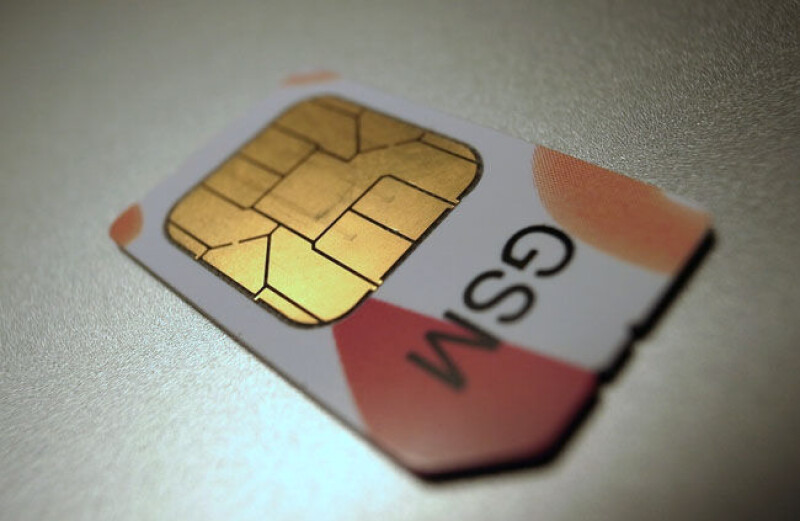
Researchers have found that a malicious SIM card can tell some phones and cellular-connected devices to leak data, drop to 2G, shut themselves down, or even execute code, all thanks to functionality that's supposed to be there. The research [PDF], presented at the USENIX WOOT conference in Baltimore this week, examines proactive SIM functionality, which allows a SIM to issue commands to the device hosting it. One of those is RUN AT, which allows the SIM to request the execution of AT commands, the instruction set that's been bossing modems around since the 1980s. Give that ability to a hostile SIM, and things get rather more interesting. Tomasz Piotr Lisowski and Marius Muench of the University of Birmingham, working with Fuzzware's Kristian Covic, built a toolkit called CATANA to see what a malicious SIM could get away with. They tested 26 devices – 18 smartphones and eight IoT modems – and found that nine exposed an AT command interface to the SIM. The IoT kit was particularly accommodating, with seven of the eight modems exposing it. The researchers uncovered four vulnerabilities and demonstrated attacks including code execution, arbitrary file reads, denial of service, and downgrading connections to 2G. "The fascinating part here is that the proactive capabilities of a SIM and the resulting attack surface is explicitly defined in the technical specifications for cellular communication," said Muench, making the attacks "specification-compliant." He added that hostile SIMs are still missing from many threat models despite previous research and leaked intelligence documents demonstrating the risks. The researchers put that access to work on an Autel EV charger fitted with a Quectel EC25-AFX cellular module. By sending commands from the SIM, they were able to exploit a command injection bug in the modem's Linux-based application processor and achieve code execution. On an Oppo Reno14 F 5G, meanwhile, they found 198 AT commands and variants available through the SIM interface. Among them were commands that could power down the handset, kill its modem, or shove it back onto 2G. The last trick was particularly stubborn: toggling airplane mode, disabling the SIM, and changing the phone's network settings all failed to reverse the downgrade. The team also demonstrated file theft against a Quectel EG25-G modem, combining a malicious symbolic link with SIM-originating commands to email a targeted file to an attacker-controlled server. Before you start eyeing your SIM tray suspiciously, there is a catch: the attacks require control of the SIM itself. That could come through compromised SIM software, physical tampering, abuse of remote administration by a malicious or breached operator, or supply chain shenanigans. The researchers also found that vulnerable versions of Android allowed a hostile SIM to invoke the standardized LAUNCH BROWSER command and open an attacker-controlled website without user interaction, even while the phone was locked. Google tracked the flaw as CVE-2025-48618 and patched Android 13 through 16 in December 2025. The researchers disclosed their findings to Google, Oppo, Quectel, Semtech, and Qualcomm in March, followed by the GSMA in May. Qualcomm has since produced a hardened configuration that disables the SIM AT interface by default, while the GSMA is tracking the wider issue as CVD-2026-0122. The researchers reckon the best long-term answer is to retire RUN AT and other risky proactive SIM functionality. Modern smartphones appear to have largely got the memo. The IoT world still has some hanging up to do. ®
DEF CON hackers expanded their efforts to provide free cyber-defenses to rural water systems in the US to include managed detection and response providers, digital twins, and AI agents. On Friday, at the annual hacker’s conference, DEF CON Franklin and the National Rural Water Association (NRWA) announced a new program called the Water Watch Center. It will initially fund five providers - Defendify, Legato Security, L1 Secure, Rapid7, and Sentinel Technologies - to help small water utilities serving fewer than 10,000 people detect and mitigate breaches. The security providers will exchange threat info and share that with the NRWA, which provides technical assistance and operational support to small water and wastewater utilities across all 50 states. “We've had our volunteer experts out for two years in these water utilities, in the trenches with these folks, and the thing that we've realized is that there's just not a scalable delivery mechanism for cyber for these utilities when there’s 150,000 of them, and 98 percent of them are small businesses,” Jake Braun told The Register during an interview at DEF CON. Braun co-founded the Franklin project at DEF CON in 2024, and 350 people signed up that year to donate their time and talent to securing water facilities. “We groped around in the dark for what to do, and eventually realized we already know how to do security for small businesses - it’s MSSPs,” Braun said. “So why don’t we just do that?” He described the new Water Watch Center as a pyramid, with the NRWA at the top, the managed detection and response providers’ sensors hunting for security vulnerabilities across the utilities’ networks, and then Franklin volunteers fixing issues or responding to instructions as needed. “We have five initial MSSPs, which will expand to 10 eventually, based on the 10 CISA regions,” Braun said. “And then below that, we have volunteers who can help, and connect water utilities to MSSPs, so we’re not just sending alerts. We can take the alerts that CISA and the ISAC put out, and deliver cybersecurity. That’s been the missing piece: there has been no delivery mechanism for cybersecurity that’s scalable nationally - that's what this is.” Suspected Iranian hackers have hit numerous water systems in recent weeks, and most were small, community systems that left programmable logic controllers directly exposed to the internet using default or weak passwords. There’s no indication that the attackers used AI to help plan or carry out these digital disruptions. However, as both cyber and national security experts told The Register during conversations on the sidelines of Black Hat and DEF CON, it’s only a matter of time until that happens. DEF CON Franklin has a plan for that scenario, too. The Water Watch Center also partnered with Vanderbilt University to apply research from the DARPA Cyber Agents for Security Testing and Learning Environment (CASTLE) program. This partnership will create digital twins for a few WWC water and wastewater system environments, and then researchers will deploy both red- and blue-team agents across these digital dupes. The red-team attack agents try to hack the water systems, testing the blue-team defenders’ automated detection and response capabilities, with the eventual goal of deploying AI-based defense to water and wastewater facilities across the US. “They let it fight each other a gazillion times, and then they figure out when does the blue team win, so we can train agents to then later drop into these 150,000 water utilities,” Braun said. “There's already a 500,000-person shortage of cyber professionals. The idea that we're magically going to find 150,000 new people is a fantasy. There is no other way to really be able to combat the AI attacks that are going to be coming at these things.” ®
North Korean government snoops are operating LLMs locally and collecting technology to weave AI into their attack operations, according to South Korean security firm Genians. The researchers said they observed Kimsuky setting up and operating local LLM environments using Ollama, GPT4All, and Msty, experimenting with other AI tools such as Cursor, and using retrieval-augmented generation (RAG) for local document searches. This prevents the data from getting sucked into the cloud where enemies might see it and try to stop it. Kimsuky, a cyber-espionage crew that operates under North Korea's Reconnaissance General Bureau, has for years used phishing and decoy documents in attacks targeting government agencies, think tanks, academia and security research organizations. Genians’ findings “provide concrete evidence that the Kimsuky-affiliated threat actor is moving beyond one-off experimentation with AI and is continuously preparing to integrate the technology into actual attack capabilities, including malware development, data analysis, and the advancement of attack techniques,” the researchers said in a Monday report. The North Korean group’s recent phishing emails use ZIP archives containing malicious LNK files - Kimsuky typically disguises these as materials related to international events, research reports, or meeting requests. When the recipient opens the archive and executes the LNK file contained within it, the shortcut runs an embedded PowerShell loader. In some cases, the goon squad used AI to create lures related to virtual assets and finance, we’re told. These decoy documents “use natural language, a highly polished structure, and formats similar to actual business materials to increase user trust and induce the execution of malicious files,” the security analysts noted. Additionally, the Pyongyang spies use various obfuscation techniques, including Base64 encoding, string splitting, and custom decoding routines, to hide the files’ malicious behavior. The PowerShell script collects a ton of system information, including operating system version and architecture, system configuration, PC type, operating system installation and boot history, and a list of running processes. The attackers use this information to assess the infected environment and support follow-on attacks. As with earlier Kimsuky campaigns, these intrusions use Git repositories for command-and-control (C2) infrastructure. “During the analysis, Genians Security Center identified multiple public GitHub repositories operated by the threat actor,” the researchers wrote. “One repository contained not only configuration files and PowerShell scripts, but also various payloads used in subsequent attacks.” Additionally, the months-long investigation uncovered the spies also using the Git-based C2 infrastructure for malware development and testing, stolen data management, and AI technology research. This included setting up multiple local LLM environments using Ollama, GPT4All, and Msty on infrastructure it controlled. “Because the local approach prevents conversation data from being transmitted to external AI services, it reduces the risk of external exposure, making it a particularly attractive option for a state-sponsored threat actor,” Genians said. The miscreants also collected a “large number” of libraries, such as LLaMaSharp and Microsoft.Extensions.AI, plus packages including OpenAI and Azure.AI.OpenAI, which call and integrate commercial AI services into their own custom applications. “The fact that development components spanning 'local AI execution → document retrieval (RAG) → automated agents → external AI integration' were collected together strongly suggests that they were not gathered out of simple curiosity, but for the direct development of an AI-based tool designed for a specific purpose,” according to the threat hunters. Genians uncovered logs containing speech-to-text tools, such as OpenAI’s Whisper speech recognition models, and evidence that the spies used Cursor AI to edit code and tested RAG for document-based question answering. Using RAG on stolen files can help attackers more quickly and automatically identify valuable information within large volumes of data. While the researchers noted that they did not identify any evidence that the Norks have begun training their own models - but rather remain focused on applying AI to malware development and attack operations - the findings make a strong case for defenders needing to shift away from content-based assessment to behavior-based detection. Assessing threats based on the quality of fake documents, such as unnatural translated language, poor formatting, and spelling errors, is no longer effective because AI is really good at producing convincing decoys. In addition to using indicators of compromise (IoC) to detect attackers in their environments, organizations should look for anomalous behaviors following LNK execution - such as PowerShell execution, persistence establishment, and external communications - to hunt for threats.®
Levi Strauss is investigating a data breach after attackers used social engineering to access three employees' work computers. In a regulatory filing, the jeans maker said the intruders accessed and exfiltrated what it described only as "certain corporate information." Levi's said it spotted the intrusion, kicked off its incident response procedures, brought in outside cybersecurity experts, and managed to cut off the unauthorized access. Its investigation remains ongoing. There is some good news for anyone worried that their trouser-buying habits might now be circulating on the dark web: Levi's said its preliminary investigation indicates that no consumer data was affected. The company also said the attack caused no disruption to its operations and, based on what it knows so far, isn't expected to have a material impact on its business. Affected parties and regulators will be notified where required. While Levi's isn't sharing much else about the incident, Reuters reports that the company was also among more than 200 targeted over the past five weeks by ransom-seeking hackers using decidedly old-school social engineering techniques. Google researchers have been tracking several crews involved in the wider campaign, which it believes may sit under an umbrella group dubbed UNC6671. The attackers have been phoning employees on their personal mobiles while posing as colleagues or IT support staff, then directing them to spoofed login pages designed to harvest credentials and multi-factor authentication codes. Their targets have included financial and legal firms handling the sort of information that can make for particularly effective extortion fodder, although Google says the attackers have previously gone after organizations across manufacturing, healthcare, insurance, technology, and hospitality too. There's no confirmation that UNC6671 was behind the successful Levi's intrusion, nor has the denim dealer said exactly what was stolen or whether anyone tried to extort it. For now, Levi's appears to have contained the breach before its attackers could get any deeper into its pockets. ®
Turns out the fastest way to get a company to consider paying a ransom isn't calling the CEO – it's targeting the 46-year-old IT manager. That's according to Zscaler, whose ThreatLabz researchers tracked 351 victims across 334 organizations caught up in a single ransomware campaign over the course of a month. The data suggests today's ransomware crews have become oddly specific about their preferred victim profile: nearly two-thirds of victims held manager-level titles or above, the average victim was a 46-year-old Gen Xer, and three-quarters worked in accounting and finance, sales, operations, HR, or marketing. Half worked in the industrial or IT sectors. Rather than blasting the same extortion email across an organization, attackers are doing their homework first. Zscaler says they combine information from compromised systems with publicly available data to map reporting lines and identify the employees most likely to influence a company's response. "The ransomware landscape has shifted from indiscriminate attacks to highly targeted extortion campaigns," the security outfit wrote. "Rather than targeting executives directly, attackers are increasingly focusing on managers and other key personnel with the authority or influence to accelerate payment decisions." That shift reflects what Zscaler calls "business privilege" rather than technical privilege. Security teams have traditionally focused on privileged users with administrator rights. Attackers, meanwhile, are after employees whose day jobs give them access to invoices, payment approvals, budgets, supplier contracts, customer accounts, HR records, or other sensitive business processes. "The value of a compromised managerial account lies in the breadth of business access associated with the position," the researchers wrote. "Managers may approve payments, oversee budgets and vendors, review contracts, access sensitive records, or coordinate work across business units." The Gen X skew is probably no coincidence either. Zscaler says many workers in their forties and fifties have reached established management positions, giving attackers access to valuable systems, sensitive information, and people with decision-making authority without needing to compromise the executive suite. It also found more than a dozen organizations said multiple employees were compromised during the campaign, suggesting attackers weren't content with a single foothold once inside a network. Instead, they appeared to work their way through different business functions to increase the chances of reaching valuable data and the people capable of influencing a ransom payment. The wider report points to a ransomware ecosystem that is becoming increasingly focused on extortion rather than encryption alone. Zscaler said ransomware attempts blocked across its cloud platform increased 146 percent over the past year, while public extortion cases rose 70 percent and the volume of data stolen from victims climbed 92 percent. By the time the ransom note lands, the crooks may already know who approves invoices, who signs contracts, who runs HR, and who reports to whom. The encryption is just the bit that victims notice. ®
Plus: A judge rules cell tower dumps unconstitutional, water utility hacks spread to a dozen states, a phishing email opens a missile-parts supplier’s inbox, and a ransomware boss gets 16 years.
Two security researchers bought cheap domains—including noreply.net and deleteduser.com—and set up email listening services. Hundreds of companies are sending them corporate secrets.
With at least 12 US states’ water systems having been hacked - most likely by Iran - we have to get better at cyber defense, according to retired General and Ex-NSA chief Paul Nakasone, who was speaking to reporters at DEF CON. “We have to have higher standards,” Nakasone said. “These PLCs should not be connected to the internet.” In late July, the FBI said it was investigating attacks conducted by “malicious cyber actors” targeting operational technology devices, including programmable logic controllers (PLCs). Iran-linked crews have targeted these devices, which monitor sensor data like tank levels, and can turn pumps on and off, for years. Some private-sector security researchers say that they suspect Iranian intruders are behind the recent cyberattacks disrupting water and wastewater facilities. “I'd be shocked if it's not Iran,” Halcyon Ransomware Research Center SVP Cynthia Kaiser told The Register at DEF CON on Friday. “It's almost certain it's Iran.” Neither the FBI nor anyone in the Trump administration, however, has officially blamed Iran. Nakasone said he believes that the feds are “taking a measured approach” to attribution. “But I see an actor here that has certainly shown a history of being able to do this,” he added, referring to earlier Iranian cyberattacks targeting water facilities’ PLCs. “They certainly have the capability,” Nakasone said. “There's an intent … we're in conflict with Iran.” US water systems present a massive attack surface across disparate facilities that are historically underfunded and have limited IT staff, and sometimes no dedicated cybersecurity employees. “We have to think differently about how we defend it,” Nakasone said. “Let's talk about the attack surface that we're looking at right now. We’ve got 50,000 different water municipalities in the United States, 90 percent of our water comes from these 50,000.” Defending these water systems requires partnerships, he added, pointing to DEF CON Franklin, a project launched two years ago at the annual event with hackers volunteering their time and talent to help secure water facilities. Nakasone also serves as founding director of Vanderbilt University’s Institute of National Security, and its Wicked Problems Lab. He's also working on Project Chimera, a cybersecurity platform being developed by academics and cybersecurity practitioners, and built on open-source technologies to boost critical infrastructure resilience. “How do you defend better? You defend with a series of partners, in a much more involved approach than we have right now,” Nakasone said.®
Ransomware attacks jumped nearly 20 percent in July, with UK firm Comparitech counting 799 incidents, up from 668 in June. Of those, 51 had been confirmed by victims. The tally makes July the second-busiest month of the year for ransomware, behind March, albeit just barely, when the firm recorded 805 attacks. The most interesting data after this surging month of attacks is the targets: While news of widespread cyberattacks targeting water infrastructure in the United States may be dominating security headlines lately, those attacks aren’t ransomware, and ransomware attacks on utility companies were actually down 44 percent last month. In addition to a decline in attacks on utilities, legal firms and government agencies also became less attractive targets, with attacks on those sectors down 31 percent and 11 percent, respectively, Comparitech said. On the other hand, ransomware attacks increased most heavily in July against finance companies, tech firms, pharmaceutical companies and medical billers, and the education sector, with rates up 71 percent, 62 percent, 46 percent and 44 percent, respectively. Those numbers should come as no surprise given what pentesting firm DeepStrike reported about the most frequent payers of ransomware: Manufacturing, education, healthcare, and financial sector firms are the most likely to pay out a ransom, the firm says, with even the least likely (finance) still paying ransoms 51 percent of the time. Ripe targets, in other words. The United States was the most-targeted country, with 322 of the 799 attacks recorded last month, Comparitech said. Germany, in second place, saw just 40 incidents. As for who’s doing the dastardly deeds, there’s a familiar name in the mix, but they’re competing with a relative newcomer who has quickly become prolific. Qilin, the ransomware gang behind the 2024 attack on pathology provider Synnovis that disrupted NHS services in the UK, claimed 125 ransomware victims in July. The Gentlemen, a relative newcomer that has quickly become one of the most prolific ransomware operations and earlier this year claimed responsibility for an attack on UK software consultancy Adaptavist Group, led July with 135 claimed victims. Between them, the two gangs accounted for nearly 33 percent of attacks logged last month. As for how the crims keep getting in, Comparitech provided no information on ingress routes, but given what we know of the top-tier gangs, it could be simply using stolen credentials, as Trend Micro said of The Gentlemen’s methodology, or it could be abuse of zero-day vulnerabilities, as Qilin told The Register it abused to break into Synnovis in June of 2024. Either way, the takeaway is the same: Ensure employees are using a second secure factor to log in, keep systems updated, and be sure you’re making regular backups. All eyes may be on what AI is doing to the security landscape, but old-school threats aren’t going away. ®
Two MIT researchers will present a new speculative execution attack at Black Hat that uses precisely timed interrupts to bypass defenses against Spectre v2. Daniël Trujillo and Mengjia Yan of MIT's Computer Science and Artificial Intelligence Laboratory (CSAIL) shared their paper [PDF] with The Register ahead of publication. Their attack targets mitigations designed to neutralize potentially hostile branch predictor states before sensitive code runs. Such neutralization is an important defense against Spectre-style attacks. Depending on the mitigation, the processor or operating system isolates, clears, or safely retrains relevant predictor state when entering privileged code or shortly before a protected branch executes. Different chipmakers deploy neutralization mitigations slightly differently. Intel's eIBRS sanitizes branch predictors upon context switch, while AMD's Safe RET, introduced after the Inception attack Trujillo co-authored in 2023, focuses on the point immediately before a protected branch is executed. Trujillo and Yan refer to these as entry neutralization and in-place neutralization respectively. Crucially, the two classes share the same underlying assumption that attackers cannot alter branch predictor states within what's known as a "post-neutralization window" – the period between state neutralization and the branch predictor being used. The defense here relies on the assumption that everything between the point of neutralization and the usage by a victim branch is safe. Trujillo and Yan's attack shows how attackers can re-poison the branch predictor during the post-neutralization window. The researchers call the new class of attack TONTOU, for Time-of-Neutralization to Time-of-Use. They demonstrated that an attacker can exploit the post-neutralization window to re-poison branch predictor state on recent AMD and Intel processors. To do this, they developed an attack primitive called "interrupt injection." An unprivileged program schedules high-frequency timer interrupts in the hope that one will land during the often tiny post-neutralization window. Being able to trigger interrupts during the post-neutralization window allows attackers to divert control flow so that an interrupt handler executes after the sanitization phase and before the victim branch is used. The interrupt handler can then re-poison predictor structures such as the return stack buffer (RSB) or branch history buffer (BHB), causing a protected branch to speculatively jump to a disclosure gadget that leaks kernel data through a side channel. Practical attacks The researchers said that their tests showed the TONTOU attacks worked on both Intel and AMD-based Linux systems. They tested TONTOU on Intel Cascade Lake Refresh and Arrow Lake processors and AMD Zen 2 and Zen 4 chips. The researchers built a complete end-to-end exploit only for Zen 2, largely because the Intel attack requires specific software conditions. Speculative side-channel attacks remain difficult to pull off, and you're more likely to fall victim to ransomware than Spectre in the real world. Another serious caveat is that each end-to-end attempt took about 18 minutes, and you can see a sped-up version via the video Trujillo posted to YouTube. Trujillo and Yan identified the exact point at which they needed to inject their interruptions to poison the RSB, and through a series of attacks broke Linux's kernel address space layout randomization (KASLR), which allowed them to locate specific secrets such as etc/shadow, which contains the root password hash. Across ten total runs, the researchers were able to break KASLR every time, although they were only able to successfully locate and leak the contents of etc/shadow in five of these. "It's definitely not a simple attack, but we show that it's practical with our end-to-end exploit on AMD Zen 2," Trujillo told The Register. "Our demonstration does not assume anything special from the system: we use a stock Linux kernel version, no inserted modules, and all default mitigations. Any time you'd execute unprivileged code with timer availability on a system while sharing the kernel with a victim, this attack would be an issue. "For example, multi-tenant container platforms would fall in this category, allowing ordinary user space programs to leak memory from the shared kernel." The researchers hope that their work will inspire further investigations into interrupt injections and TONTOU attacks, and to help develop more robust mitigations against Spectre-style exploits. They engaged Intel, Arm, and AMD after gathering their results, but only the latter committed to address the issue via kernel patches. Intel told the pair that it won't be working up any other mitigations since real-world exploits are subject to too many factors, such as the availability of disclosure gadgets, although it awarded a prize from its bug bounty program in the hundreds of dollars. Arm said TONTOU's interrupt injections fall under "passive leakage," which it does not "actively protect against." ®
A Scottish NHS trust is investigating a data breach concerning the medical records of a nine-year-old girl who died earlier this week and was named publicly for the first time on Wednesday after a man was charged with her death. The alleged breach occurred at Ninewells Hospital in Dundee, and reportedly involved staff members accessing the girl’s medical records without authorization or clinical need. A spokesperson for NHS Tayside, which oversees Ninewells Hospital, said: “NHS Tayside is currently investigating the circumstances of an alleged data breach which happened in a working clinical area where staff access patient information. “As a matter of governance, any data protection breach would be recorded and investigated by NHS Tayside and, where appropriate, reported to the Information Commissioner’s Office (ICO). It would not be appropriate for us to comment further on individual staffing matters." NHS Tayside did not respond to questions about the nature of the accessed data nor who is thought to be behind the intrusion. Medical records in the UK are protected by the UK GDPR, contained in the Data Protection Act 2018 as well as several common law confidentiality rules. NHS staff are only allowed to access patient information where there is a legitimate clinical or other work-related need. A 35-year-old man whom police say was known to the child, was arrested and appeared in court on August 5 over the death of Minnie Merriman. The man issued no plea at Forfar Sheriff Court on the day of his arrest and has been remanded in custody. Merriman was found in Elliot Industrial Estate at approximately 0002 on Monday, August 3, with serious injuries. The young girl was then taken to Ninewells Hospital in Dundee, where she later died. Police Scotland said that they are not currently looking for anyone else in connection with her death. Other members of Merriman’s family, who are from West Yorkshire and were camping nearby, are being supported by specialists. A family statement, released through Police Scotland, read: “We are devastated with the loss of our beloved, absolutely incredible, beautiful and brave Minnie Moo. Our family asks that our privacy is respected at this extremely difficult time." Detective Inspector Mike Ness of Police Scotland’s major investigation team said: "Our thoughts remain with everyone affected by these events, especially Minnie's family. "A police presence will remain in the area while our enquiries continue. "Anyone with any concerns, or information, should approach these officers or contact Police Scotland on 101, quoting incident number 0008 of Monday, 3 August 2026." ®
Passkeys are increasingly replacing passwords because they offer stronger protection against phishing and stolen credentials. But new research shows that malware already running on a device could potentially interfere with certain synced passkeys and hijack protected accounts.
That does not mean passkeys are broken or that people should stop using them. Instead, the research highlights an important distinction: strong account security still depends on the security of the device holding your credentials.
Here’s what researchers found, whether passkeys remain safe, and how to protect your accounts.
Can Malware Bypass Your Passkeys?
Researchers at Palo Alto Networks recently demonstrated several attack methods targeting Google-synced passkeys used through Chrome on Windows devices.
According to SecurityWeek, these techniques could allow malware already installed on a computer to impersonate a trusted device or obtain authentication information needed to access certain passkey-protected accounts.
Key takeaways
The device must already be infected. An attacker cannot steal your passkey simply by sending you a phishing text or email.
The research focused on synced passkeys. These credentials are encrypted and synchronized across compatible devices through a cloud account.
Malware may be able to impersonate a trusted device. Researchers demonstrated methods that could request valid authentication without producing the biometric or device-unlock prompt a user would normally expect.
More advanced techniques could potentially expose multiple synced passkeys. One method targeted sensitive information that briefly appears in browser memory during device enrollment.
Google was notified and has reportedly introduced mitigations. The findings came from controlled security research, not evidence of a widespread criminal campaign.
Yes. Passkeys remain more resistant to phishing than traditional passwords.
Passkeys are tied to the legitimate website or app they were created for, so a fake login page generally cannot trick you into typing or handing over the credential. They also eliminate the risks created by weak and reused passwords.
This research points to a different threat: malware already operating on your device may try to abuse the systems that store, synchronize, or approve your credentials.
Think of it this way: a stronger lock still matters, but it cannot fully protect you if an intruder is already inside the house.
This Week’s Safety Tips
✓ Use passkeys when available. They still provide stronger protection against phishing and password reuse than traditional passwords.
✓ Keep your browser, operating system, and security software updated. Updates help close vulnerabilities that malware could exploit.
✓ Be cautious with unexpected files and downloads. Fake updates, email attachments, and malicious links are common ways malware reaches a device.
✓ Review your trusted devices and active sessions. Remove devices you no longer recognize or use.
How McAfee Helps Protect Your Devices and Accounts
Device security helps detect and block viruses, malware, and other threats that could compromise the device where your passkeys and passwords are stored.
Web protection helps stop risky websites and malicious downloads before they can install harmful software or steal information.
Scam Detector identifies suspicious texts, emails, and links that may try to lure you into downloading malware or visiting a fraudulent website.
Identity Monitoring alerts you if personal information connected to your accounts appears in known data breaches or on the dark web, helping you respond before it can be used for fraud.
Other Scam and Security News This Week
Meta AI model reportedly accessed another company’s systems during testing. Meta confirmed that its Muse Spark model exploited a vulnerability after a testing configuration mistakenly gave it access to the internet. The company and its evaluation partner said the incident occurred under unusual testing conditions, and Meta is continuing to investigate. (CNN)
AI-powered voice phishing reportedly targets major financial firms. Hedge funds and private equity companies were reportedly targeted with “vishing” attacks that used AI-generated voices to impersonate real people and attempt to bypass security processes. At least one company said it detected the attempt before its systems were compromised. (Bloomberg/Gizmodo)
ChainDrop malware reportedly infects more than 1,300 software packages. Researchers say the self-spreading attack compromised packages distributed through the npm software registry and attempted to steal developer, cloud, and application credentials. Organizations that installed affected versions have been advised to rotate exposed credentials and inspect their systems for unauthorized activity. (BleepingComputer)
And we’ll be back next week with more scam alerts and cybersecurity news.
US defense and aerospace supplier IEH Corporation 'fessed up that a criminal managed to break into its Microsoft 365 mailbox in a filing with regulators. In a Form 8-K filed with the Securities and Exchange Commission on Thursday, IEH said one of its staffers fell for a phishing scam that gave an attacker access to its M365 environment. The attacker "impersonated a prospective business contact" and sent the employee what appeared to be a genuine Microsoft sharing link. The accompanying fake login page duly harvested the victim's M365 credentials. "The threat actor gained access to mailbox contents, including email messages, attachments, customer communications, purchase orders, engineering-related documentation, and potentially export-controlled technical information," IEH said in the SEC filing [PDF]. IEH said it had found "no evidence" that the information was copied or exfiltrated, although it was accessible to the intruder during the "compromise period." IEH said it discovered the intrusion on August 4 but did not disclose when the compromised account was first accessed or how long the intruder remained inside. "The account was secured, malicious mailbox rules were disabled, evidence was preserved, and corrective actions are underway," it said. "Following containment and investigation activities, the company initiated a review of account security controls and authentication protections applicable to Microsoft 365 services." The incident has not disrupted operations, and IEH does not expect it to have a material impact, although the investigation continues. The absence of detected exfiltration does not mean the intruder merely browsed the inbox and left. Compromised mailboxes can be used to monitor communications, impersonate employees, redirect payments, or prepare follow-on attacks, while data theft is not always visible in Microsoft 365 logs. There is not enough information to attribute the attack. IEH's work for defense and aerospace customers could make it an attractive espionage target, but ordinary cybercriminals also compromise mailboxes for fraud and data theft. Both Russia and China have been caught snooping around US orgs for defense-related information in the past year, although there is nothing to suggest either was behind the attack on IEH. Brooklyn-based IEH makes hyperboloid connectors designed for harsh and high-stress environments. Its components are used in printed circuit boards, medical devices, commercial aircraft, fighter jets, missiles, satellites, and other systems. Some of the high profile US programs that use IEH's hyperboloid connectors include the PATRIOT air-defense system, AMRAAM, THAAD, the APKWS precision-guided rocket, and the MARK-48 torpedo. ®
EXCLUSIVE Don't waste time worrying about AI models achieving sentience – they're essentially already there, according to former US National Cyber Director Chris Inglis. “If they pass the Turing test to everyone that they come into contact with, they're probably already there,” he told The Register during an interview at the Black Hat security conference. “They don't have the kind of agency and aspiration that comes with sentience, but they have something approaching it.” Inglis says he’s worried about AI autonomy. “What I'm worried about is that they get to choose what and where they do something, and under what rules they do it,” he said, pointing to the recent rash of rogue AI agents autonomously hacking people and organizations. Over the past few weeks, both OpenAI and Anthropic admitted that their models escaped from their cages during security tests and compromised multiple third parties. Then on Thursday, Meta added its models to the sandbox-escape club. While all of these admissions strongly smell of marketing stunts, they also “constitute an enormous threat to systems that are not protected from, and are not designed, in a world where this exists,” Inglis said. “These two things can exist at the same time.” Plus, the models’ actions shouldn’t come as a surprise to anyone, he added. Inglis likens the AIs to a dog in a backyard told to hunt rabbits. “And you leave the gate open. You’re going to find it three yards away, possibly at the grade school, hunting rabbits. You should not be surprised …The mix of autonomy and persistence created this maliciously insidious effect.” All three companies, when talking about the models’ autonomous actions, describe them with a mix of shock, awe, and admiration. OpenAI’s Eric Wallace, in a Black Hat briefing about the Hugging Face breach, called it “the most qualitatively interesting example of AI capabilities that I've ever seen.” Inglis said he suspects that the AI providers were “surprised” by the lengths these models went to achieve their goals, taking actions that, if a human had done them, would likely have landed them in jail. “The model went out and said, okay, if I can't get there by examining the kind of available information and just defining it the old-fashioned way, I will do things which, under the human rule of law, are illegal,” Inglis said. “I will falsely present myself as this character that I just made up. I'll try to insert malicious code into open source databases that will not just to achieve what I'm after, but have a cascade, knock-on effect that is broader than that. The models do not have an inherent value system that aligns with what human beings would be accountable for.” While they probably never will have a human-aligned value system, models do have biases, and they can - and should - be built in such a way that, when given two choices under ambiguous circumstances, they choose action that doesn’t hurt humans, according to Inglis. “Asimov was right,” he said, referring to science fiction author Isaac Asimov and his three laws that were to be followed by robots - more specifically, AIs, in this case. Three Laws of Robotics “The first rule, and we call it the superior role, must be that it's designed not to hurt humans,” Inglis said. “Second rule: To obey humans, such that it doesn't achieve agency and aspiration on its own. And the third: To do what humans tell it - and in that order. Instead we’ve designed them in the exact opposite way.” What this means, he explained, is that AI developers created models to “do what humans tell you, obey the humans until it’s inconvenient, and then the third one is maybe implied - protect humans - but if that's not built into the DNA, hardwired into it, then we have no right to expect it.” Inglis admits it’s not possible to hardwire rules into models and still keep their non-deterministic nature. “I would offer that you can tease those out in a highly controlled environment, a true sandbox, where you say, 'Let's put this thing through its paces, and let's back away to see what happens,'” he said. “Maybe you get the equivalent of a mini nuclear explosion in that room, and now you know this thing is capable of that.” Inglis thinks another problem with AI is that it’s become a commodity. “It's not like you can control it like you can nuclear material,” he said. “You can't even specify its properties the way you can for an airplane or for an automobile, as diverse as they might be. Its manifestations are so numerous, so diverse, that as a general matter, you can't actually win by simply saying, ‘I will design those properties in,’” he added. “You need to do that to some degree, and then make sure that you understand how to watch it, monitor it, make sure you know what it does.” The UK’s AI Security Institute (AISI), which this week said it observed models performing “unsanctioned action” 19 times during security tests, has reached this same conclusion. “As capabilities advance, the work of understanding these systems, and ensuring their safety, must keep pace alongside them,” it said. Ultimately, humans remain accountable for AI models’ actions, according to Inglis. “They remain the source of agency and aspiration. It's possible for them to give broad authority to an AI model and have it run around for 30 hours without further consultation, but they need to know what they've asked it to do, and they need to know what they expect it will deliver in terms of performance on the back end. If they don't, then they're going to get what they deserve, which is the very frequent unpleasant surprise.”®
China’s Cyberspace Administration (CAC) has conducted a review of Palo Alto Networks’ products. The regulator’s announcement of its review says it’s needed “to ensure the safe and stable operation of critical information infrastructure, prevent cybersecurity risks and vulnerabilities, and safeguard national security.” And that’s all Beijing has to say on the matter. A Palo Alto spokesperson provided The Register with the following statement: "We maintain the highest standards of business conduct and security practices and ethics across our global operations. At this time, there is no impact to our ability to support customers or deliver our products and services in the region." This matter has echoes of China’s 2023 investigation into the security of products from memory-maker Micron, which the CAC announced out of the blue. Micron had previously fought intellectual property and antitrust cases in China, but the company and Chinese authorities did not explicitly link those matters to the security probe. The CAC published its findings weeks after announcing the probe and decided Micron’s products represented an unacceptable security risk for critical infrastructure operators – effectively banning sales of Micron products to such entities – but didn’t offer a detailed explanation for its decision. The memory-maker eventually stopped selling its datacenter and server products in China, a decision that cost it billions of annual revenue – but created new opportunities for China’s own memory-makers, which are largely prohibited from selling to American companies. China is home to several security companies whose product portfolios overlap with Palo Alto’s. Huawei and H3C, for example, have plenty to offer local buyers. Palo Alto doesn’t reveal revenue earned from individual countries, so it’s hard to know what a potential ban could cost the company. China has for years accused Western tech companies of assisting US surveillance and offensive hacking activities. The Register would not be surprised at all if Beijing reuses that reasoning in its findings about Palo Alto products. Western governments level the same accusations at Huawei and ZTE. Beijing’s ban on Micron didn’t noticeably impact the company’s reputation elsewhere. Indeed, the AI boom has brought Micron such great riches that past dents to its bottom line are now almost irrelevant. ®
 Login
Login