❌

Reading view

Nearly 7 Million Driver’s Licenses Exposed in Assurance Breach: This Week in Scams

Millions of Americans hand over personal information every day. They share their data with insurance companies, banks, investment apps, and other services they trust. 

And that’s exactly why cybercriminals target and impersonate those services.

This week, an insurance provider disclosed a breach reportedly affecting nearly 7 million people’s driver’s license numbers, while a California journalist shared how a convincing fake Robinhood text ultimately cost her more than $70,000. 

Here’s what happened, why these scams work, and what you can do to protect yourself This Week in Scams. 

Nearly 7 Million Driver’s License Numbers Exposed in Insurance Data Breach 

One of the largest U.S. data breaches of the year has exposed sensitive information belonging to 6.9 million people. 

According to reporting from TechCrunch, insurance provider AssuranceAmerica confirmed that hackers accessed customer information after compromising an employee account. The company says the stolen data includes names, contact information, driver’s license numbers, insurance policy details, vehicle information, and claims data. 

While the company has not said exactly how the employee’s credentials were compromised, it noted that the attackers targeted an employee account before accessing company systems. 

Why driver’s license numbers matter 

Unlike a password, you can’t simply change your driver’s license number. 

Combined with your name, address, phone number, or other information from previous breaches, driver’s license numbers can be used by criminals to: 

  • Open fraudulent accounts  
  • Impersonate victims during identity verification  
  • Make phishing scams more convincing  
  • Support broader identity theft schemes  

This is also part of a larger trend. In recent months, multiple breaches have exposed government-issued identity documents as more organizations collect IDs for identity verification and age-check requirements. 

If you receive a notice that your information was involved in a breach, monitor your financial accounts closely, consider placing a fraud alert or credit freeze, and remain cautious of unexpected emails, texts, or phone calls referencing your insurance or driver’s license information. 

Unfortunately, scammers will reach out saying they’re trying to “help” secure your stolen information, only to try and steal more personal data from you.

How McAfee Can Help Before, During, and After a Data Breach

Before a breach

Personal Data Cleanup helps reduce your digital footprint by removing your personal information from many data broker sites, limiting what scammers can easily find about you.

During a breach

Identity Monitoring alerts you if your personal information appears on the dark web or in known data leaks, helping you respond faster if your information is exposed.

After a breach

Scam Detector helps identify suspicious texts, emails, and links that often follow major breaches, while Web Protection helps block malicious websites designed to steal additional information or credentials.

Fake Robinhood Text Scam Costs Former News Anchor More Than $70,000 

Even people who report on scams can become victims. 

A former California television news anchor recently shared how she lost more than $70,000 after receiving what appeared to be a legitimate text message claiming there was suspicious activity on her Robinhood investment account. 

The message instructed her to call a phone number for assistance. Once connected, the caller posed as Robinhood support before transferring her to a fake “fraud department.” 

Believing she was protecting her investments from hackers, she was convinced to move her money into what she thought was a secure account. Instead, it went directly to scammers. 

She later contacted Robinhood through the official app, but by then the money had already been transferred. 

Why investment scams are becoming more convincing 

Investment scams rely on urgency, authority, and impersonation rather than obvious phishing emails. 

Rather than asking targets to “invest” immediately, many scams begin by convincing people that their existing account is under attack and immediate action is needed. 

At McAfee, we’ve also seen scammers impersonate Robinhood, Charles Schwab, cryptocurrency platforms, and other investment services through fraudulent text messages and malicious links promising AI-powered investing, exclusive bonuses, or unusually high returns. 

Whether the message claims your account has been compromised or promises incredible profits, the goal is often the same: get you to click, call, or transfer money before you have time to verify what’s happening. 

Investment Safety Checklist 

Before responding to any message about your investments: 

✅ Never call the phone number provided in a text message or email. Instead, contact your financial institution using the number listed in its official app or website. 

✅ Slow down when someone creates urgency. Claims that your account is being hacked or frozen are designed to make you act before you think. 

✅ Be skeptical of guaranteed returns or AI-powered investment opportunities. Promises of extraordinary profits are a common hallmark of investment fraud. 

✅ Verify alerts through your account directly. If you receive a suspicious notification, log in through the official app, not a link in the message. 

How McAfee Can Help   

With McAfee+, multiple layers work together before any damage is done:  

Scam Detector flags suspicious texts, emails, links, QR codes, and even deepfake videos before you engage 

Secure VPN keeps your data private, especially on public Wi-Fi  

Web Protection helps block risky sites, even if you do accidentally click 

Password Manager doesn’t just help you make unique, strong passwords, it keeps them stored and organized for you

Device Security helps detect malicious apps or downloads   

Identity Monitoring alerts you if your personal info appears online in places it shouldn’t, so you can act fast

Personal Data Cleanup helps remove your information from sites selling it. 

Online Account Cleanup assists in taking down your old, forgotten accounts across the web 

Social Privacy Manager helps you monitor and change privacy settings across your social platforms in just a few clicks 

Together, these protections are designed to address the broader range of online risks people face every day. 

The post Nearly 7 Million Driver’s Licenses Exposed in Assurance Breach: This Week in Scams appeared first on McAfee Blog.

  •  

SharpHound Recon Attack – How AI enhanced the threat hunt

During the Cisco Live Americas 2026 Agentic SOC, we discovered and investigated suspicious LDAP activity both manually and with the assistance of AI. This helped us understand how the Agentic SOC can improve the threat-hunting process.
  •  
  •  
  •  
  •  

Swimming Pools, Pee, and Trying to Delete Your Data From the Internet

Swimming Pools, Pee, and Trying to Delete Your Data From the Internet

I can't recall if someone else originally came up with this saying or if I said it in some off-the-cuff comment and it just propagated, but since it's often attributed back to me, I'll relay it here regardless:

Trying to delete yourself from the internet is like trying to take piss out of a swimming pool

Depending on the publication, I'll tailor the saying to be either more broadly palatable or more, uh, "Australian", but the sentiment doesn't change: once data spreads on the internet, you can never put a lid on it. This is important in the context of data breaches because it speaks to the immutability of our exposed personal information. It also speaks to the limited practicality of services that promise to erase your data from the internet, and it's the constant outreach from these organisations looking for marketing opportunities on Have I Been Pwned (HIBP) that's prompted me to write this.

Let's begin with those services, and because there are so many and I don't want to throw any of them under the bus, I won't name names. I also won't name them because whilst they're rather assertive in their marketing outreach, I do believe they're well-intentioned and I don't want to imply otherwise. And they have a role to play; it's just much more limited than is represented. The positioning is often around "data broker removal services", or "protect my data", or "remove my information from the internet". You'll find various companies providing these services by searching for those terms, or you can search for specific organisations... and find others hijacking the search term as they pay to market their brand in front of others. Usual internet marketing shadiness, of course, but IMHO it speaks volumes about the commercialisation of the data removal business.

These services all follow roughly the same marketing handbook:

  1. Data brokers have your personal information, which they may obtain via both legitimate and dodgy means
  2. It may be used for nefarious purposes such as identity theft, stalking, spam and other privacy violations
  3. Pay us, and we'll ask the brokers to remove your data

So let's go through these points one by one, starting with the data broker claim, which is absolutely correct. Your data has value - "data is the new oil" - and there's business in obtaining and selling it. I've dealt with many of them personally over the years, primarily because they've had data breaches. Master Deeds in South Africa was massive. National Public data a couple of years ago was many times larger. Exactis, Adapt, and many others have also been added to HIBP over the years. To the best of my knowledge, they're legally operating services, even if they may exist on the fringe of what most of us would consider "a bit dodgy" as far as respecting our personal information goes.

Which brings us to the second point about nefarious uses. There is a very broad spectrum of legitimacy across data brokers. Let's pick two extremes as far as the legality of the service goes. On the "very legally operating" end of things, we have Experian, and even if you don't like what they do, there's no arguing the fact that they're on the cleaner end of legitimacy and do provide valid services. At the other end, you have the likes of LeakedSource (and pretty much every other service with the word "Leak" in its name) that... well... just Google them. And there are many, many more at each end and everywhere in between. And a lot of it's very grey: different legal jurisdictions, different means of obtaining data, and different tolerances for adhering to opt-out requests.

But it's the data removal piece that's the real problem. If you pay one of the services in question to scrub you from the internet, I have no doubt they'll have some degree of success with the legally operating services. Those services will comply with legal requests and are adequately equipped to receive and process them. But the LeakedSources of the world? Not so much. And that's where the rub begins:

Requests to remove personal information are only effective for services that are willing to honour them.

That should sound profoundly obvious to anyone reading this now, but it doesn't really feature when you read the marketing material on data removal services. But I'm only just warming up...

Imagine trying to remove your data from here:

🚨🇺🇸 ShinyHunters has leaked the data of multiple companies...

🇺🇸 American Tower Corporation

🇺🇸 JCPenney & subsidiaries under Catalyst Brands & Authentic Brands Group

🇺🇸 Madison Square Garden Sports Corp.

🇺🇸 Ralph Lauren

🇺🇸 https://t.co/08IaUnp1sx pic.twitter.com/TvqanSTO1Y

— Dark Web Informer (@DarkWebInformer) June 16, 2026

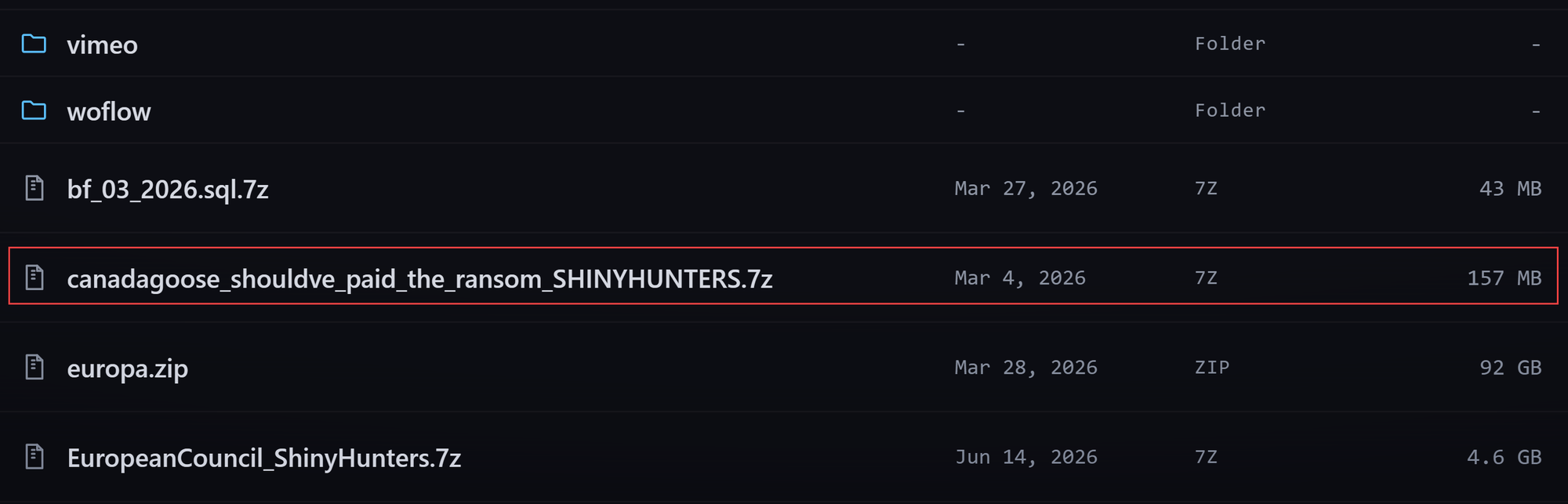
That's a small snippet of the ShinyHunters website from a couple of weeks ago. At the time of writing, a bunch more data has been dumped, including only about 15 minutes before putting these words down in the draft blog post. These breaches have impacted tens of millions of people, including my wife courtesy of her having previously shopped at Canada Goose. Now, let's see how you go about scrubbing her data from that incident. For all the data broker removal services I'll direct to this post later, how do you do that? Clearly, you can't. The pee is now in the pool, and you're not taking it back out. And it's not just "on the dark web" either, their Tor site links through to a clear web site hosting all the data:

Swimming Pools, Pee, and Trying to Delete Your Data From the Internet

And that's just the beginning. Because we're talking about digitised data posted publicly, it replicates like crazy. There will be tens of thousands of copies of my wife's personal info floating around between personal stashes, Telegram channels and public hacking forums. That genie is never going back in the bottle, not unless we're talking about the narrow scope of a legally operating data broker, which raises another issue:

What legally operating broker is enriching their corpus from data breaches?! That's just not where the legitimate ones source info from. The data comes from surveys, exchanges with other services where you ticked the box to agree to the terms and conditions for exchanging data with "partners", public business directories, and even arrest records. Legal services, legal sources, legal processes. In one of the emails from a company looking for product placement, they described their plan as follows (bold is mine):

a plan which allows you to remove your personal information from any URL (where it's legal) you find your personal information on

So what we're left with is data removal services being effective for legally operating brokers who honour legitimate requests, whilst being completely useless against the worst kinds of sites that replicate and abuse your data. In other words, you may be able to opt out of some marketing material or content that's way too specifically targeted to you, but you can't stop the bad guys trying to steal your identity or extort you because "we caught you watching porn on your PC via the malware we installed". It's a little like the court injunctions being the thoughts and prayers of data breach response I wrote about in October: I can't touch the Qantas data breach because I'm a law-abiding Australian who knows about the injunction, but there's absolutely nothing stopping the genuinely bad actors from abusing that data.

And therein lies the core of why I don't want to entertain partnerships with these organisations: not because I disagree with the service or because it will cause any harm, rather because when someone uses HIBP to search for their email address and finds it in the Canada Gooses of the world, these services can't do anything about it. They're merely skimming the leaves off the top of the pool, and no amount of skimming is going to remove what we all know still lies beneath.

  •  

Imposter Scams Are Evolving. Here Are the 10 Identities Scammers Pretend to Be Most.

Imposter scams remain the most reported type of fraud in America for the fifth year in a row, according to new data from the Federal Trade Commission (FTC).  

Americans submitted more than 1 million reports of imposter scams in 2025, making them the agency’s top fraud category once again. Victims reported more than $3.5 billion in losses, though the real number is likely much higher since many scams go unreported.  

But “imposter scam” is a broad category. It doesn’t tell you what these scams actually look like when they land in your inbox, texts, social media DMs, or phone calls. 

To better understand what consumers are encountering every day, McAfee surveyed more than 7,500 people for its State of the Scamiverse report. The results show scammers aren’t just pretending to be one type of person or company. They’re impersonating the brands, services, and people we trust most.  

This week’s edition of This Week in Scams is here ahead of the holiday weekend with the 10 most common identities scammers pretend to be. 

10. Someone Who “Texted the Wrong Number” (20%)

Common scam: An innocent conversation that turns into something more. 

These scams often begin with a harmless message intended for “someone else.” Once you reply, the scammer slowly builds trust over days or even weeks before introducing investment opportunities, romance, or requests for money. 

Unlike traditional phishing, these scams don’t always include suspicious links. 

Why it works: They feel like genuine human conversations rather than obvious scams. 

Learn more about wrong number and pig-butchering scams. 

9. Technology Companies (21%)

Common scam: “Your device has been compromised.” 

These messages impersonate technology companies or cybersecurity brands, claiming your computer or phone has been infected or involved in a security breach. 

Some direct victims to fake technical support, while others encourage downloads of malicious software. 

Why it works: Security alerts are designed to grab attention, and convincing impersonation can make fake warnings look legitimate. 

Learn more about tech support scams. 

8. Banks and Financial Institutions (21%)

Common scam: “We’ve detected suspicious activity on your account.” 

Bank impersonation scams create immediate urgency, asking customers to confirm transactions, secure their accounts, or verify their identity. 

Many direct victims to fake websites or connect them with fraudulent customer support representatives. 

Why it works: Financial security messages naturally demand attention, making people more likely to react before verifying the sender. 

Learn more about banking scams and financial fraud. 

 7. Subscription Services (21%)

Common scam: “Your payment couldn’t be processed.” 

Scammers impersonate streaming services, software subscriptions, and other recurring services, warning that your account will be canceled unless you update your payment information. 

Why it works: Consumers are used to recurring billing notifications, making these messages blend into everyday digital life. 

Learn more about mobile payment and subscription scams. 

6. Auto Warranty Providers (22%)

Common scam: “Your vehicle warranty is about to expire.” 

One of the oldest impersonation scams is still one of the most common. Fraudsters claim your warranty is ending and pressure you to purchase coverage immediately or provide personal information. 

Why it works: Many people aren’t sure when their warranty expires, making the claim difficult to verify on the spot. 

Learn more about these types of robocallers. 

5. Rewards Programs and Survey Companies (22%)

Common scam: “You’ve won a prize.” 

These scams promise gift cards, rewards, or exclusive offers but require you to “verify” your identity or enter payment information to claim them. 

Why it works: The promise of something free lowers skepticism, especially when the message appears to come from a familiar brand. 

Learn more about survey and prize scams.  

4. Retailers and Merchants (26%)

Common scam: Fake invoices for purchases you never made. 

Receiving an invoice for an expensive purchase can trigger panic. Scammers count on victims clicking quickly to dispute the charge, often leading them to malicious websites or fake customer support numbers. 

Why it works: Consumers naturally want to stop fraudulent purchases as quickly as possible. 

Learn more about shopping scams. 

3. Payment Services (27%)

Common scam: “Verify your PayPal account.” 

Messages claiming there’s a problem with your payment account often direct you to fake login pages designed to steal your username, password, or financial information. 

While PayPal is one common example, scammers impersonate many digital payment platforms. 

Why it works: Payment notifications are common, and many consumers don’t think twice before signing in to resolve what appears to be a routine issue. 

Learn more about mobile payment scams.  

2. Social Media Platforms (27%)

Common scam: “Verify your account or it will be suspended.” 

Scammers frequently impersonate platforms like Facebook, Instagram, TikTok, or X, claiming there’s unusual activity or that your account violates community guidelines. 

The goal is usually to steal your login credentials or two-factor authentication codes. 

Why it works: Many people rely on social media for work, business, or staying connected, making the threat of losing access feel urgent. 

Learn more about social media scams.  

1. Delivery Companies (31%)

Common scam: “Your package couldn’t be delivered.” 

Whether you’re waiting for a birthday gift, an online order, or an important package, fake delivery notifications prey on the fact that most people are expecting something to arrive. 

These messages often claim there’s a shipping issue, unpaid delivery fee, or missed package and urge you to click a link immediately. 

Why it works: Package updates have become part of daily life, making fake notifications feel routine rather than suspicious. 

Learn more about delivery scams. 

The Common Thread 

While these scams may look different, they all rely on the same tactic: impersonation. 

“AI has lowered the barrier for creating convincing impersonation scams,” said Abhishek Karnik, Head of Threat Research at McAfee.  

“Scammers can now produce professional-looking emails, realistic websites, and even convincing voices or videos at scale. The result isn’t necessarily more scam types, it’s far more believable versions of the scams people already encounter every day.” 

That mirrors a broader trend McAfee identified in its State of the Scamiverse research: scams are becoming more realistic, more personalized, and harder to distinguish from legitimate communications.  

Americans now receive an average of 14 scam messages every day, spend 114 hours each year deciding what’s real and what’s fake, and one in three say they feel less confident spotting scams than they did a year ago.  

How to Protect Yourself From Impersonation Scams 

If you notice this…  ✅ Do this instead 
A message creates a sense of urgency (“Your account will be suspended,” “Package delivery failed,” “Fraud detected”)  Pause before acting. Scammers want you to make a quick decision before verifying the message. 
You’re asked to click a link or scan a QR code  Open the company’s official website or app yourself instead of using the link in the message. 
The message asks you to verify your account, payment information, or identity  Never enter credentials through an unsolicited message. If you’re concerned, contact the company directly using a trusted phone number or website. 
Someone asks for passwords, one-time verification codes, or payment over text, email, or phone  Legitimate companies won’t ask for this. Don’t share the information, even if the request seems convincing. 
A “wrong number” text quickly becomes unusually friendly or shifts toward investing, crypto, or money  Stop responding and block the sender. Modern scams often begin as seemingly harmless conversations. 

How McAfee Can Help   

With McAfee+, multiple layers work together before any damage is done:  

  • Scam Detector flags suspicious texts, emails, links, QR codes, and even deepfake videos before you engage 
  • Secure VPN keeps your data private, especially on public Wi-Fi  
  • Web Protection helps block risky sites, even if you do accidentally click 
  • Password Manager doesn’t just help you make unique, strong passwords, it keeps them stored and organized for you
  • Device Security helps detect malicious apps or downloads   
  • Identity Monitoring alerts you if your personal info shows up where it should not, so you can act fast   
  • Personal Data Cleanup helps remove your information from sites selling it. 
  • Online Account Cleanup assists in taking down your old, forgotten accounts across the web 
  • Social Privacy Manager helps you monitor and change privacy settings across your social platforms in just a few clicks 

Together, these protections are designed to address the broader range of online risks people face every day. 

The post Imposter Scams Are Evolving. Here Are the 10 Identities Scammers Pretend to Be Most. appeared first on McAfee Blog.

  •  
❌